LIBER XIII · CAPUT 11
NINE KINDS OF GUM. THE SARCOCOLLA
Latine · Mayhoff 1906
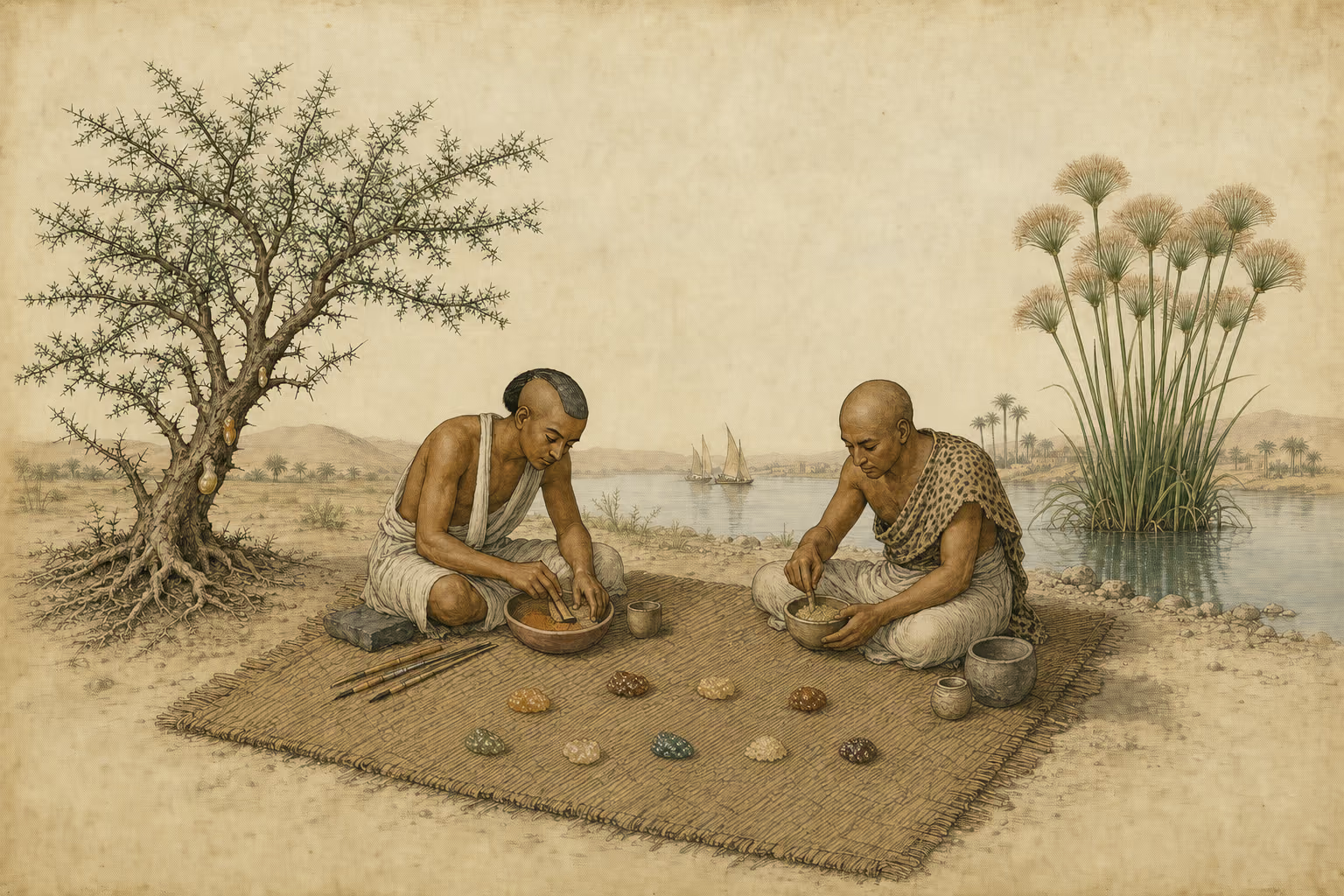
Cummim optimam esse ex Aegyptia spina convenit, vermiculatam, colore glauco, puram, sine cortice, dentibus adhaerentem. pretium eius in libras X III. deterior ex amygdalis amaris et ceraso, pessima e prunis. fit et in vitibus infantium ulceribus aptissima, et aliquando in olea dentium dolori, ulmo etiam in Coryco monte Ciliciae ac iunipiro ad nihil utiles, ex ulmi vero cummi et culices ibi nascuntur. fit et e sarcocolla — ita vocatur arbor et cummis — utilissima pictoribus ac medicis, similis pollini turis et ideo candida quam rufa melior. pretium eius quod supra.
Nondum palustria attingimus nec frutices amnium; prius tamen quam digrediamur ab Aegypto, et papyri natura dicetur, cum chartae usu maxime humanitas vitae constet, certe memoria. et hanc Alexandri Magni victoria repertam auctor est M. Varro, condita in Aegypto Alexandria. antea non fuisse chartarum usam: in palmarum foliis primo scriptitatum, dein quarundam arborum libris. postea publica monumenta plumbeis voluminibus, mox et privata linteis confici coepta aut ceris; pugillarium enim usum fuisse etiam ante Troiana tempora invenimus apud Homerum, illo vero prodente ne terram quidem ipsam, quae nunc Aegyptus, intellegitur, cum in Sebennytico et Saite eius nomo omnis charta nascatur, postea adaggeratam Nilo, si quidem a Pharo insula, quae nunc Alexandriae ponte iungitur, noctis dieique velifico navigi cursu terram afuisse prodidit. mox aemulatione circa bibliothecas regum Ptolemaei et Eumenis, supprimente chartas Ptolemaeo, idem Varro membranas Pergami tradit repertas. postea promiscue repatuit usus rei qua constat inmortalitas hominum.
Papyrum ergo nascitur in palustribus Aegypti aut quiescentibus Nili aquis, ubi evagatae stagnant duo cubita non excedente altitudine gurgitum, bracchiali radicis obliquae crassitudine, triangulis lateribus, decem non amplius cubitorum longitudine in gracilitatem fastigatum, thyrsi modo 5 cacumen includens, nullo semine aut usu eius alio quam floris ad deos coronandos. radicibus incolae pro ligno utuntur, nec ignis tantum gratia, sed ad alia quoque utensilia vasorum. ex ipso quidem papyro navigia texunt et e libro vela tegetesque, nec non et vestem, etiam stragula ac funes. mandunt quoque crudum decoctumque, sucum tantum devorantes. nascitur et in Syria circa quem odoratus ille calamus lacum, neque aliis usus est quam inde funibus rex Antigonus in navalibus rebus, nondum sparto communicato. nuper et in Euphrate nascens circa Babylonem papyrum intellectum est eundem usum habere chartae; et tamen adhuc malunt Parthi vestibus litteras intexere.
English · Bostock & Riley 1855–57
It is universally agreed, that the best gum is that produced from the Egyptian thorn; it is of variegated appearance, of azure colour, clean, free from all admixture of bark, and adheres to the teeth; the price at which it sells is three denarii per pound. That produced from the bitter almond-tree and the cherry is of an inferior kind, and that which is gathered from the plum-tree is the worst of all. The vine, too, produces a gum, which is of the greatest utility in healing the sores of children; while that which is sometimes found on the olive-tree is used for the tooth-ache. Gum is also found on the elm upon Mount Corycus in Cilicia, and upon the juniper, but it is good for nothing; indeed, the gum of the elm found there is apt to breed gnats. From the sarcocolla also—such is the name of a certain tree—a gum exudes that is remarkably useful to painters and medical men; it is similar to incense dust in appearance, and for those purposes the white kind is preferable to the red. The price of it is the same as that mentioned above.
We have not as yet taken any notice of the marsh plants, nor yet of the shrubs that grow upon the banks of rivers: before quitting Egypt, however, we must make some mention of the nature of the papyrus, seeing that all the usages of civilized life depend in such a remarkable degree upon the employment of paper—at all events, the remembrance of past events. M. Varro informs us that paper owes its discovery to the victorious career of Alexander the Great, at the time when Alexandria in Egypt was founded by him; before which period paper had not been used, the leaves of the palm having been employed for writing at an early period, and after that the bark of certain trees. In succeeding ages, public documents were inscribed on sheets of lead, while private memoranda were impressed upon linen cloths, or else engraved on tablets of wax; indeed, we find it stated in Homer, that tablets were employed for this purpose even before the time of the Trojan war. It is generally supposed, too, that the country which that poet speaks of as Egypt, was not the same that is at present understood by that name, for the Sebennytic and the Saitic Nomes, in which all the papyrus is produced, have been added since his time by the alluvion of the Nile; indeed, he himself has stated that the main-land was a day and a night’s sail from the island of Pharos, which island at the present day is united by a bridge to the city of Alexandria. In later times, a rivalry having sprung up between King Ptolemy and King Eumenes, in reference to their respective libraries, Ptolemy prohibited the export of papyrus; upon which, as Varro relates, parchment was invented for a similar purpose at Pergamus. After this, the use of that commodity, by which immortality is ensured to man, became universally known.
Papyrus grows either in the marshes of Egypt, or in the sluggish waters of the river Nile, when they have overflowed and are lying stagnant, in pools that do not exceed a couple of cubits in depth. The root lies obliquely, and is about the thickness of one’s arm; the section of the stalk is triangular, and it tapers gracefully upwards towards the extremity, being not more than ten cubits at most in height. Very much like a thyrsus in shape, it has a head on the top, which has no seed in it, and, indeed, is of no use whatever, except as a flower employed to crown the statues of the gods. The natives use the roots by way of wood, not only for firing, but for various other domestic purposes as well. From the papyrus itself they construct boats also, and of the outer coat they make sails and mats, as well as cloths, besides coverlets and ropes; they chew it also, both raw and boiled, though they swallow the juice only.
The papyrus grows in Syria also, on the borders of the same lake around which grows the sweet-scented calamus; and King Antiochus used to employ the productions of that country solely as cordage for naval purposes; for the use of spartum had not then become commonly known. More recently it has been understood that a papyrus grows in the river Euphrates, in the vicinity of Babylon, from which a similar kind of paper may easily be produced: still, however, up to the present time the Parthians have preferred to impress their characters upon cloths.