LIBER XIII · CAPUT 16
THE CITRON-TREE
Latine · Mayhoff 1906
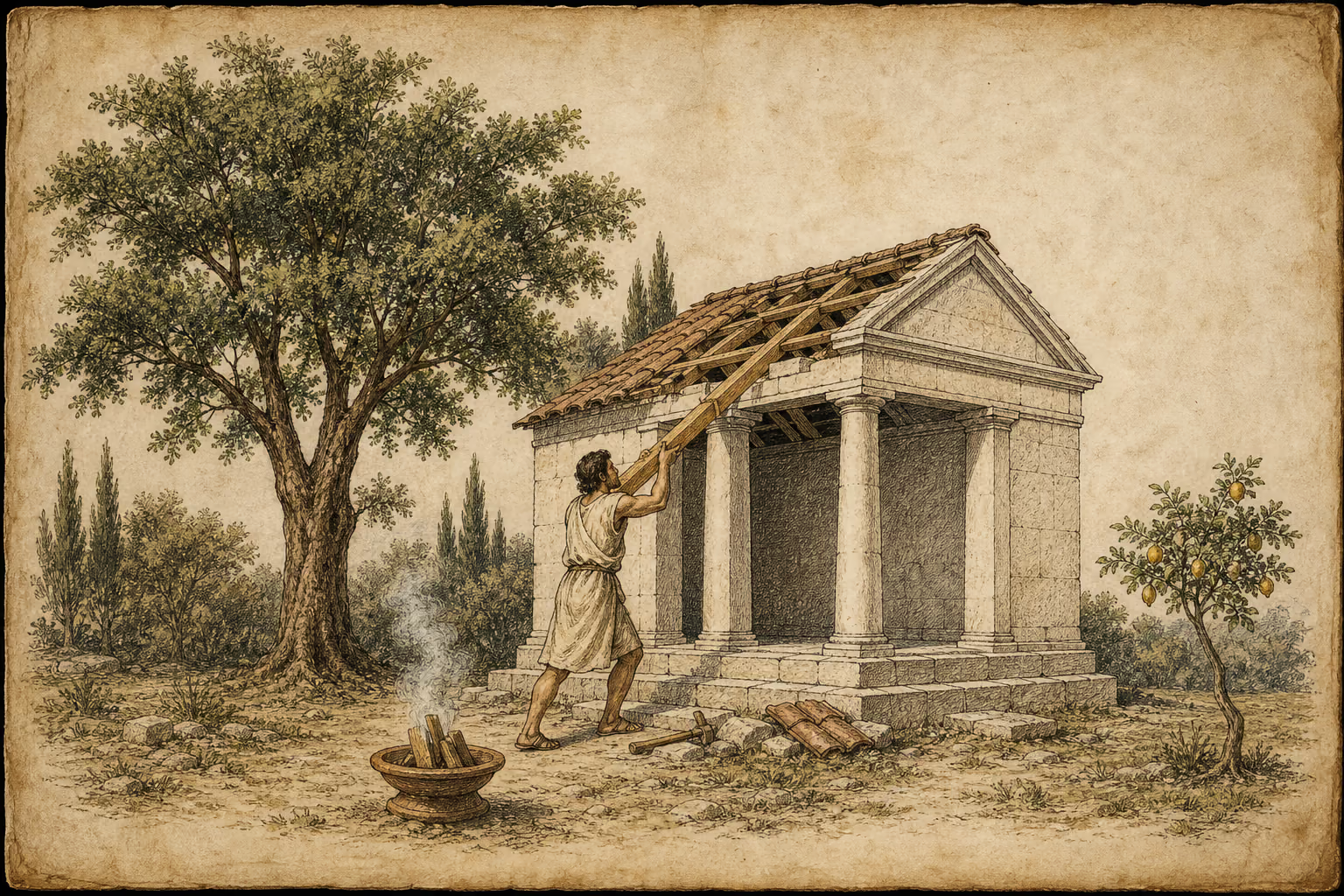
Inter pauca nitidioris vitae instrumenta haec arbor est, quapropter insistendum ei quoque paululum videtur. nota etiam Homero fuit. thyon Graece vocatur, ab aliis thya. hanc itaque inter odores uri tradidit in deliciis Circae, quam deam volebat intellegi, magno errore eorum qui odoramenta in eo vocabulo accipiunt, cum praesertim eodem versu cedrum laricemque una tradat uri, quo manifestum est de arboribus tantum locutum. Theophrastus, qui proximus a Magni Alexandri aetate scripsit haec circa urbis Romae annum CCCCXXXX, magnum iam huic arbori honorem tribuit, memoratas ex ea referens templorum veterum contignationes quandamque inmortalitatem materiae in tectis contra vitia omnia incorruptae. radice nihil crispius, nec aliunde pretiosiora opera. praecipuam autem esse eam arborem circa Hammonis delubrum, nasci et in interior Cyrenaicae parte. de mensis tamen tacuit, et alias nullius ante Ciceronianam vetustor memoria est, quo noviciae apparent. — Alia est arbor eodem nomine, malum ferens exsecratum aliquis odore et amaritudine, aliis expetitum, domus etiam decorans, nec dicenda verbosius.
English · Bostock & Riley 1855–57
As this tree is one among the elements of more civilized life, I think that it is as well on the present occasion to dwell a little further upon it. It was known to Homer even, and in the Greek it is known by the name of “thyon,” or sometimes “thya.” He says that the wood of this tree was among the unguents that were burnt for their pleasant odour by Circe, whom he would represent as being a goddess; a circumstance which shows the great mistake committed by those who suppose that perfumes are meant under that name, seeing that in the very same line he says that cedar and larch were burnt along with this wood, a thing that clearly proves that it is only of different trees that he is speaking. Theophrastus, an author who wrote in the age succeeding that of Alexander the Great, and about the year of the City of Rome 440, has awarded a very high rank to this tree, stating that it is related that the raftering of the ancient temples used to be made of this wood, and that the timber, when employed in roofs, will last for ever, so to say, being proof against all decay,—quite incorruptible, in fact. He also says that there is nothing more full of wavy veins than the root of this tree, and that there is no workmanship in existence more precious than that made of this material. The finest kind of citrus grows, he says, in the vicinity of the Temple of Jupiter Hammon; he states also that it is produced in the lower part of Cyrenaica. He has made no mention, however, of the tables that are made of it; indeed, we have no more ancient accounts of them than those of the time of Cicero, from which it would appear that they are a comparatively recent invention.
There is another tree also which has the same name of “citrus,” and bears a fruit that is held by some persons in particular dislike for its smell and remarkable bitterness; while, on the other hand, there are some who esteem it very highly. This tree is used as an ornament to houses; it requires, however, no further description.