LIBER XIII · CAPUT 17
THE LOTUS
Latine · Mayhoff 1906
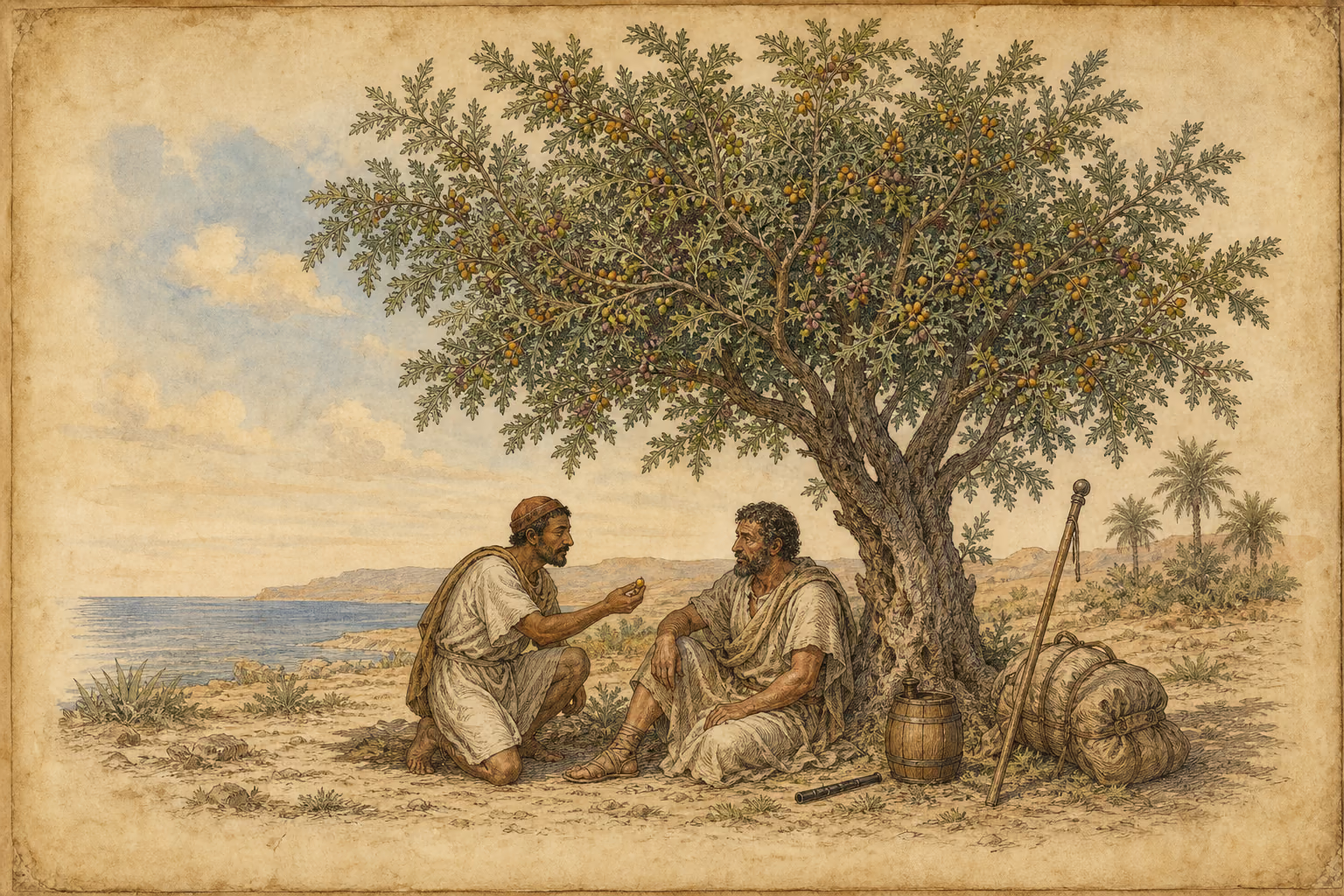
Eadem Africa, qua vergit ad nos, insignem arborem loton gignit, quam vocat celthim, et ipsam Italiae 5 familiarem, sed terra mutatam. praecipua est circa Syrtis atque Nasamonas. magnitudo quae piro, quamquam Nepos Cornelius brevem tradit. incisurae folio crebriores; alioqui ilicis viderentur. differentiae plures, eaeque maxime fructibus fiunt. magnitudo huic fabae, color croci, sed ante maturitatem alius atque alius, sicut uvis. nascitur densus in ramis myrti modo, non ut in Italia cerasis, tam dulcis ibi cibo, ut nomen etiam genti terraeque dederit nimis hospitali advenarum oblivione patriae. ferunt ventris non sentire morbos qui eum mandant. melior sine interiore nucleo, qui in altero genere osseus videtur. vinum quoque exprimitur illi simile mulso, quod ultra denos dies negat durare idem Nepos bacasque concisas cum alica ad cibos doliis condi. quin et exercitus pastos eo accepimus ultro citroque commeantes per Africam. ligno colos niger; ad tibiarum cantus expetitur. e radice cultellis capulos brevesque alios usus excogitant.
Haec ibi natura arboris. est autem eodem nomine et herba et in Aegypto caulis in palustrium genere. recedentibus enim aquis Nili riuis provenit, similis fabae caule foliisque densa congerie stipatis, brevioribus tantum gracilioribusque. fructus in capite papaveri similis incisuris omnique alio modo; intus grana ceu milium. incolae capita in acervis putrefaciunt, mox separant lavando et siccata tundunt eoque pane utuntur. mirum est quod praeter haec traditur, sole occidente papavera ea comprimi et integi foliis, ad ortum autem aperiri, donec maturescant flosque, qui est candidus, decidat.
English · Bostock & Riley 1855–57
Africa, too, at least that part of it which looks towards our shores, produces a remarkable tree, the lotus, by some known as the “celtis,” which has also been naturalized in Italy, though it has been somewhat modified by the change of soil. The finest quality of lotus is that found in the vicinity of the Syrtes and among the Nasamones. It is the same size as the pear-tree, although Cornelius Nepos states to the effect that it is but short. The leaves have numerous incisions, just as with those of the holm-oak. There are many varieties of the lotus, which are characterized more particularly by the difference in their respective fruits. The fruit is of about the size of a bean, and its colour is that of saffron, though before it is ripe it is continually changing its tints, like the grape. It has branches thickly set with leaves, like the myrtle, and not, as with us in Italy, like the cherry. In the country to which this tree is indigenous, the fruit of it is so remarkably sweet and luscious, that it has even given its name to a whole territory, and to a nation who, by their singular hospitality, have even seduced strangers who have come among them, to lose all remembrance of their native country. It is said also, that those who eat this fruit are subject to no maladies of the stomach. The fruit which has no stone in the inside is the best: this stone in the other kind seems to be of an osseous nature. A wine is also extracted from this fruit very similar to honied wine; according to Nepos, however, it will not last above ten days; he states also that the berries are chopped up with alica, and then put away in casks for the table. Indeed, we read that armies have been fed upon this food when marching to and fro through the territory of Africa. The wood is of a black colour, and is held in high esteem for making flutes; from the root also they manufacture handles for knives, and various other small articles.
Such is the nature of the tree that is so called in Africa; the same name being also given to a certain herb, and to a stalk that grows in Egypt belonging to the marsh plants. This last plant springs up when the waters of the Nile have retired after its overflow: its stalk is similar to that of the bean, and its leaves are numerous and grow in thick clusters, but are shorter and more slender than those of the bean. The fruit grows on the head of the plant, and is similar in appearance to a poppy in its indentations and all its other characteristics; within there are small grains, similar to those of millet. The inhabitants lay these heads in large heaps, and there let them rot, after which they separate the grain from the residue by washing, and then dry it; when this is done they pound it, and then use it as flour for making a kind of bread. What is stated in addition to these particulars, is a very singular fact; it is said that when the sun sets, these poppy-heads shut and cover themselves in the leaves, and at sun-rise they open again; an alternation which continues until the fruit is perfectly ripe, and the flower, which is white, falls off.