LIBER XIII · CAPUT 23
THE CAPPARIS OR CYNOSBATON, OTHERWISE OPHIOSTAPHYLE
Latine · Mayhoff 1906
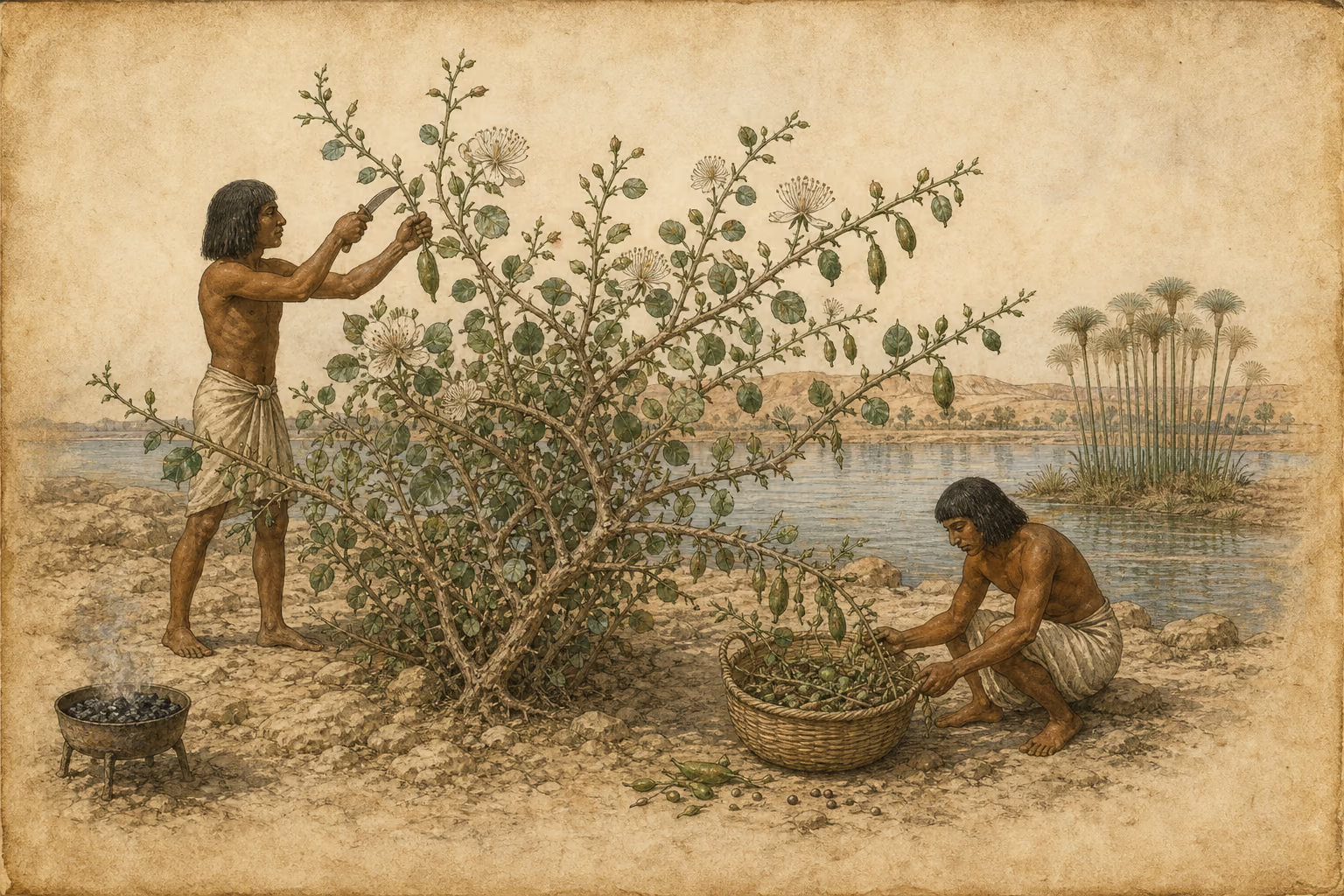
Vbi et cappari, firmioris ligni frutex seminisque et cibis vulgati, caule quoque una plerumque decerpto. cavenda eius genera peregrina, si quidem Arabium pestilens, Africum gingivis inimicum, Marmaricum vulvis et omnibus inflationibus. Apulum vomitus facit, stomachum et alvum solvit. quidam id cynosbaton vocant, alii ophiostaphylen.
Frutectosi est generis et saripha, circa Nilum naScens, duorum ferme cubitorum altitudine, pollicari crassitudine, coma papyri, similique manditur modo, radice ferrariis officinis praecipua carbonis usu propter duritiam.
English · Bostock & Riley 1855–57
In Egypt, too, the capparis is found, a shrub with a wood of much greater solidity. The seed of it is a well-known article of food, and is mostly gathered together with the stalk. It is as well, however, to be on our guard against the foreign kinds; for that of Arabia has certain deleterious properties, that from Africa is injurious to the gums, and that from Marmarica is prejudicial to the womb and causes flatulence in all the organs. That of Apulia, too, is productive of vomiting, and causes derangement in the stomach and intestines. Some persons call this shrub “cynosbaton,” others, again, “ophiostaphyle.”
The saripha, too, that grows on the banks of the Nile, is one of the shrub genus. It is generally about two cubits in height, and of the thickness of one’s thumb: it has the foliage of the papyrus, and is eaten in a similar manner. The root, in consequence of its extreme hardness, is used as a substitute for charcoal in forging iron.