LIBER XIII · CAPUT 24
THE ROYAL THORN
Latine · Mayhoff 1906
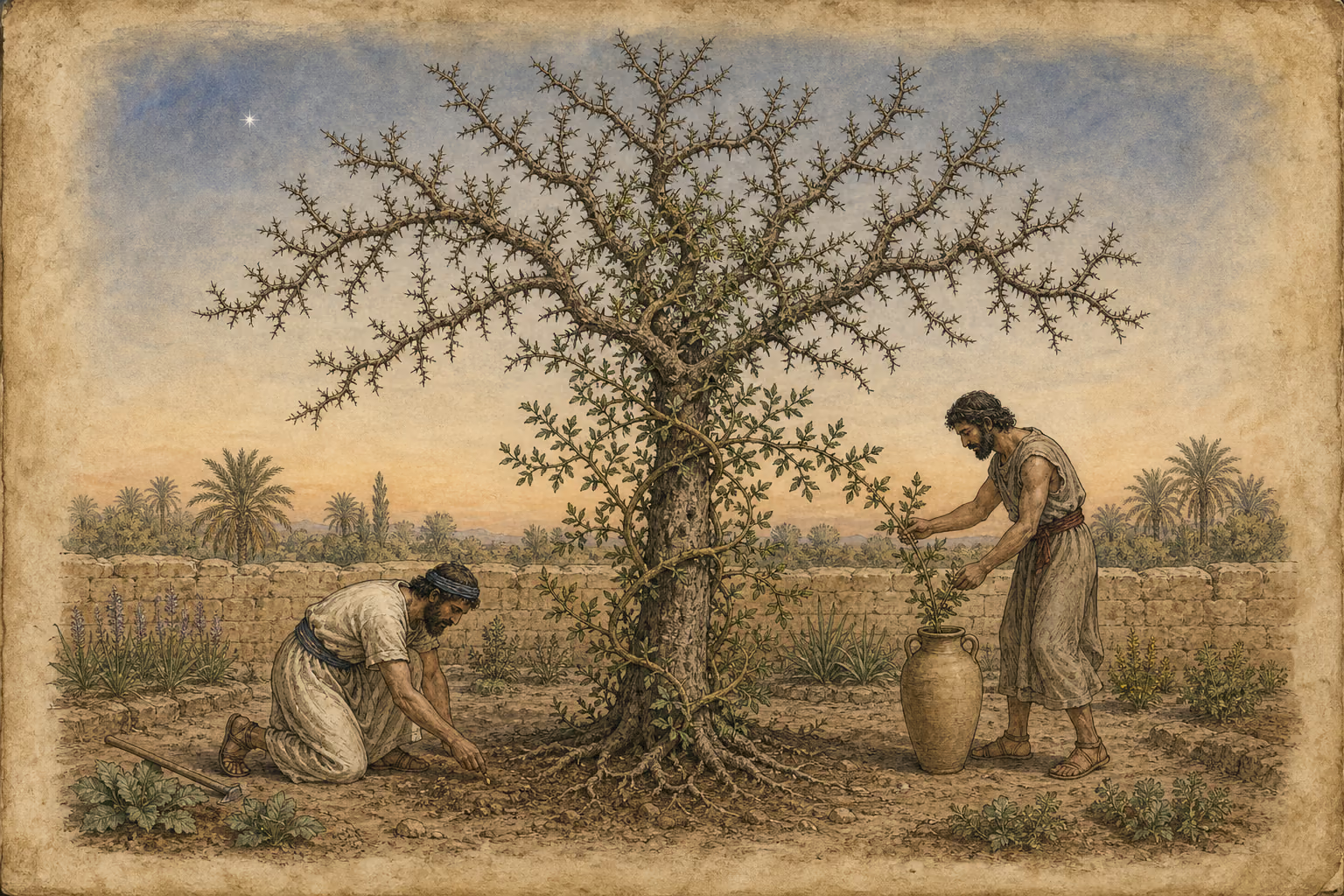
Non omittendum est et quod Babylone seritur in spinis, quoniam non aliubi vivit, sicut et viscum in arboribus, sed illud in spina tantum quae regia vocatur. mirum quod eodem die germinat quo iniectum est — inicitur autem ipso canis ortu — et celerrime arborem occupat. condiunt eo vina et ideo serunt. spina illa nascitur et Athenis in Longis muris.
Frutex est et cytisus, ab Amphilocho Atheniense miris laudibus praedicatus pabulo omnium, aridus vero etiam suum, spondetque iugero eius annua HS MM vel mediocri solo reditus. utilitas quae ervo, sed ocior satias, perquam modico pinguescente quadripede, ita ut iumenta hordeum spernant. non ex alio pabulo lactis maior copia aut melior, super omnia pecudum medicina validas a morbis omnibus praestante. quin et nutricibus in defectu lactis aridum atque in aqua decoctum potui cum vino dari iubet — firmiores excelsioresque infantes fore —, viridem etiam gallinis aut, si inaruerit, madefactum. apes quoque numquam defore cytisi pabulo contingente promittunt Democritus atque Aristomachus. nec aliud minoris impendi est. seritur, cum hordeum, aut vere semine ut porrum, vel caule autumno ante brumam; si semine, madidum, aut, si desint imbres, satum spargitur. plantae cubitales transferuntur scrobe pedali. seritur per aequinoctia tenero frutice, perficitur triennio, demetitur verno aequinoctio, cum florere desiit, vel pueri anusve vilissima opera. canus aspectu, breviterque si quis exprimere similitudinem velit, angustioris trifoli frutex. datur animalibus post biduum semper, hieme vero quod inaruit madidum. satiant equos denae librae et ad portionem minora animalia, obiterque inter ordines alium, cepas seri fertile est. inventus est hic frutex in Cythno insula, inde tralatus in omnes Cycladas, mox in urbes Graecas, magno casei proventu. praeterea — quo maxime miror rarum esse in Italia — non aestuum, non frigorum, non grandinum aut nivis iniuriam expavescit. adicit Hyginus, ne cossium quidem propter nullam gratiam ligni.
English · Bostock & Riley 1855–57
We must take care, also, not to omit a peculiar shrub that is planted at Babylon, and only upon a thorny plant there, as it will not live anywhere else, just in the same manner as the mistletoe will live nowhere but upon trees. This shrub, however, will only grow upon a kind of thorn, which is known as the royal thorn. It is a wonderful fact, but it germinates the very same day that it has been planted. This is done at the rising of the Dog-star, after which it speedily takes possession of the whole tree. They use it in the preparation of wine, and it is for this purpose that it is planted. This thorn grows at Athens also, upon the Long Walls there.
The cytisus is also a shrub, which, as a food for sheep, has been extolled with wonderful encomiums by Aristomachus the Athenian, and, in a dry state, for swine as well: the same author, too, pledges his word that a jugerum of very middling land, planted with the cytisus, will produce an income of two thousand sesterces per annum. It is quite as useful as the ervum, but is apt to satiate more speedily: very little of it is necessary to fatten cattle; to such a degree, indeed, that beasts of burden, when fed upon it, will very soon take a dislike to barley. There is no fodder known, in fact, that is productive of a greater abundance of milk, and of better quality; in the medical treatment of cattle in particular, this shrub is found a most excellent specific for every kind of malady. Even more than this, the same author recommends it, when first dried and then boiled in water, to be given to nursing women, mixed with wine, in cases where the milk has failed them: and he says that, if this is done, the infant will be all the stronger and taller for it. In a green state, or, if dried, steeped in water, he recommends it for fowls. Both Democritus and Aristomachus promise us also that bees will never fail us so long as they can obtain the cytisus for food. There is no crop that we know of, of a similar nature, that costs a smaller price. It is sown at the same time as barley, or, at all events, in the spring, in seed like the leek, or else planted in the autumn, and before the winter solstice, in the stalk. When sown in grain, it ought to be steeped in water, and if there should happen to be no rain, it ought to be watered when sown: when the plants are about a cubit in height, they are replanted in trenches a foot in depth. It is transplanted at the equinoxes, while the shrub is yet tender, and in three years it will arrive at maturity. It is cut at the vernal equinox, when the flower is just going off; a child or an old woman is able to do this, and their labour may be had at a trifling rate. It is of a white appearance, and if one would wish to express briefly what it looks like, it is a trifoliated shrub, with small, narrow leaves. It is always given to animals at intervals of a couple of days, and in winter, when it is dry, before being given to them, it is first moistened with water. Ten pounds of cytisus will suffice for a horse, and for smaller animals in proportion: if I may here mention it by the way, it is found very profitable to sow garlic and onions between the rows of cytisus.
This shrub has been found in the Isle of Cythnus, from whence it has been transplanted to all the Cyclades, and more recently to the cities of Greece, a fact which has greatly increased the supply of cheese: considering which, I am much surprised that it is so rarely used in Italy. This shrub is proof, too, against all injuries from heat, from cold, from hail, and from snow: and, as Hyginus adds, against the depredations of the enemy even, the wood produced being of no value whatever.