LIBER XIII · CAPUT 25
THE TREES AND SHRUBS OF THE MEDITERRANEAN. THE PHYCOS, PRASON, OR ZOSTER
Latine · Mayhoff 1906
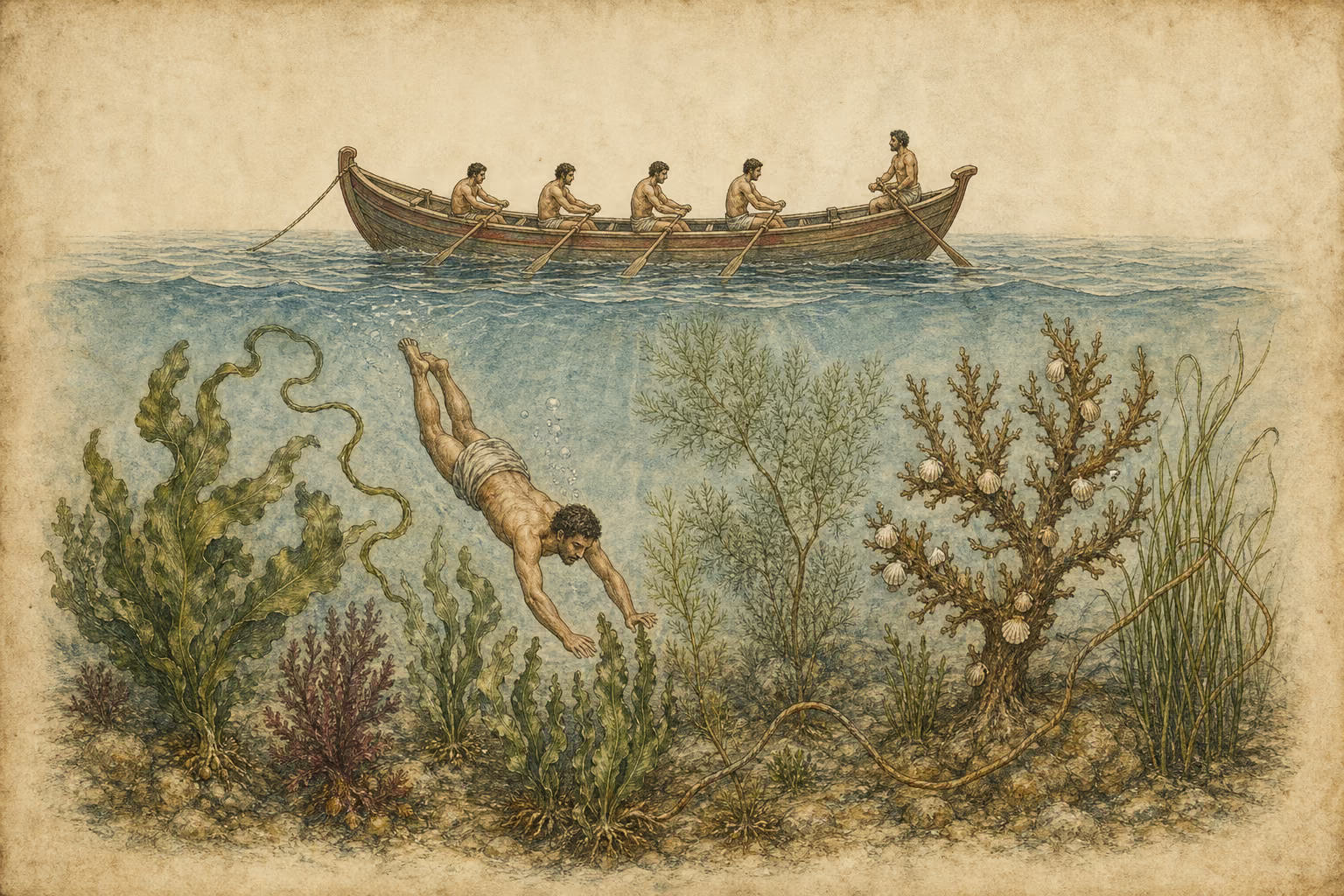
Nascuntur etiam in mari frutices arboresque — minores in nostro —, Rubrum enim et totus orientis oceanus refertus est silvis. non habet lingua Latia nomen quod Graeci vocant phycos, quoniam alga herbarum maris vocabulum intellegitur, hic autem est frutex. folio lato, colore viridi gignit quod quidam prason vocant, alii zostera. alterum genus eiusdem capillaceo folio, simile feniculo, in saxis nascitur, superius in vadis haut procul litore, utrumque verno, et interit aatumno. circa Cretam insulam nato in petris purpuras quoque inficiunt, laudatissimo a parte aquilonis ut spongeis. tertium est gramini simile, radice geniculata et caule qualiter calami. aliud genus fruticum bryon vocatur, folio lactucae, rugosiore tantum, iam hoc inferius nascens, in alto vero abies et quercus cubitali altitudine; ramis earum adhaerent conchae. quercu et tingui lanas tradunt, glandem etiam quasdam ferre in alto. nau- fragis haec deprehensa urinantibusque; ea et aliae traduntur praegrandes circa Scionen. vitis enim passim nascitur, sed ficus sine foliis, rubro cortice. fit et palma fruticum generis. extra Herculis columnas porri fronde nascitur frutex et alius lauri ac thymi, qui ambo eiecti in pumicem transfigurantur.
At in oriente mirum est statim a Copto per solitudines nihil gigni praeter spinam quae sitiens vocatur, et hanc raram admodum, in maria vero Rubro silvas virere, lauru maxime et oliva ferentibus bacas et, cum pluat, fungos, qui sole tacti mutantur in pumicem. fruticum ipsorum magnitude ternum cubitorum est. caniculis referta maria, vix ut prospicere e nave tutum sit, remos plerumque ipsos invadentibus. qui navigavere ex Indo Alexandri milites frondem marinarum arborum tradidere in aqua viridem fuisse, exemptam sole protinus in salem arescentem, iuncos quoque lapideos perquam similes veris per litora, et in alto quasdam arbusculas colore bubuli cornus ramosas et cacuminibus rubentes, cum tractarentur, vitri modo fragiles, in igni autem ut ferrum inardescentes, restinctis colore suo redeunte. eodem tractu insularum silvas operit aestus, quamquam altiores platanis populisque altissimis. folia iis laurea, flos violae et odore et colore, bacae ut oleis, et ipsae odoris iucundi, autumno nascentes, vere decidentes, foliis numquam deciduis. harum minors totas integit mare; maximarum cacumina extant, ad quae naves religantur et, cum recessit aestus, ad radices. alias quoque arbores in alto ab isdem accepimus eodem in mari visas, semper folia retinentes, fructu earum lupino simili. Iuba tradit circa Trogodytarum insulas fruticem in alto vocari Isidis crinem, curalio similem sine foliis, praecisum mutato colore in nigrum durescere, cum cadat, frangi. item alium, qui vocatur chariton blepharon, efficacem in amatoriis. spatalia ex eo facere et monilia feminas; sentire eum se capi durarique cornus modo et hebetare aciem ferri. quod si fefellerint insidiae, in lapidem transligurari.
English · Bostock & Riley 1855–57
Shrubs and trees grow in the sea as well; those of our sea are of inferior size, while, on the other hand, the Red Sea and all the Eastern Ocean are filled with dense forests. No other language has any name for the shrub which is known to the Greeks as the “phycos,” since by the word “alga” a mere herb is generally understood, while the “phycos” is a complete shrub. This plant has a broad leaf of a green colour, which is by some called “prason,” and by others is known as “zoster.” Another kind, again, has a hairy sort of leaf, very similar to fennel, and grows upon rocks, while that previously mentioned grows in shoaly spots, not far from the shore. Both kinds shoot in the spring, and die in autumn. The phycos which grows on the rocks in the neighbourhood of Crete, is used also for dyeing purple; the best kind being that produced on the north side of the island, which is the case also with sponges of the very best quality. A third kind, again, is similar in appearance to grass; the root of it is knotted, and so is the stalk, which resembles that of a reed.
There is another kind of marine shrub, known by the name of “bryon;” it has the leaf of the lettuce, only that it is of a more wrinkled appearance; it grows nearer land, too, than the last. Far out at sea we find a fir-tree and an oak, each a cubit in height; shells are found adhering to their branches. It is said that this sea-oak is used for dyeing wool, and that some of them even bear acorns in the sea, a fact which has been ascertained by shipwrecked persons and divers. There are other marine trees also of remarkable size, found in the vicinity of Sicyon; the sea-vine, indeed, grows everywhere. The sea-fig is destitute of leaves, and the bark is red. There is a palm-tree also in the number of the sea-shrubs. Beyond the columns of Hercules there is a sea-shrub that grows with the leaf of the leek, and others with those of the carrot, and of thyme. Both of these last, when thrown up by the tide, are transformed into pumice.
In the East, it is a very remarkable thing, that immediately after leaving Coptos, as we pass through the deserts, we find nothing whatever growing, with the exception of the thorn that is known as the “thirsty” thorn; and this but very rarely. In the Red Sea, however, there are whole forests found growing, among which more particularly there are plants that bear the laurel-berry and the olive; when it rains also certain fungi make their appearance, which, as soon as they are touched by the rays of the sun, are turned into pumice. The size of the shrubs is three cubits in height; and they are all filled with sea-dogs, to such a degree, that it is hardly safe to look at them from the ship, for they will frequently seize hold of the very oars.
The officers of Alexander who navigated the Indian seas, have left an account of a marine tree, the foliage of which is green while in the water; but the moment it is taken out, it dries and turns to salt. They have spoken also of bulrushes of stone bearing a strong resemblance to real ones, which grew along the sea-shore, as also certain shrubs in the main sea, the colour of an ox’s horn, branching out in various directions, and red at the tips. These, they say, were brittle, and broke like glass when touched, while, on the other hand, in the fire they would become red-hot like iron, and when cool resume their original colour.
In the same part of the earth also, the tide covers the forests that grow on the islands, although the trees there are more lofty than the very tallest of our planes and poplars! The leaves of these trees resemble that of the laurel, while the blossom is similar to the violet, both in smell and colour: the berries resemble those of the olive, and they, too, have an agreeable smell: they appear in the autumn, and the leaves of the trees never fall off. The smaller ones are entirely covered by the waves, while the summits of those of larger size protrude from the water, and ships are made fast to them; when the tide falls the vessels are similarly moored to the roots. We find the same persons making mention of certain other trees which they saw out at sea, which always retained their leaves, and bore a fruit very similar to the lupine.
Juba relates, that about the islands of the Troglodytæ there is a certain shrub found out at sea, which is known as the “hair of Isis:” he says that it bears a strong resemblance to coral, is destitute of leaves, and if cut will change its colour, becoming quite black and hard, and so brittle as to break if it falls. He speaks also of another marine plant, to which he gives the name of “Charito-blepharon,” and which, he says, is particularly efficacious in love-charms. Bracelets and necklaces are made of it. He says also that it is sensible when it is about to be taken, and that it turns as hard as horn, so hard, indeed, as to blunt the edge of iron. If, on the other hand, it is cut before it is sensible of the danger, it is immediately transformed to stone.