LIBER XIII · CAPUT 3
THE EXCESSES TO WHICH LUXURY HAS RUN IN UNGUENTS
Latine · Mayhoff 1906
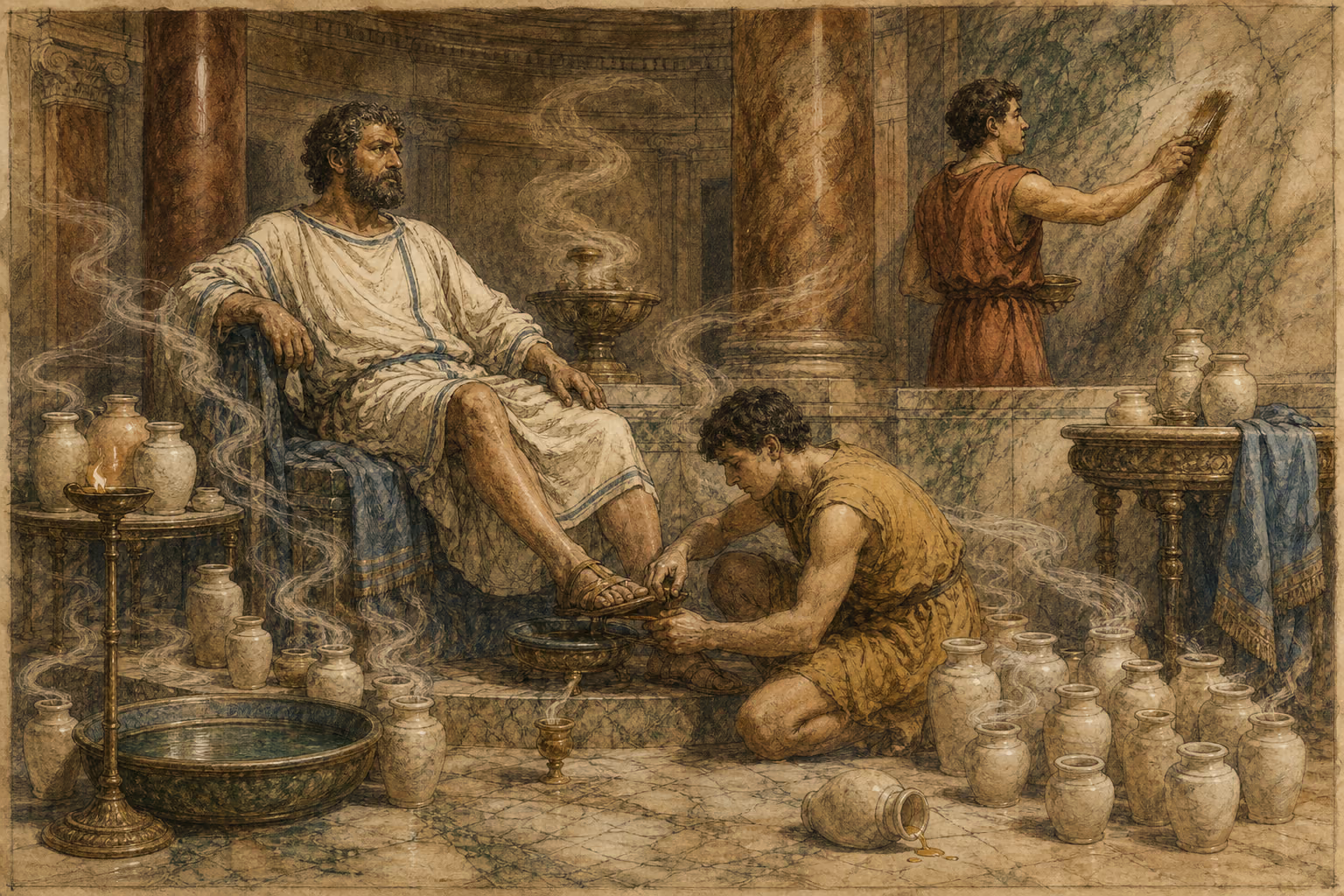
Haec est materia luxus e cunctis maxime supervacui. margaritae enim gemmaeque ad heredem tamen transeunt, vestes prorogant tempus: unguenta ilico expirant ac suis moriuntur horis. summa commendatio eorum ut transeuntem feminam odor invitet etiam aliud agentis. exceduntque quadringenos denarios librae: tanti emitur voluptas aliena; etenim odorem qui gerit, ipse non sentit. si tamen et haec aliqua differentia signanda sunt, in M. Ciceronis monumentis invenitur unguenta gratiora quae terrain quam quae crocum sapiant, quando etiam corruptissimo in genere magis tamen iuvat quaedam ipsius vitii severitas. sed quosdam crassitudo maxime delectat, spissum appellantes, linique iam, non solum perfundi, gaudent. vidimus etiam vestigia pedum tingui, quod monstrasse M. Othonem Neroni principi ferebant, quaeso ut qualiter sentiretur iuvaretque ab ea parte corporis? nec non aliquem e privatis audivimus iussisse spargi parietes balnearum unguento atque Gaium principem solia temperari ac, ne principale videatur hoc bonum, et postea quendam e servi; Neronis. maxime tamen mirum est hanc gratiam penetrasse et in castra; aquilae certe ac signa, pulverulenta illa et cuspidibus horrida, unguuntur festis diebus, utinamque dicere possemus quis primus instituisset! ita est nimirum: hac mercede corruptae orbem terrarum devicere aquilae. ista patrocinia quaerimus vitiis, ut per hoc ius sub casside unguenta sumantur.
Quando id primum ad Romanos penetraverit, non facile dixerim. certum est Antiocho rege Asiaque devictis, urbis anno DLXV, P. Licinium Crassum L. Iulium Caesarem censores edixisse ne quis venderet unguenta exotica; sic enim appellavere. at Hercules iam quidam etiam in potus addunt, tantique est amaritudo, ut odore prodigo fruantur ex utraque parte corporis. L. Plotium, L. Planci bis consulis censorisque fratrem, proscriptum a triumviris in Salurnitana latebra unguenti odore proditum constat, quo dedecore tota absoluta proscriptio est: quis enim non merito iudicet perisse tales?
Cetero terrarum omnium Aegyptus accommodatissima unguentis, ab ea Campania est copia rosae.
English · Bostock & Riley 1855–57
These perfumes form the objects of a luxury which may be looked upon as being the most superfluous of any, for pearls and jewels, after all, do pass to a man’s representative, and garments have some durability; but unguents lose their odour in an instant, and die away the very hour they are used. The very highest recommendation of them is, that when a female passes by, the odour which proceeds from her may possibly attract the attention of those even who till then are intent upon something else. In price they exceed so large a sum even as four hundred denarii per pound: so vast is the amount that is paid for a luxury made not for our own enjoyment, but for that of others; for the person who carries the perfume about him is not the one, after all, that smells it.
And yet, even here, there are some points of difference that deserve to be remarked. We read in the works of Cicero, that those unguents which smell of the earth are preferable to those which smell of saffron; being a proof, that even in a matter which most strikingly bespeaks our state of extreme corruptness, it is thought as well to temper the vice by a little show of austerity. There are some persons too who look more particularly for consistency in their unguents, to which they accordingly give the name of “spissum”; thus showing that they love not only to be sprinkled, but even to be plastered over, with unguents. We have known the very soles even of the feet to be sprinkled with perfumes; a refinement which was taught, it is said, by M. Otho to the Emperor Nero. How, I should like to know, could a perfume be at all perceptible, or, indeed, productive of any kind of pleasure, when placed on that part of the body? We have heard also of a private person giving orders for the walls of the bath-room to be sprinkled with unguents, while the Emperor Caius had the same thing done to his sitting-bath: that this, too, might not be looked upon as the peculiar privilege of a prince, it was afterwards done by one of the slaves that belonged to Nero.
But the most wonderful thing of all is, that this kind of luxurious gratification should have made its way into the camp even: at all events, the eagles and the standards, dusty as they are, and bristling with their sharpened points, are anointed on festive days. I only wish it could, by any possibility, be stated who it was that first taught us this practice. It was, no doubt, under the corrupting influence of such temptations as these, that our eagles achieved the conquest of the world: thus do we seek to obtain their patronage and sanction for our vices, and make them our precedent for using unguents even beneath the casque.
I cannot exactly say at what period the use of unguents first found its way to Rome. It is a well-known fact, that when King Antiochus and Asia were subdued, an edict was published in the year of the City 565, in the censorship of P. Licinius Crassus and L. Julius Cæsar, forbidding any one to sell exotics; for by that name unguents were then called. But, in the name of Hercules! at the present day, there are some persons who even go so far as to put them in their drink, and the bitterness produced thereby is prized to a high degree, in order that by their lavishness on these odours they may thus gratify the senses of two parts of the body at the same moment. It is a well-known historical fact, that L. Plotius, the brother of L. Plancus, who was twice consul and censor, after being proscribed by the Triumvirs, was betrayed in his place of concealment at Salernum by the smell of his unguents, a disgrace which more than outweighed all the guilt attending his proscription. For who is there that can be of opinion that such men as this do not richly deserve to come to a violent end?
In other respects, Egypt is the country that is the best suited of all for the production of unguents; and next to it, Campania, from its abundance of roses.