LIBER XIII · CAPUT 5
THE TREES OF SYRIA: THE PISTACIA, THE COTTANA, THE DAMASCENA, AND THE MYXA
Latine · Mayhoff 1906
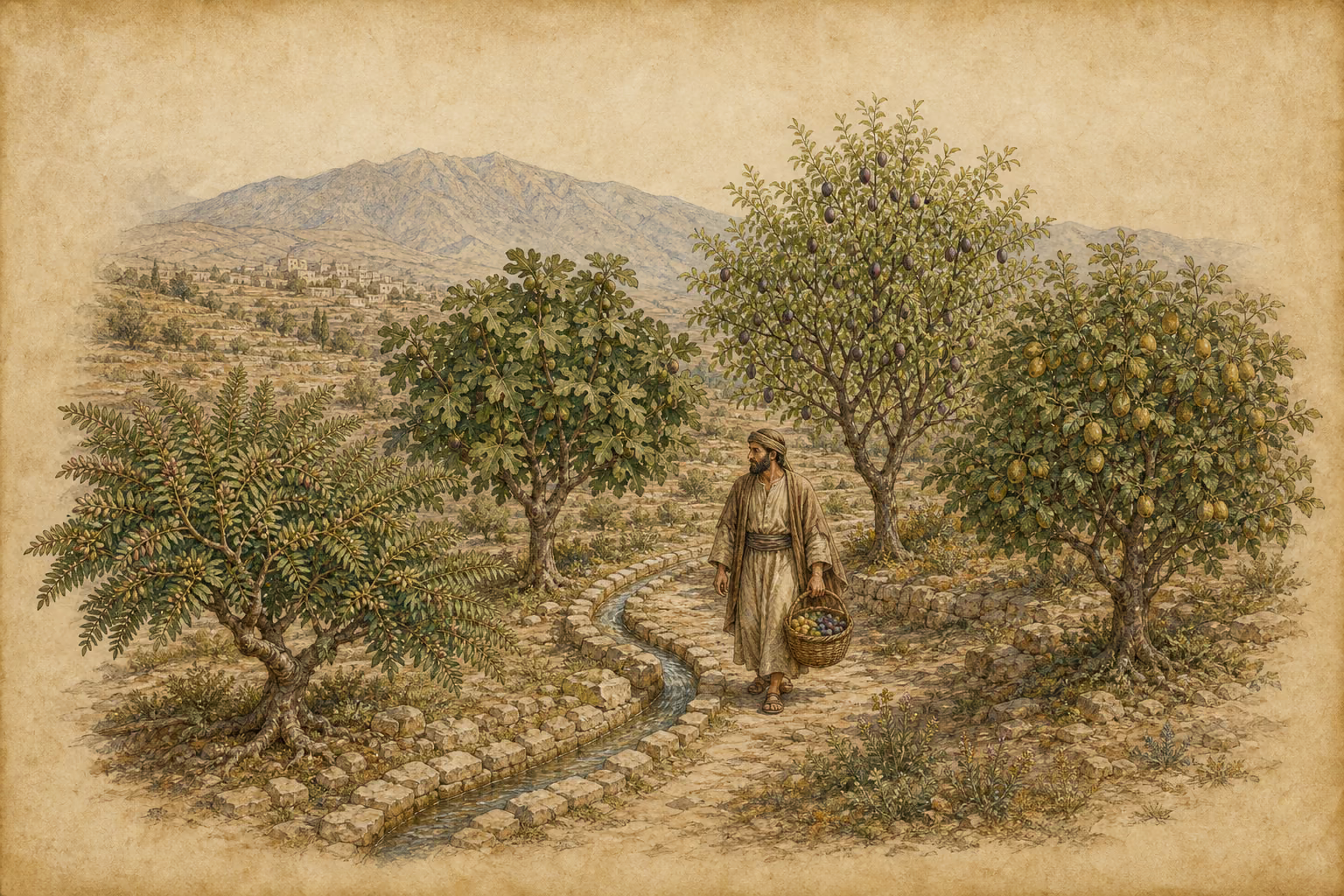
Syria praeter hanc peculiares habet arbores: in nucum genere pistacia nota — prodesse adversus serpentium morsus traduntur et potu et cibo —, in ficorum autem caricas et minores eiusdem generis, quas cottana vocant, item pruna in Damasco monte nata et myxas, utramque iam familiarem Italiae. e myxis in Aegypto et vina fiunt.
Iunipiris similem habet Phoenice cedrum minorem. duo eius genera, Lycia et Phoenicia, differunt folio; nam quae durum, acutum, spinosum habet, oxycedros vocatur, ramosa et nodis infesta altera, odore praestans. fructum ferunt myrti magnitudine, dulcem sapore. et maioris cedri duo genera. quae floret, fructum non fert, fructifera non floret, et in ea antecedentem fructum occupat novus; semen eius cupresso simile. quidam cedrelaten vocant. ex hac resina laudatissima. materiae vero ipsi aeternitas, itaque et simulacra deorum ex ea factitaverunt. cedrinus est Romae in delubro Apollo Sosianus Seleucia advectus. cedro similis in Arcadia est arbor, in Phrygia frutex vocatur cedris.
English · Bostock & Riley 1855–57
In addition to the palm, Syria has several trees that are peculiar to itself. Among the nut-trees there is the pistacia, well known among us. It is said that, taken either in food or drink, the kernel of this nut is a specific against the bite of serpents. Among figs, too, there are those known as “caricæ,” together with some smaller ones of a similar kind, the name of which is “cottana.” There is a plum, too, which grows upon Mount Damascus, as also that known as the “myxa;” these last two are, however, now naturalized in Italy. In Egypt, too, they make a kind of wine from the myxa.
Phœnicia, too, produces a small cedar, which bears a strong resemblance to the juniper. Of this tree there are two varieties; the one found in Lycia, the other in Phœnicia. The difference is in the leaf: the one in which it is hard, sharp, and prickly, being known as the oxycedros, a branchy tree and rugged with knots. The other kind is more esteemed for its powerful odour. The small cedar produces a fruit the size of a grain of myrrh, and of a sweetish taste. There are two kinds of the larger cedar also; the one that blossoms bears no fruit, while, on the other hand, the one that bears fruit has no blossom, and the fruit, as it falls, is being continually replaced by fresh. The seed of this tree is similar to that of the cypress. Some persons give this tree the name of “cedrelates.” The resin produced from it is very highly praised, and the wood of it lasts for ever, for which reason it is that they have long been in the habit of using it for making the statues of the gods. In a temple at Rome there is a statue of Apollo Sosianus in cedar, originally brought from Seleucia. There is a tree similar to the cedar, found also in Arcadia; and there is a shrub that grows in Phrygia, known as the “cedrus.”