LIBER XIII · CAPUT 6
THE TEREBINTH
Latine · Mayhoff 1906
Syria et terebinthum habet. ex iis mascula est sine fructu; feminarum duo genera. alteri fructus rubet lentis magnitudine, alteri pallidus cum vite maturescit, non grandior faba, odore iucundus, tactu resinosus. circa Iden Troadis et in Macedonia brevis arbor haec atque fruticosa, in Damasco Syriae magna. materies ei admodum lenta ac fidelis ad vetustatem, nigri splendoris; flos racemosus olivae modo, sed rubens, folia densa. fert et folliculos emittentes quaedam animalia ceu culices lentoremque resinosum, qui et ex cortice erumpit. et rhus Syriae mascula sterili fert femina, folio ulmi paulo longiore et piloso, foliorum semper inter se contrariis pediculis, gracili brevique ramo. pelles candidae conficiuntur iis. semen lenti simile cum uva rubescit, quod vocatur rhus, medicamentis necessarium.
English · Bostock & Riley 1855–57
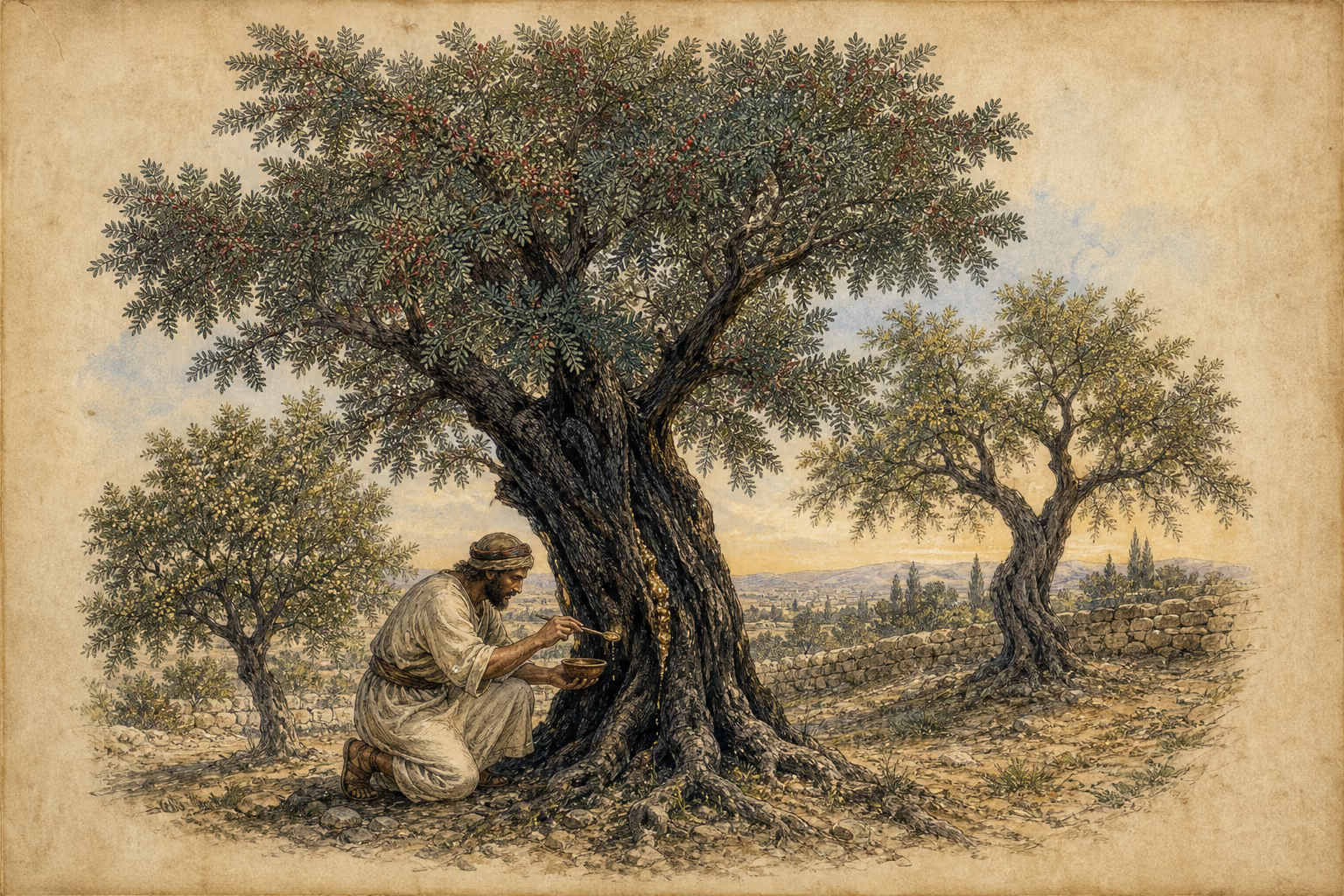
Syria, too, produces the terebinth, the male tree of which bears no fruit, and the female consists of two different varieties; one of these bears a red fruit, the size of a lentil, while the other is pale, and ripens at the same period as the grape. This fruit is not larger than a bean, is of a very agreeable smell, and sticky and resinous to the touch. About Ida in Troas, and in Macedonia, this tree is short and shrubby, but at Damascus, in Syria, it is found of very considerable size. Its wood is remarkably flexible, and continues sound to a very advanced age: it is black and shining. The blossoms appear in clusters, like those of the olive-tree, but are of a red colour; the leaves are dense, and closely packed. It produces follicules, too, from which issue certain insects like gnats, as also a kind of resinous liquid which oozes from the bark.
The male sumach-tree of Syria is productive, but the female is barren. The leaf resembles that of the elm, though it is a little longer, and has a downy surface. The footstalks of the leaves lie always alternately in opposite directions, and the branches are short and slender. This tree is used in the preparation of white skins. The seed, which strongly resembles a lentil in appearance, turns red with the grape; it is known by the name of “ros,” and forms a necessary ingredient in various medicaments.