LIBER XIII · CAPUT 7
THE TREES OF EGYPT. THE FIG-TREE OF ALEXANDRIA
Latine · Mayhoff 1906
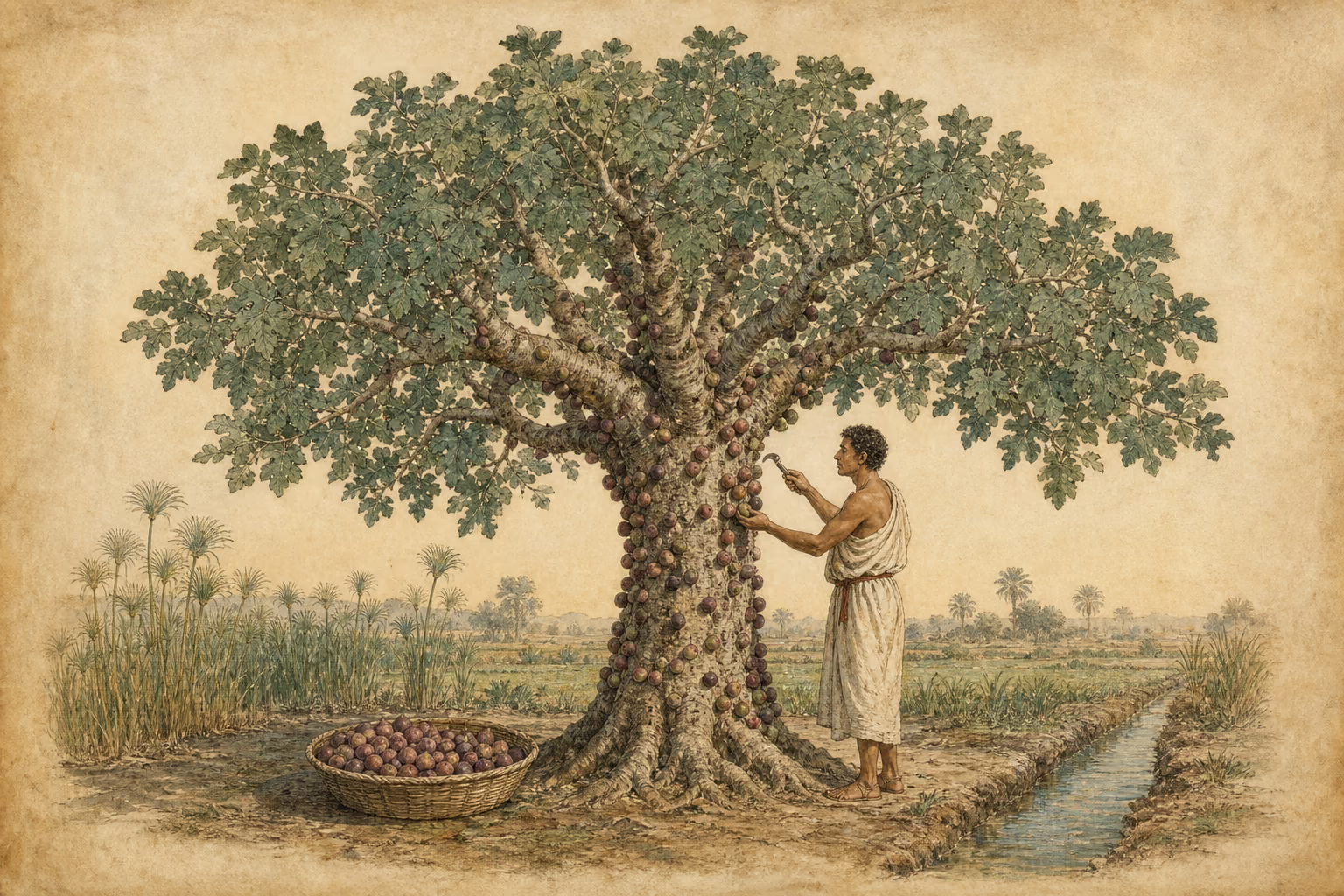
Et Aegypto multa genera quae non aliubi, ante omnia ficus ob id Aegyptia cognominata. arbor moro similis folio, magnitudine, aspectu; pomum fert non ramis, sed caudice ipso, idque ficus est praedulcis sine granis interioribus, perquam fecundo proventu scalpendo tantum ferreis unguibus; aliter non maturescit. sed cum hoc factum est, quarto die demetitur alio subnascente, septeno ita numerosa partu per singulas aestates, multo lacte abundante. subnascitur, etiamsi non scalpatur, fetus quater aestate prioremque expellit inmaturum. maleries proprii generis inter utilissimas. caesa statim stagnis mergitur — hoc est eius siccari — et primo sidit, posted fluitare incipit, certoque eam sugit alienus umor, qui aliam omnem rigat. cum innatare coeperit, tempestivae haBet signum.
Huic similis quadamtenus quae vocatur Cypria ficus in Creta. nam et iPsa caudice ipso fert pomum et ramis, cum in crassitudinem adolevere, sed haec germen emittit sine ullis foliis radici simile. caudex arboris similis populo, folium ulmo. fructus quaternos fundit, totiens et germinat, sed grossus eius non maturescit nisi incisura emisso lacte. suavitas et interiora fici, magnitude sorvi.
English · Bostock & Riley 1855–57
Egypt, too, has many trees which are not to be found elsewhere, and the kind of fig more particularly, which for this reason has been called the Egyptian fig. In leaf this tree resembles the mulberry-tree, as also in size and general appearance. It bears fruit, not upon branches, but upon the trunk itself: the fig is remarkable for its extreme sweetness, and has no seeds in it. This tree is also remarkable for its fruitfulness, which, however, can only be ensured by making incisions in the fruit with hooks of iron, for otherwise it will not come to maturity. But when this has been done, it may be gathered within four days, immediately upon which another shoots up in its place. Hence it is that in the year it produces seven abundant crops, and throughout all the summer there is an abundance of milky juice in the fruit. Even if the incisions are not made, the fruit will shoot afresh four times during the summer, the new fruit supplanting the old, and forcing it off before it has ripened. The wood, which is of a very peculiar nature, is reckoned among the most useful known. When cut down it is immediately plunged into standing water, such being the means employed for drying it. At first it sinks to the bottom, after which it begins to float, and in a certain length of time the additional moisture sucks it dry, which has the effect of penetrating and soaking all other kinds of wood. It is a sign that it is fit for use when it begins to float.
The fig-tree that grows in Crete, and is known there as the Cyprian fig, bears some resemblance to the preceding one; for it bears fruit upon the trunk of the tree, and upon the branches as well, when they have attained a certain degree of thickness. This tree, however, sends forth buds without any leaves, but similar in appearance to a root. The trunk of the tree is similar to that of the poplar, and the leaves to those of the elm. It produces four crops in the year, and germinates the same number of times, but its green fruit will not ripen unless an incision is made in it to let out the milky juice. The sweetness of the fruit and the appearance of the inside are in all respects similar to those of the fig, and in size it is about as large as a sorb-apple.