LIBER XIII · CAPUT 9
THE PERSIAN TREE. IN WHAT TREES THE FRUITS GERMINATE THE ONE BELOW THE OTHER
Latine · Mayhoff 1906
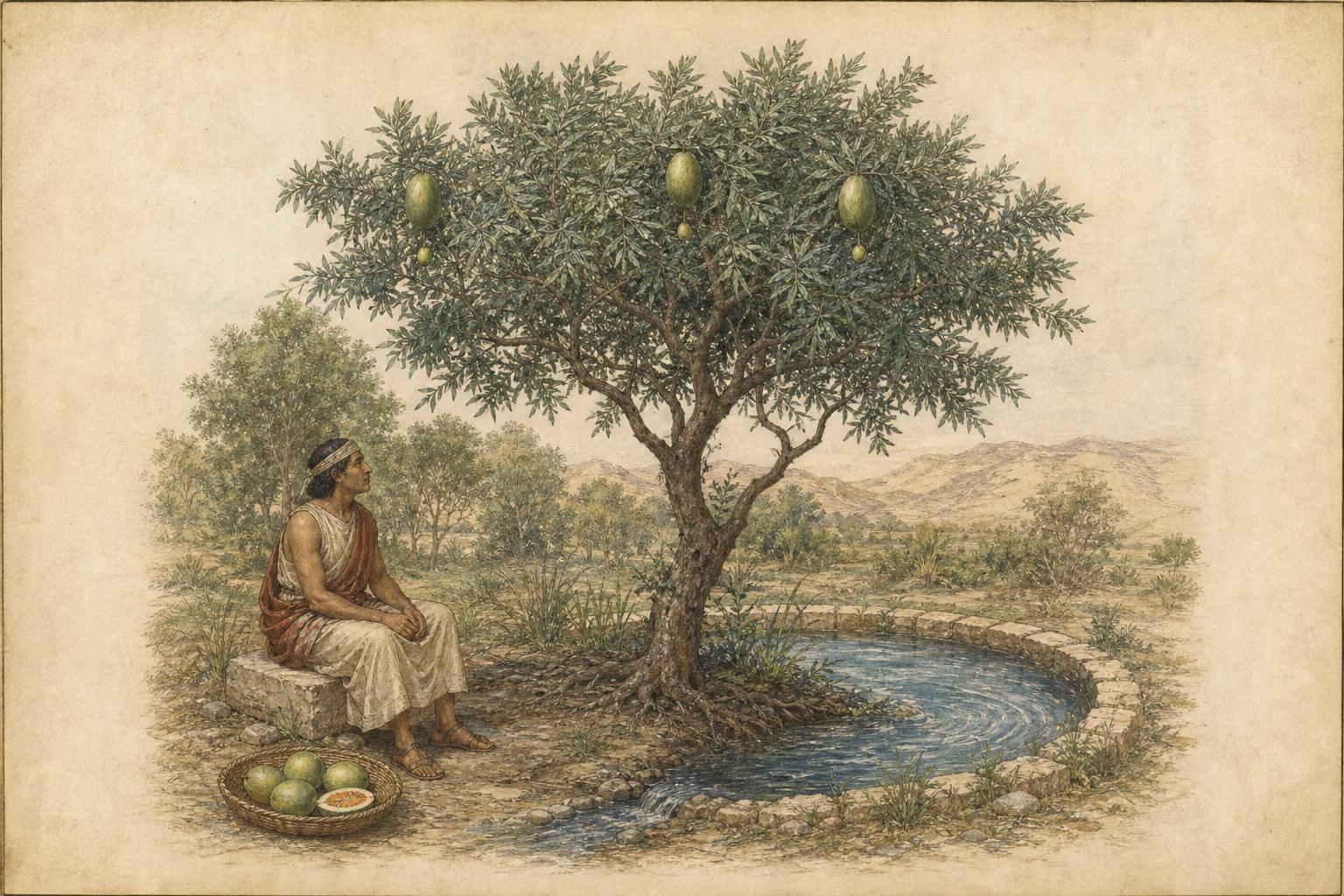
Aegyptus et perseam arborem sui generis habet, similem piro, folia retinentem. fertilitas adsidua eius, subnascente crastino fructu, maturitas etesiarum adflatu. pomum longius piro, inclusum amygdalae putamine et corio, colore herbido, sed ubi nux illi, huic prunum differens brevitate ac mollitia et, quamvis blandiatur praedulcis suavitas, innocuum. materies bonitate, firmitudine, nigritia quoque nihil differens a loto. simulacra et ex ea factitavere. non eadem gratia, quamquam fideli, materiae ex arbore quam balanum appellavimus, magna ex parte contortae; navalis itaque tantum est. at e diverso cuci in magno honore, palmae similis, quando et eius foliis utuntur ad textilia. differt quod in bracchia ramorum spargitur. pomo magnitudo quae manum inpleat, colos fulvus, commendabili suco ex austero dulci. lignum intus grande firmaeque duritiae, ex quo velares detornant anulos. in eo nucleus dulcis, dum recens est; siccatus durescit ad infinitum, ut mandi non possit, nisi sit pluribus diebus maceratus. materies crispioris elegantiae et ob id Persis gratissima. nec minus spina celebratur in eadem gente duntaxat nigra, quoniam incorrupta etiam in aquis durat, ob id utilissima navium costis. candidae facile putrescunt. aculei spinarum et in foliis, semen in siliquis, quo coria perficiunt gallae vice. flos et coronis iucundus et medicamentis utilis. manat et cummis ex ea. sed praecipua utilitas quod caesa anno tertio resurgit. circa Thebas haec, ubi et que???cus et persea et oliva, CCC a Nilo so stadiis, silvestri tractu et suis fontibus riguo.
English · Bostock & Riley 1855–57
Egypt, too, produces another tree of a peculiar description, the Persian tree, similar in appearance to the pear-tree, but retaining its leaves during the winter. This tree produces without intermission, for if the fruit is pulled to-day, fresh fruit will make its appearance to-morrow: the time for ripening is while the Etesian winds prevail. The fruit of this tree is more oblong than a pear, but is enclosed in a shell and a rind of a grassy colour, like the almond; but what is found within, instead of being a nut as in the almond, is a plum, differing from the almond in being shorter and quite soft. This fruit, although particularly inviting for its luscious sweetness, is productive of no injurious effects. The wood, for its goodness, solidity, and blackness, is in no respect inferior to that of the lotus: people have been in the habit of making statues of it. The wood of the tree which we have mentioned as the “balanus,” although very durable, is not so highly esteemed as this, as it is knotted and twisted in the greater part: hence it is only employed for the purposes of ship-building.
On the other hand, the wood of the cucus is held in very high esteem. It is similar in nature to the palm, as its leaves are similarly used for the purposes of texture: it differs from it, however, in spreading out its arms in large branches. The fruit, which is of a size large enough to fill the hand, is of a tawny colour, and recommends itself by its juice, which is a mixture of sweet and rough. The seed in the inside is large and of remarkable hardness, and turners use it for making curtain rings. The kernel is sweet, while fresh; but when dried it becomes hard to a most remarkable degree, so much so, that it can only be eaten after being soaked in water for several days. The wood is beautifully mottled with circling veins, for which reason it is particularly esteemed among the Persians.
No less esteemed, too, in the same country, is a certain kind of thorn, though only the black variety, its wood being imperishable, in water even, a quality which renders it particularly valuable for making the sides of ships: on the other hand, the white kinds will rot very rapidly. It has sharp, prickly thorns on the leaves even, and bears its seeds in pods; they are employed for the same purposes as galls in the preparation of leather. The flower, too, has a pretty effect when made into garlands, and is extremely useful in medicinal preparations. A gum, also, distils from this tree; but the principal merit that it possesses is, that when it is cut down, it will grow again within three years. It grows in the vicinity of Thebes, where we also find the quercus, the Persian tree, and the olive: the spot that produces it is a piece of woodland, distant three hundred stadia from the Nile, and watered by springs of its own.