LIBER XIV · CAPUT 3
NINETY-ONE VARIETIES OF THE VINE
Latine · Mayhoff 1906
Et hactenus publica sunt genera, cetera regionum locorumque aut ex iis inter se insitis mixta: si quidem Tuscis peculiaris est Tudernis, atque etiam nomen iis Florentiae sopina, Arretio talpona et etesiaca et conseminia. talpona nigra candidum facit mustum. etesiaca fallax: quo plus tulit, hoc laudabilius fundit, mirumque, fecunditate pariter et bonitate cessat. conseminia nigra, vino minime durante, uva maxime, post XV dies quam ulla alia metitur, fertilis, set cibaria. buius folia sicuti labruscae prius quam decidant sanguineo colore mutantur. evenit hoc et quibusdam aliis, pessimi geneeis argumento. itriola Vmbriae Mevanatique et Piceno agro peculiaris est, Amiternino pumula. isdem bananica fallax est, adamant tamen eam. municipii suam Pompei nomine appellant, quamvis Clusinis copiosiorem; municipii et Tiburtes appellavere, quamvis oleagineam nuper invenerint a similitudine olivae. novissima haec uvarum ad hoc tempus reperta est. vinaciolam soli noverunt Sabini, calventinam Gaurani. scio e Falerno agro tralatas vocari Falernas, celerrime ubique degenerantes. nec non Surrentinum genus fecere aliqui praedulci uva. capnios et et buconiates et tharrupia in Thurinis collibus non ante demetuntur quam gelaverit. Pariana gaudent Pisae, Mutina Perusinia nigro acino, intra quadriennium albescente vino. mirum ibi cum sole circumagi uvam quae ob id streptis vocatur, et in Italia Gallicam placere, trans Alpis vero Picenam. dixit Vergilius Thasias et Mareotidas et Lageas compluresque externas, quae non reperiuntur in Italia.
Sed sunt etiamnum insignes uva, non vino, ambrosia e duracinis, sine ullis vasis in vite servabilis — tanta est contra frigora, aestus tempestatesque firmitas, nec [orthampelos ] indiget arbore aut palis, ipsa se sustinens, non item dactylides digitali gracilitate —, columbinae e racemosis, et magis purpureae, cognomine bimammiae, quando non racemos, sed uvas alias gerunt, item tripedanea, cui nomen a mensura est, item scripula passo acino et Raetica in maritimis Alpibus appellata, dissimilis laudatae illi. namque haec brevis, conferta acino, degener vino, sed cute omnium tenuissima, nucleo (quod chium vocant) uno ac minimo, acinum praegrandem unum alterumve habens. est et nigra Aminnea, cui Syriacae nomen inponunt, item Hispana ignobilium probatissima.
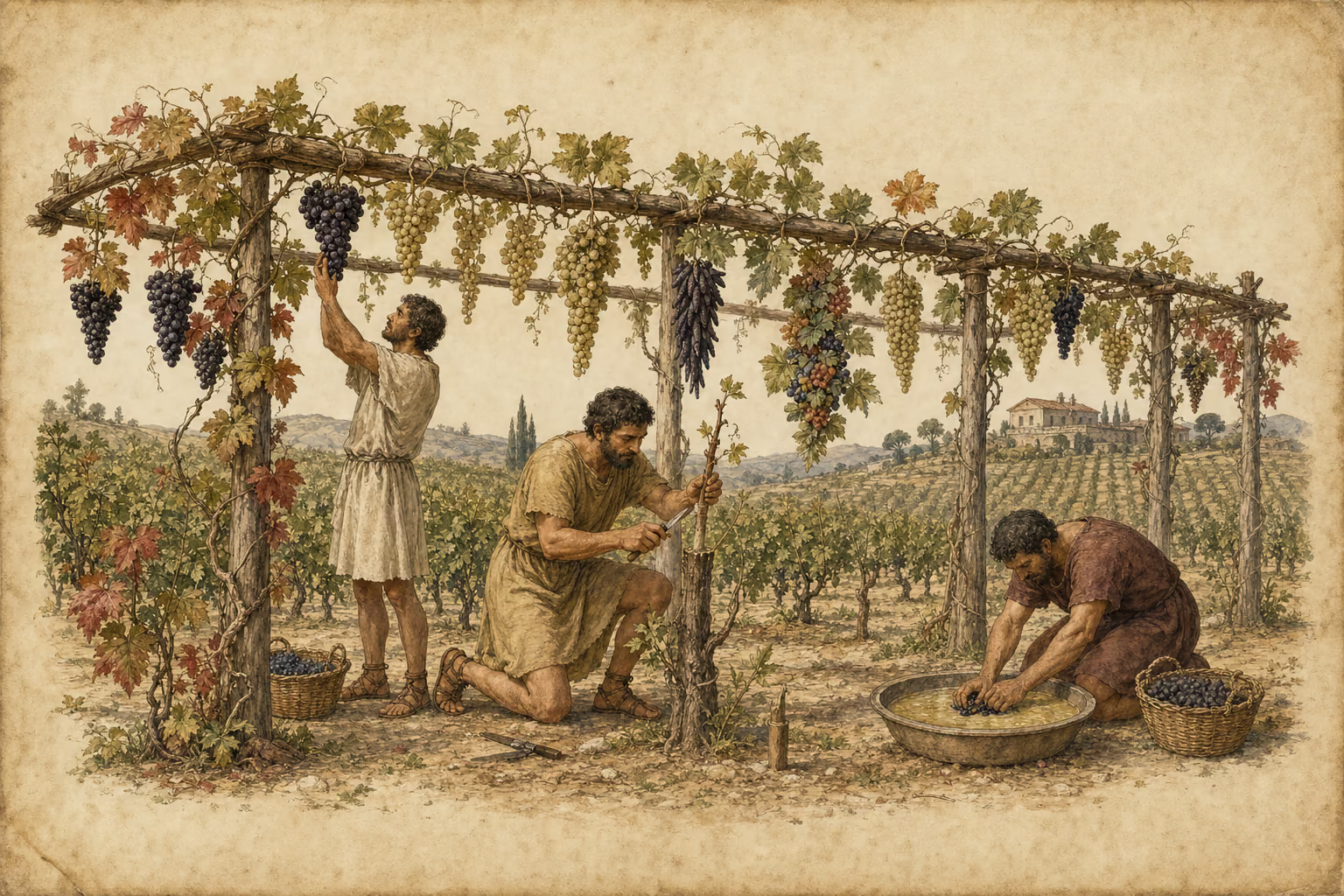
In pergulis vero seruntur escariae appellatae e duracinis, albae, nigrae, et bumasti totidem coloribus, ac nondum dictae Aegia et Rhodia et uncialis, velut a pondere acini, item picina, omnium nigerrima, et coronario naturae lusu stephanitis, acinos foliis intercursantibus, et quae forenses vocantur, celeres proventu, vendibiles aspectu, portatu faciles. contra damnantur etiam visu cinerea et rabuscula et asinusca, minus tamen caudas vulpium imitata alopecis. Alexandrina appellatur vitis circa Phalacram brevis, ramis cubitalibus, acino nigro fabae magnitudine, nucleo molli et minimo, obliquis racemis praedulcibus, folio parvo et rotundo, sine divisuris. septem his annis in Narbonensis provinciae AlbaHelvia inventa est vitis uno die deflorescens, ob id tutissima; carbunicam vocant, quam nunc tota provincia conserit.
English · Bostock & Riley 1855–57
The varieties that have been mentioned thus far are those that are generally known; the others belong to peculiar countries or individual localities, or else are of a mixed nature, the produce of grafting. Thus the vine known as the “Tudernis,” is peculiar to the districts of Etruria, and so too is the vine that bears the name of “Florentia.” At Arretium the talpona, the etesiaca, and the consemina, are particularly excellent. The talpona, which is a black grape, produces a pale, straw-coloured must: the etesiaca is apt to deceive; the more the wine it produces the better the quality, but it is a remarkable fact, that just as it has reached that point its fecundity ceases altogether. The consemina bears a black grape, but its wine will not keep, though the grape itself is a most excellent keeper; it is gathered fifteen days later than any other kind of grape: this vine is very fruitful, but its grape is only good for eating. The leaves of this tree, like those of the wild vine, turn the colour of blood just before the fall: the same is the case also with some other varieties, but it is a proof that they are of very inferior quality.
The irtiola is a vine peculiar to Umbria and the territories of Mevania and Picenum, while the pumula belongs to Amiternum. In the same districts we find the vine called bannanica, which is very deceptive, though the people are remarkably fond of its fruit. The municipal town of Pompeii has given its name to the Pompeia, although it is to be found in greater abundance in the territory of Clusium. The Tiburina, also, is so called from the municipal town of Tibûr, although it is in this district that they have lately discovered the grape known as the “oleaginea,” from its strong resemblance to an olive: this being the very last kind of grape that has been introduced. The Sabines and the Laurentes are the only people acquainted with the vinaciola. As to the vines of Mount Gaurus, I am aware that, as they have been transplanted from the Falernian territory, they bear the name of “Falernian;” but it is a fact that the Falernian vine, when transplanted, rapidly degenerates. Some persons, too, have made out a Tarentine variety, with a grape of remarkable sweetness: the grapes of the “capnios,” the “bucconiatis,” and the “tarrupia,” grow on the hills of Thurii, and are never gathered till after the frost commences. Pisæ enjoys the Parian vine, and Mutina the prusinian, with a black grape, the wine of which turns pale within four years. It is a very remarkable thing, but there is a grape here that turns round with the sun, in its diurnal motion, a circumstance from which it has received the name of “streptos.” In Italy, the Gallic vine is a great favourite, while beyond the Alps that of Picenum is preferred. Virgil has made mention of the Thasian vine, the Mareotis, the lagea, and several other foreign varieties, which are not to be found in Italy.
There are some vines, again, that are remarkable, not for their wine, but for their grapes, such, for instance, as the ambrosia, one of the “duracinus,” kind, a grape which requires no potting, but will keep perfectly well if left on the vine, so remarkable is the strength with which it is endowed for withstanding the effects of cold, heat, and stormy weather. The “orthampelos,” too, is a vine that requires neither tree nor stay, as it is well able to sustain its own weight. This, however, is not the case with the “dactylis,” the stem of which is no thicker than the finger. The “columbina” is one of those with the finest clusters, and still more so is the purple “bimammia;” it does not bear in clusters, but only secondary bunches. There is the tripedanea, too, a name which it owes to the length of its clusters, and the scirpula, with its shrivelled berry; the Rhætica, too, so called in the Maritime Alps, though very different from the grape of that name which is so highly esteemed, and of which we have previously spoken; for in this variety the clusters are small, the grapes lie closely packed, and it produces but a poor wine. It has, however, the thinnest skin of all the grapes, and a single stone, of very diminutive size, which is known as the “Chian;” one or two of the grapes on the cluster are remarkably large. There is also the black Aminean, to which the name of Syriaca is given: the Spanish vine, too, the very best of all those of inferior quality.
The grapes that are known as escariæ, are grown on trellises. Of the duracinus kind, there are those known as the white and the black varieties; the bumastus, too, is similarly distinguished in colour. Among the vines too, that have not as yet been mentioned, there are the Ægian and the Rhodian kinds, as also the uncialis, so called, it would seem, from its grape being an ounce in weight. There is the picina too, the blackest grape known, and the stephanitis, the clusters of which Nature, in a sportive mood, has arranged in the form of a garland, the leaves being interspersed among the grapes; there are the grapes, too, known as the “forenses,” and which quickly come to maturity, recommend themselves to the buyer by their good looks, and are easily carried from place to place.
On the other hand, those known as the “cinerea” are condemned by their very looks, and so are the rabuscula and the asinusca; the produce of the alopecis, which resembles in colour a fox’s tail, is held in less disesteem. The Alexandrina is the name of a vine that grows in the vicinity of Phalacra: it is of stunted growth, and has branches a cubit in length; the grape is black, about the size of a bean, with a berry that is soft, and remarkably small: the clusters hang in a slanting direction, and are remarkably sweet; the leaves are small and round, without any division. Within the last seven years there has been introduced at Alba Helvia, in the province of Gallia Narbonensis, a vine which blossoms but a single day, and is consequently proof against all accidents: the name given to it is “Narbonica,” and it is now planted throughout the whole of that province.