LIBER XIV · CAPUT 4
REMARKABLE FACTS CONNECTED WITH THE CULTURE OF THE VINE
Latine · Mayhoff 1906
Catonum ille primus, triumpho et censura super cetera insignis, magis tamen etiamnum claritate litterarum praeceptisque omnium rerum expetendarum datis generi Romano, inter prima vero agrum colendi, ille aevi confessione optimus ac sine aemulo agricola, pauca attigit vitium genera, quarundam ex iis iam etiam nominibus abolitis. separatim toto tractatu sententia eius indicanda est, ut in omni genere noscamus quae fuerint celeberrima anno DC urbis, circa captas Carthaginem ac Corinthum, cum supremum is diem obiit, et quantum postea CCXXX annis vita profecerit. ergo dc vitibus uvisque ita prodidit: Qui locus vino optimus dicetur esse et ostentus solibus, Aminnium minusculum et geminum eugenium, helvium minusculum conserito. qui locus crassior aut nebulosior, Aminnium maius aut Murgentinum, Apicium, Lucanum serito. ceterae vites miscellae maxime in quemvis agrum conveniunt. in olla vinaceis conduntur Aminnium minusculum et maius et Apicium, eadem in sapa et musto, in lora recte conduntur. quas suspendas duracinas, Aminnias maiores, vel ad fabrum ferrarium pro passis hae recte servantur. nec sunt vetustiora de illa re Latinae linguae praecepta. tam prope ab origine rerum sumus. Aminneam proxime dictam Varro Scantianam vocat.
In nostra aetate pauca exempla consummatae huius artis fuere, verum eo minus omittenda, ut noscantur etiam praemia, quae in omni re maxime spectantur. summam ergo adeptus est gloriam Acilius Sthenelus e plebe libertina LX iugerum non amplius vineis excultis in Nomentano agro atque CCCC nummum venumdatis. magna fama et Vetuleno Aegialo, perinde libertino, fuit in Campania rure Liternino, maiorque etiam favore hominum, quoniam ipsum Africani colebat exilium; sed maxima, eiusdem Stheneli opera, Remmio Palaemoni, alias grammatica arte celebri, in hisce viginti annis mercato rusDC nummum in eodem Nomentano decimi lapidis ab urbe dverticulo. est autem usquequaque nota vilitas mercis per omnia suburbana, ibi tamen maxime, quoniam et neglecta indiligentia praedia paraverat ac ne in pessimis quidem elegantioris soli. haec adgressus excolere non virtute animi, sed vanitate primo, quae nota mire in illo fuit, pastinatis de integro vineis cura Stheneli, dum agricolam imitatur, ad vix credibile miraculum perduxit, intra octavum annum CCCC nummum emptori addicta pendente vindemia. cucurritque non nemo ad spectandas uvarum in iis vineis strues, litteris eius altioribus contra id pigra vicinitate sibi patrocinante, novissime Annaeo Seneca, principe tum eruditorum ac potentia, quae postremo nimia fruit super ipsum, minime utique miratore inanium, tanto praedii huius amore capto, ut non puderet inviso alias et ostentaturo tradere palmam eam, emptis quadriplicato vineis illis intra decimum fere curae annum. digna opera quae in Caecubis Setinisque agris proficeret, quando et postea saepenumero septenos culleos singula iugera, hoc est amphoras centenas quadragenas, musti dedere! ac ne quis victam in hoc antiquitatem arbitretur, idem Cato denos culleos redire ex iugeribus scripsit, efficacibus exemplis non maria plus temerata conferre mercatori, non in Rubrum litus Indicumve merces petitas quam sedulum ruris larem.
Vino antiquissimo claritas Maroneo in Thraciae maritima parte genito, ut auctor est Homerus. neque enim fabulosa aut de origine eius varie prodita consectamur, praeterquam Aristaeum primum omnium in eadem gente mel miscuisse vino, suavitate praecipua utriusque naturae sponte provenientis. Maroneum vicies tanto addito aquae miscendum Homerus prodidit. durat etiam nunc vis in eadem terra generi rigorque indomitus, quippe cum Mucianus ter consul ex iis qui nuperrime prodidere sextarios singulos octonis aquae misceri compererit praesens in eo tractu, esse autem colore nigrum, odoratum, vetustatepinguescere. et Pramnio, quod idem Homerus celebravit, etiam nunc honos durat. nascitur Zmyrnae regione iuxta delubrum Matris deum. in reliquis claritas generi non fuit alicui: anno fuit omnium generum bonitate L. Opimio cos., cum C. Gracchus tribunus plebem seditionibus agitansest interemptus. ea caeli temperies fulsit (cocturam vocant) solis opere natali urbis DCXXXIII, durantque adhuc vina ea ducentis fere annis, iam in speciem redacta mellis asperi — etenim haec natura vinis in vetustate est —, nec potari per se queant pervincive aqua, usque in amaritudinem carie indomita; sed ceteris vinis commendandis minima aliqua mixtura medicamenta sunt. quod ut eius temporis aestimatione in singulas amphoras centeni nummi statuantur, ex his tantum usura multiplicata semissibus, quae civilis ac modica est, in C. Caesaris Germanici fili principatu anno CLX singulas uncias vini constitisse, nobili exemplo docuimus referentes vitam Pomponii Secundi vatis cenanmque quam principi illi dedit. tantum pecuniarum detinent apothecae! nec alia res maius incrementum sentit ad vicensimum annum maiusve ab eo dispendium, non proficiente pretio; raro quippe adhuc fuere, nec nisi in nepotatu, singulis testis milia nummum. Viennenses soli picata sua, quorum genera diximus pluris permutare, sed inter sese amore patrio, creduntur; idque vinum frigidius reliquis existimatur in frigido potu.
English · Bostock & Riley 1855–57
The elder Cato, who was rendered more particularly illustrious by his triumph and the censorship, and even more so by his literary fame, and the precepts which he has given to the Roman people upon every subject of utility, and the proper methods of cultivation in particular; a man who, by the universal confession, was the first husbandman of his age and without a rival—has mentioned a few varieties only of the vine, the very names of some of which are by this utterly forgotten. His statement on this subject deserves our separate consideration, and requires to be quoted at length, in order that we may make ourselves acquainted with the different varieties of this tree that were held in the highest esteem in the year of the City of Rome 600, about the time of the capture of Carthage and Corinth, the period of his death: it will show too, what great advances civilization has made in the last two hundred and thirty years. The following are the remarks which he has made on the subject of the vine and the grape.
“Where the site is considered to be most favourable to the growth of the vine, and exposed to the warmth of the sun, you will do well to plant the small Aminean, as well as the two eugenia, and the smaller helvia. On the other hand, where the soil is of a denser nature or more exposed to fogs, the greater Aminean should be planted, or else the Murgentine, or the Apician of Lucania. The other varieties of the grape are, for the most part, adapted to any kind of soil; they are best preserved in a lora. The best for keeping by hanging, are the duracinus kind, the greater Aminean, and the Scantian; these, too, will make excellent raisins for keeping if dried at the blacksmith’s forge.” There are no precepts in the Latin language on this subject more ancient than these, so near are we to the very commencement of all our practical knowledge! The Aminean grape, of which mention has been made above, is by Varro called the “Scantian.”
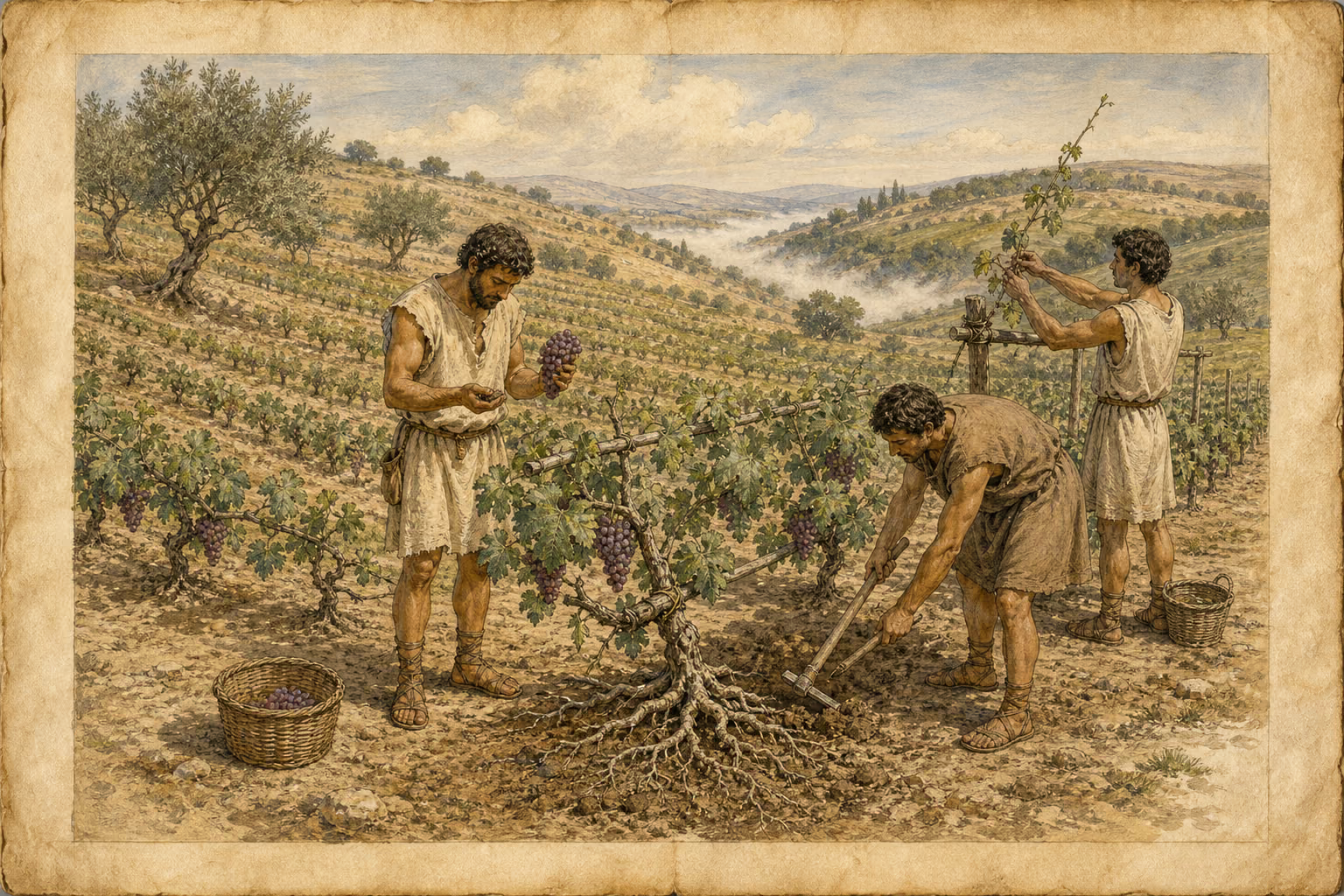
In our own times we have but few instances of any consummate skill that has been manifested in reference to this subject: the less excuse then should we have for omitting any particular which may tend to throw a light upon the profits that may be derived from the culture of the vine, a point which on all occasions is regarded as one of primary importance. Acilius Sthenelus, a man of plebeian rank, and the son of a freedman, acquired very considerable repute from the cultivation of a vineyard in the territory of Nomentum, not more than sixty jugera in extent, and which he finally sold for four hundred thousand sesterces. Vetulenus Ægialus too, a freedman as well, acquired very considerable note in the district of Liternum, in Campania, and, indeed, received a more extensive share of the public favour, from the fact that he cultivated the spot which had been the place of exile of Scipio Africanus. The greatest celebrity of all, however, was that which, by the agency of the same Sthenelus, was accorded to Rhemmius Palæmon, who was also equally famous as a learned grammarian. This person bought, some twenty years ago, an estate at the price of six hundred thousand sesterces in the same district of Nomentum, about ten miles distant from the City of Rome. The low price of property in the suburbs, on every side of the City, is well known; but in that quarter in particular, it had declined to a most remarkable extent; for the estate which he purchased had become deteriorated by long-continued neglect, in addition to which it was situate in the very worst part of a by no means favourite locality. Such was the nature of the property of which he thus undertook the cultivation, not, indeed, with any commendable views or intentions at first, but merely in that spirit of vanity for which he was notorious in so remarkable a degree. The vineyards were all duly dressed afresh, and hoed, under the superintendence of Sthenelus; the result of which was that Palæmon, while thus playing the husbandman, brought this estate to such an almost incredible pitch of perfection, that at the end of eight years the vintage, as it hung on the trees, was knocked down to a purchaser for the sum of four hundred thousand sesterces; while all the world was running to behold the heaps upon heaps of grapes to be seen in these vineyards. The neighbours, by way of finding some excuse for their own indolence, gave all the credit of this remarkable success to Palæmon’s profound erudition; and at last Annæus Seneca, who both held the highest rank in the learned world, and an amount of power and influence which at last proved too much for him—this same Seneca, who was far from being an admirer of frivolity, was seized with such vast admiration of this estate, as not to feel ashamed at conceding this victory to a man who was otherwise the object of his hatred, and who would be sure to make the very most of it, by giving him four times the original cost for those very vineyards, and that within ten years from the time that he had taken them under his management. This was an example of good husbandry worthy to be put in practice upon the lands of Cæcuba and of Setia; for since then these same lands have many a time produced as much as seven culei to the jugerum, or in other words, one hundred and forty amphoræ of must. That no one, however, may entertain the belief that ancient times were surpassed on this occasion, I would remark that the same Cato has stated in his writings, that the proper return was seven culei to the jugerum: all of them so many instances only tending most convincingly to prove that the sea, which in our rashness we trespass upon, does not make a more bounteous return to the merchant, no, not even the merchandize that we seek on the shores of the Red and the Indian Seas, than does a well-tilled homestead to the agriculturist.
The wine of Maronea, on the coast of Thrace, appears to have been the most celebrated in ancient times, as we learn from the writings of Homer. I dismiss, however, all the fabulous stories and various traditions which we find relative to its origin, except, indeed, the one which states that Aristæus, a native of the same country, was the first person that mixed honey with wine, natural productions, both of them, of the highest degree of excellence. Homer has stated that the Maronean wine was mixed with water in the proportion of twenty measures of water to one of wine. The wine that is still produced in the same district retains all its former strength, and a degree of vigour that is quite insuperable. Mucianus, who thrice held the consulship, and one of our most recent authors, when in that part of the world was witness himself to the fact, that with one sextarius of this wine it was the custom to mix no less than eighty sextarii of water: he states, also, that this wine is black, has a strong bouquet, and is all the richer for being old.
The Pramnian wine, too, which Homer has also similarly eulogized, still retains its ancient fame: it is grown in the territory of Smyrna, in the vicinity of the shrine of the Mother of the Gods.
Among the other wines now known, we do not find any that enjoyed a high reputation in ancient times. In the year of the consulship of L. Opimius, when C. Gracchus, the tribune of the people, engaging in sedition, was slain, the growth of every wine was of the very highest quality. In that year, the weather was remarkable for its sereneness, and the ripening of the grape, the “coctura,” as they call it, was fully effected by the heat of the sun. This was in the year of the City 633. There are wines still preserved of this year’s growth, nearly two hundred years ago; they have assumed the consistency of honey, with a rough taste; for such, in fact, is the nature of wines, that, when extremely old, it is impossible to drink them in a pure state; and they require to be mixed with water, as long keeping renders them intolerably bitter. A very small quantity of the Opimian wine, mixed with them, will suffice for the seasoning of other wines. Let us suppose, according to the estimated value of these wines in those days, that the original price of them was one hundred sesterces per amphora: if we add to this six per cent. per annum, a legal and moderate interest, we shall then be able to ascertain what was the exact price of the twelfth part of an amphora at the beginning of the reign of Caius Cæsar, the son of Germanicus, one hundred and sixty years after that consulship. In relation to this fact, we have a remarkable instance, when we call to mind the life of Pomponius Secundus, the poet, and the banquet which he gave to that prince —so enormous is the capital that lies buried in our cellars of wine! Indeed, there is no one thing, the value of which more sensibly increases up to the twentieth year, or which decreases with greater rapidity after that period, supposing that the value of it is not by that time greatly enhanced. Very rarely, indeed, up to the present day, has it been known for a single piece of wine to cost a thousand sesterces, except, indeed, when such a sum may have been paid in a fit of extravagance and debauchery. The people of Vienne, it is said, are the only ones who have set a higher price than this upon their “picata,” wines, the various kinds of which we have already mentioned; and this, it is thought, they only do, vying with each other, and influenced by a sort of national self-esteem. This wine, drunk in a cool state, is generally thought to be of a colder temperature than any other.