LIBER XV · CAPUT 14
THIRTY DIFFERENT KINDS OF POMES. AT WHAT PERIOD FOREIGN FRUITS WERE FIRST INTRODUCED INTO ITALY, AND WHENCE
Latine · Mayhoff 1906
Malorum plura sunt genera. de citreis cum sua arbore diximus, Medica autem Graeci vocant patriae nomine. aeque peregrina sunt zizipha et tubures, quae et ipsa non pridem venere in Italiam, haec ex Africa, illa ex Syria. Sex. Papinius, quem consulem vidimus, primus utraque attulit Divi Augusti novissimis temporibus in castris sata, bacis similiora quam malis, sed aggeribus praecipue decora, quoniam et in tecta iam silvae scandunt. tuburum duo genera: candidum et a colore syricum dictum. paene peregrina sunt in uno Italiae agro Veroniensi nascentia quae lanata appellantur; lanugo ea obducit, strutheis quidem Persicisque plurima, iis tamen peculiare nomen dedit, nulla alia commendatione insignibus.
Reliqua cur pigeat nominatim indicare, cum conditoribus suis aeternam propagaverint memoriam, tamquam ob egregium aliquod in vita factum? nisi fallor, apparebit ex eo ingenium inserendi nihilque tam parvum esse quod non gloriam parere possit. ergo habent originem a Matio Cestioque et Mallio, item Scaudio; quibus cotoneo insito ab Appio e Claudia gente Appiana sunt cognominata. odor est iis cotoneorum, magnitude quae Scaudianis, color rubens. ac ne quis sic ambitum valuisse claritatis e familia putet, sunt et Sceptiana ab inventore libertino, insignia rotunditate. Cato adicit Quiriniana et quae tradit in doliis condi Scantiana. omnium autem nuperrime adoptata sunt parva gratissimi saporis, quae Petisia nominantur. patrias nobilitavere Amerina et Graecula. cetera e causis traxere nomen: germanitatis cohaerentia gemella, numquam singula in fetu, colore syrica, cognatione melapia, mustea a celeritate mitescendi, quae nunc melimela dicuntur a sapore melleo, orbiculata a figura orbis in rotunditatem circumacti 5 —haec in Epiro primum provenisse argumento sunt Graeci, qui Epirotica vocant —, mammarum effigie orthomastia, condicione castrati seminis quae spadonia appellant Belgae. melofoliis folium unum, aliquando et geminum, erumpit e latere medio. celerrime in rugas marcescunt pannucea. stolide tument pulmonea. est quibusdam sanguineus colos origine ex mori insitu tracta. cunctis vero quae fuere a sole partes rubent. sunt et parva gratia saporis atque etiam acutiora odore silvestria. peculiare inprobaeiis acerbitatis convicium et vis tanta, ut aciem gladii praestringat. dat aliis farina vilissimis nomen, quamquam primis adventu decerpique properantibus.
English · Bostock & Riley 1855–57
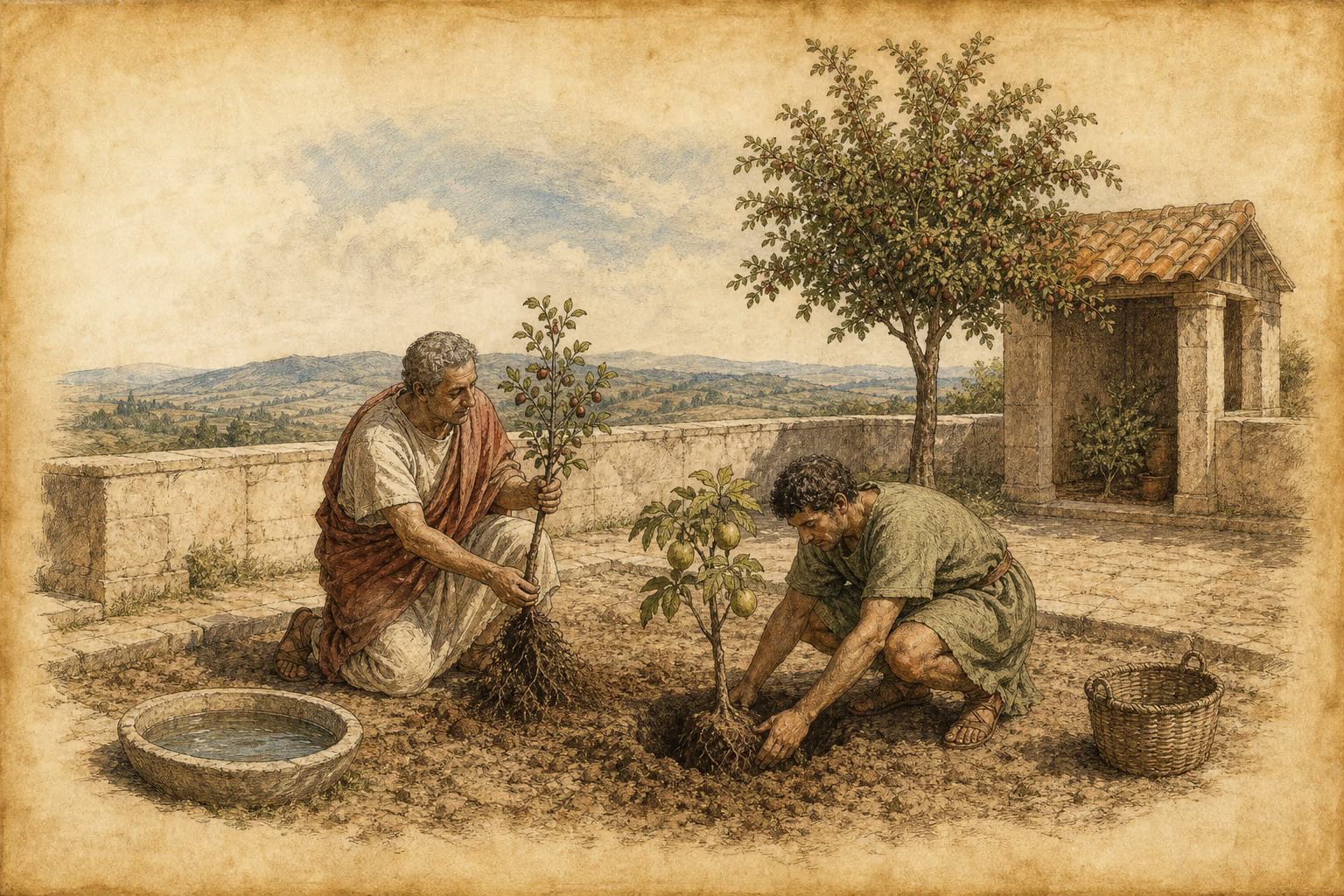
There are numerous varieties of pomes. Of the citron we have already made mention when describing its tree; the Greeks gave it the name of “Medica,” from its native country. The jujube -tree and the tuber are equally exotics; indeed, they have, both of them, been introduced only of late years into Italy; the latter from Africa, the former from Syria. Sextus Papinius, whom we have seen consul, introduced them both in the latter years of the reign of Augustus, produced from slips which he had grown within his camp. The fruit of the jujube more nearly resembles a berry than an apple: the tree sets off a terrace remarkably well, and it is not uncommon to see whole woods of it climbing up to the very roofs of the houses.
Of the tuber there are two varieties; the white, and the one called “syricum,” from its colour. Those fruits, too, may be almost pronounced exotic which grow nowhere in Italy but in the territory of Verona, and are known as the wool-fruit. They are covered with a woolly down; this is found, it is true, to a very considerable extent, on both the strutheum variety of quince and the peach, but still it has given its name to this particular fruit, which is recommended to us by no other remarkable quality.
Why should I hesitate to make some mention, too, of other varieties by name, seeing that they have conferred everlasting remembrance on those who were the first to introduce them, as having rendered some service to their fellow-men? Unless I am very much mistaken, an enumeration of them will tend to throw some light upon the ingenuity that is displayed in the art of grafting, and it will be the more easily understood that there is nothing so trifling in itself from which a certain amount of celebrity cannot be ensured. Hence it is that we have fruits which derive their names from Matius, Cestius, Mallius, and Scandius. Appius, too, a member of the Claudian family, grafted the quince on the Scandian fruit, in consequence of which the produce is known as the Appian. This fruit has the smell of the quince, and is of the same size as the Scandian apple, and of a ruddy colour. Let no one, however, imagine that this name was merely given in a spirit of flattery to an illustrious family, for there is an apple known as the Sceptian, which owes its name to the son of a freedman, who was the first to introduce it: it is remarkable for the roundness of its shape. To those already mentioned, Cato adds the Quirinian and the Scantian varieties, which last, he says, keep remarkably well in large vessels. The latest kind of all, however, that has been introduced is the small apple known as the Petisian, remarkable for its delightful flavour: the Amerinian apple, too, and the little Greek have conferred renown on their respective countries.
The remaining varieties have received their name from various circumstances—the apples known as the “gemella” are always found hanging in pairs upon one stalk, like twins, and never growing singly. That known as the “syricum” is so called from its colour, while the “melapium” has its name from its strong resemblance to the pear. The “musteum” was so called from the rapidity with which it ripens; it is the melimelum of the present day, which derives its appellation from its flavour, being like that of honey. The “orbiculatum,” again, is so called from its shape, which is exactly spherical—the circumstance of the Greeks having called it the “epiroticum” proves that it came originally from Epirus. The orthomastium has that peculiar appellation from its resemblance to a teat; and the “spadonium” of the Belgæ is so nicknamed from the total absence of pips. The melofolium has one leaf, and occasionally two, shooting from the middle of the fruit. That known as the “pannuceum” shrivels with the greatest rapidity; while the “pulmoneum” has a lumpish, swollen appearance.
Some apples are just the colour of blood, owing to an original graft of the mulberry; but they are all of them red on the side which is turned towards the sun. There are some small wild apples also, remarkable for their fine flavour and the peculiar pungency of their smell. Some, again, are so remarkably sour, that they are held in disesteem; indeed their acidity is so extreme, that it will even take the edge from off a knife. The worst apples of all are those which from their mealiness have received the name of “farinacea;” they are the first, however, to ripen, and ought to be gathered as soon as possible.