LIBER XVI · CAPUT 31
THE BARK OF TREES
Latine · Mayhoff 1906
Cortex aliis tenuis, ut lauro, tiliae, aliis crassus, ut robori, aliis levis, ut malo, fico, idem scaber robori, palmae, omnibus in senecta rugosior. quibusdam rumpitur sponte, ut viti, quibusdam etiam cadit, ut malo, unedoni, carnosus suberi, populo, membranaceus viti, harundini, libris similis ceraso, multiplex tunicis vitibus, tiliae, abieti, quibusdam simplex, ut fico, harundini.
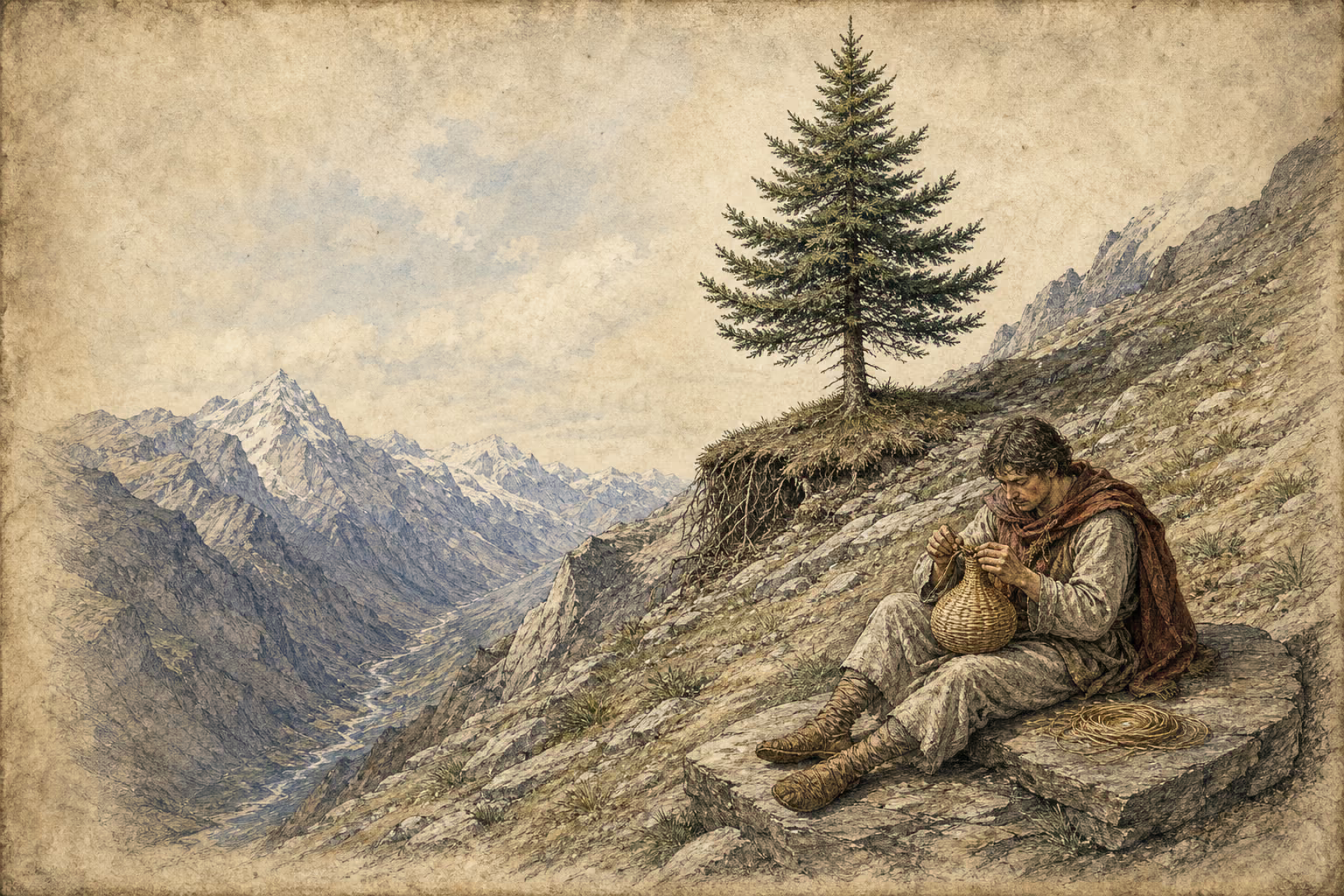
Magna et radicum differentia: copiosae fico, robori, platano, breves et angustae malo, singulares abieti, larici; singulis enim innituntur, quamquam minutis in latera dispersis, crassiores lauro et inaequales, item oleae, cui et ramosae. at robori carnosae. robora suas in profundum agunt; si Vergilio quidem credimus, aesculus quantum corpore eminet, tantum radice descendit. oleae malisque et cupressis per summa caespitum, aliis recto meatu, ut lauro, oleae, aliis flexuoso, ut fico. minutis haec capillamentis hirsuta et abies multaeque silvestrium, e quibus montani praetenuia fila decerpentes spectabiles lagoenas et alia vasa nectunt. quidam non altius descendere radices, quam solis calor tepefaciat, idque natura loci tenuioris crassive dixere, quod falsum arbitror. apud auctores certe invenitur, abietis planta cum transferretur, octo cubitorum in altitudinem nec totam refossam, sed abruptam. maxima spatio atque plenitudine citri est, ab ea platani, roboris et glandiferarum. quarundam radix vivacior superficie, ut laurus. itaque cum trunco inaruit, recisa etiam laetius fruticat. quidam brevitate radicum celerius senescere arbores putant, quod coarguunt fici, quarum radices longissimae et senectus ocissima. falsum arbitror et quod aliqui prodidere, radices arborum vetustate minui. visa enim est annosa quercus eversa tempestatis vi, iugerum soli amplexa.
Prostratas restitui plerumque et quadam terrae cicatrice vivescere volgare est. familiarissimum hoc platanis, quae plurimum ventorum concipiunt propter densitatem ramorum, quibus amputatis levato onere in suo scrobe reponuntur; factumque iam est hoc et in iuglandibus oleisque ac multis aliis.
English · Bostock & Riley 1855–57
In some trees the bark is thin, as in the laurel and the lime; in others, again, it is thick, as in the robur; in some it is smooth, as in the apple and the fig, while in the robur and the palm it is rough: in all kinds it becomes more wrinkled when the tree is old. In some trees the bark bursts spontaneously, as in the vine for instance, while in others it falls off even, as we see in the apple and the arbutus. In the cork-tree and the poplar, the bark is substantial and fleshy; in the vine and the reed it is membraneous. In the cherry it is similar to the coats of the papyrus, while in the vine, the lime, and the fir, it is composed of numerous layers. In others, again, it is single, the fig and the reed for instance.
There are great differences, too, in the roots of trees. In the fig, the robur, and the plane, they are numerous; in the apple they are short and thin, while in the fir and the larch they are single; and by this single root is the tree supported, although we find some small fibres thrown out from it laterally. They are thick and unequal in the laurel and the olive, in which last they are branchy also; while in the robur they are solid and fleshy. The robur, too, throws its roots downwards to a very considerable depth. Indeed, if we are to believe Virgil, the æsculus has a root that descends as deep into the earth as the height to which the trunk ascends in the air. The roots of the olive, the apple, and the cypress, creep almost upon the very surface: in some trees they run straight and horizontally, as in the laurel and the olive; while in others they have a sinuous course—the fig for example. In some trees the roots are bristling with small filaments, as in the fir, and many of the forest trees; the mountaineers cut off these fine filaments, and weave with them very handsome flasks, and various other articles.
Some writers say that the roots of trees do not descend below the level to which the sun’s heat is able to penetrate; which, of course, depends upon the nature of the soil, whether it happens to be thin or dense. This, however, I look upon as a mistake: and, in fact, we find it stated by some authors that a fir was transplanted, the roots of which had penetrated eight cubits in depth, and even then the whole of it was not dug up, it being torn asunder. The citrus has a root that goes the very deepest of all, and is of great extent; next after it come the plane, the robur, and the various glandiferous trees. In some trees, the laurel for instance, the roots are more tenacious of life the nearer they are to the surface: hence, when the trunk withers, it is cut down, and the tree shoots again with redoubled vigour. Some think that the shorter the roots are, the more rapidly the tree decays; a supposition which is plainly contradicted by the fig, the root of which is among the very largest, while the tree becomes aged at a remarkably early period. I regard also as incorrect what some authors have stated, as to the roots of trees diminishing when they are old; for I once saw an ancient oak, uprooted by a storm, the roots of which covered a jugerum of ground.
It is a not uncommon thing for trees when uprooted to receive new strength when replanted, the earth about their roots forming a sort of cicatrix there. This is particularly the case with the plane, which, from the density of its branches, presents a remarkably broad surface to the wind: when this happens, the branches are cut off, and the tree, thus lightened, is replaced in its furrow: this, too, has also been done before now with the walnut, the olive, and many others.