LIBER XVI · CAPUT 32
HOW TREES GROW SPONTANEOUSLY—DIVERSITIES IN THEIR NATURE, THE SAME TREES NOT GROWING EVERYWHERE
Latine · Mayhoff 1906
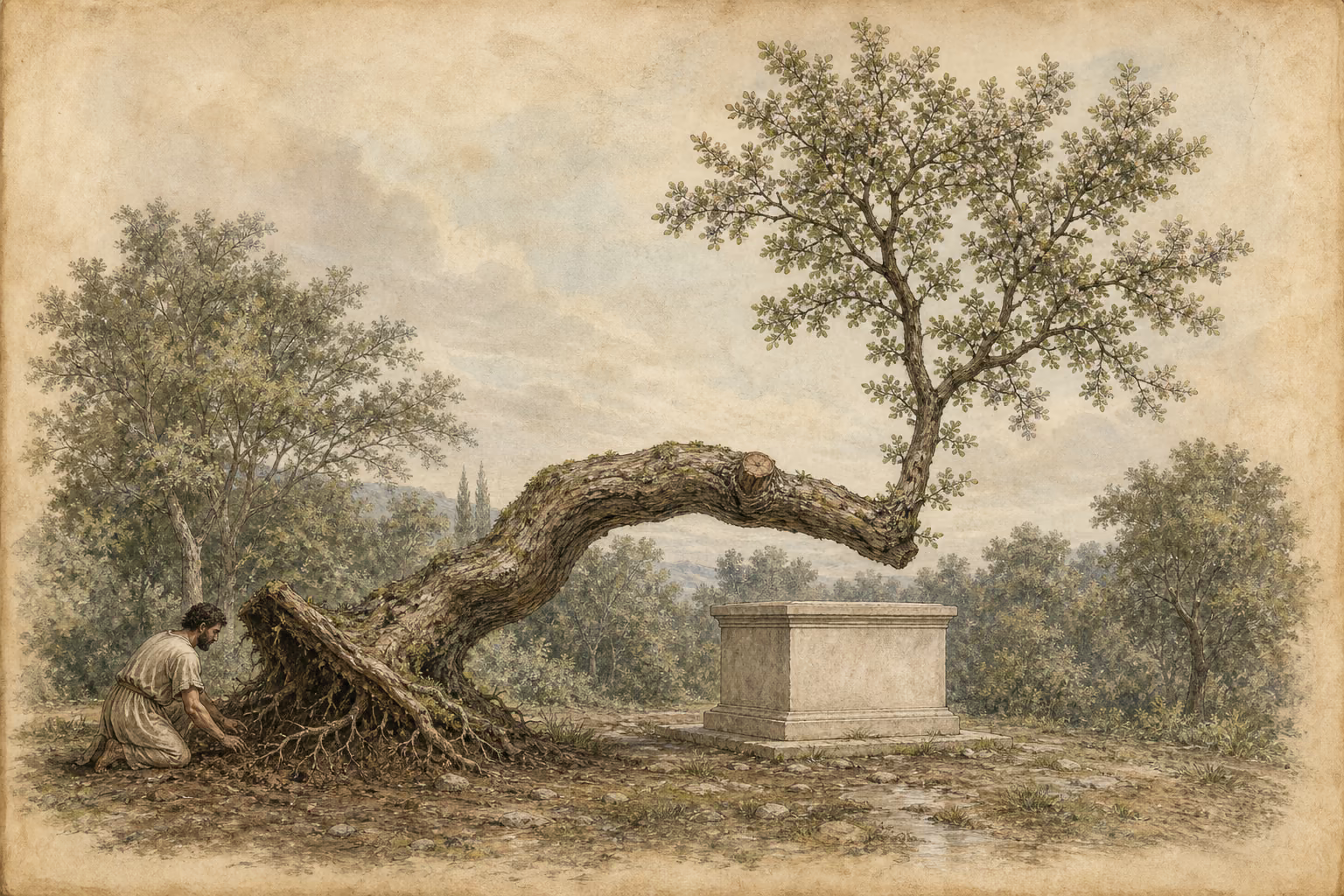
est in exemplis et sine tempestate ullave causa alia quam prodigi cecidisse multas ac sua sponte resurrexisse. factum hoc populi Romani Quiritibus ostentum Cimbricis bellis Nuceriae in luco lunonis ulmo, postquam etiam cacumen amputatum erat, quoniam in aram ipsam procumbebat, restituta sponte ita ut protinus floreret, a quo deinde tempore maiestas p. R. resurrexit, quae ante vastata cladibus fuerat. memoratur hoc idem factum et in Philippis salice procidua atque detruncata et Stagiris in museo populo alba, omnia fausti ominis. sed maxime mirum, Antandri platanus etiam circumdolatis lateribus restibilis sponte facta vitaeque reddita longitudine xv cubitorum, crassitudine quattuor ulnarum.
Arbores quas naturae debemus tribus modis nascuntur, sponte ant semine aut ab radice. cura numerosior extitit, de qua suo dicemus volumine. nunc enim totus sermo de natura est multis modis mirisque memorabili. namque non omnia in omnibus locis nasci docuimus nec tralata vivere. hoc alias fastidio, alias contumacia, saepius inbecillitate eorum quae transferantur evenit, alias caelo invidente, alias solo repugnante.
Fastidit balsamum alibi nasci, nata Assyria malus alibi ferre, nec non et palma ubique nasci aut nata parere vel, cum promisit etiam ostenditque, educare, tamquam invita pepererit. non habet vires frutex cinnami in Syriae vicina perveniendi. non ferunt amomi nardique deliciae, ne in Arabiam quidem, ex India et nave peregrina ri; temptavit enim Seleucus rex. illud maxime mirum, ipsas plerumque arbores exorari, ut vivant atque tramigrent, aliquando et a solo impetrari, ut alienas alat advenasque nutriat, caelum nullo modo flecti. vivit in Italia piperis arbor, casiae vero etiam in septentrionali plaga, vixit in Lydia turis, sed unde sorbentes sucum omnem ex iis soles coquentesve lacrimam? illud proxime mirum, mutari naturam in iisdem atque pro indiviso valere. cedrum aestuosis partibus dederat, set in Lyciis Phrygiisque montibus nascitur. frigus inimicum lauro fecerat, sed in Olympo copiosior nulla est. circa Bosporum Cimmerium in Panticapaeo urbe omni modo laboravit Mithridates rex et ceteri incolae sacrorum certe causa laurum myrtumque habere: non contigit, cum teporis arbores abundent ibi, punicae ficique, iam mali et piri laudatissimae. frigidas eodem tractu non genuit arbores, pinum, abietem, piceam. et quid attinet in Pontum abire? iuxta Romam ipsam castaneae cerasique aegre proveniunt, persica in Tusculano, nuces Graecae cum taedio inseruntur Tarracina silvis scatente earum.
English · Bostock & Riley 1855–57
We have many instances cited also of trees falling to the ground without there being any storm or other perceptible cause, but merely by way of portentous omen, and then rising again of themselves. A prodigy of this nature happened to the citizens of Rome during their wars with the Cimbri: at Nuceria, in the grove consecrated to Juno, an elm inclined to such a degree, even after the top had been cut off, as to overhang the altar there, but it afterwards recovered itself to such an extent as to blossom immediately: it was from that very moment, too, that the majesty of the Roman people began to flourish once again after it had been laid low by disaster and defeat. A similar circumstance is said to have taken place also at Philippi, where a willow, which had fallen down, and the top of which had been taken off, rose again; and at Stagira, in the Museum there, where the same thing occurred to a white poplar; all which events were looked upon as favourable omens. But what is most wonderful of all, is the fact that a plane, at Antandros, resumed its original position even after its sides had been rough-hewn all round with the adze, and took root again: it was a tree fifteen cubits long, and four ulnæ in thickness.
The trees which we owe to Nature are produced in three different ways; spontaneously, by seed sown, or by a slip which throws out a root. Art has multiplied the methods of reproduction, as we shall have occasion to state in its own appropriate Book: at present our sole subject is the operations of Nature, and the manifold and marvellous methods she adopts. The trees, as we have already stated, do not all of them grow in every locality, nor will they live, many of them, when transplanted: this happens sometimes through a natural antipathy on the part of the tree, sometimes through an innate stubbornness, but more frequently through the weakness of the variety so transplanted, either the climate being unfavourable, or the soil repulsive to it.
Balsamum will grow nowhere but [in Judæa]: and the citron of Assyria refuses to bear fruit in any other country. The palm, too, will not grow everywhere, and even if it does grow in some places, it will not bear: sometimes, indeed, it may make a show and promise of bearing, but even then its fruit comes to nothing, it seeming to have borne them thus far in spite of itself. The cinnamon shrub has not sufficient strength to acclimatize itself in the countries that lie in the vicinity of Syria. Amomum, too, and nard, those most delicate of perfumes, will not endure the carriage from India to Arabia, nor yet conveyance by sea; indeed, King Seleucus did make the attempt, but in vain. But what is more particularly wonderful, is the fact that most of the trees by care may be prevailed upon to live when transplanted; for sometimes the soil may be so managed as to nourish the foreigner and give support to the stranger plant; climate, however, can never be changed. The pepper-tree will live in Italy, and cassia in the northern climates even, while the incense-tree has been known to live in Lydia: but how are we to impart to these productions the requisite warmth of the sun, in order to make all the crude juices go off by evaporation, and ripen the resins that distil from them?
Nearly as great a marvel, too, is the fact that the nature of the tree may be modified by circumstances, and yet the tree itself be none the less vigorous in its growth. Nature originally gave the cedar to localities of burning heat, and yet we find it growing in the mountains of Lycia and Phrygia. She made the laurel, too, averse to cold, and yet there is no tree that grows in greater abundance on Mount Olympus. At the city of Panticapæum, in the vicinity of the Cimmerian Bosporus, King Mithridates and the inhabitants of the place used every possible endeavour, with a view to certain religious ceremonies, to cultivate the myrtle and the laurel: they could not succeed, however, although trees abound there which require a hot climate, such as the pomegranate and the fig, as well as apples and pears of the most approved quality. In the same country, too, the trees that belong to the colder climates, such as the pine, the fir, and the pitch-tree, refuse to grow. But why go search for instances in Pontus? In the vicinity of Rome itself it is only with the greatest difficulty that the cherry and the chesnut will grow, and the peach-tree, too, at Tusculum: the Greek nut, too, is grown there from grafts only at a cost of considerable labour, while Tarracina abounds with whole woods of it.