LIBER XVI · CAPUT 33
THE CYPRESS
Latine · Mayhoff 1906
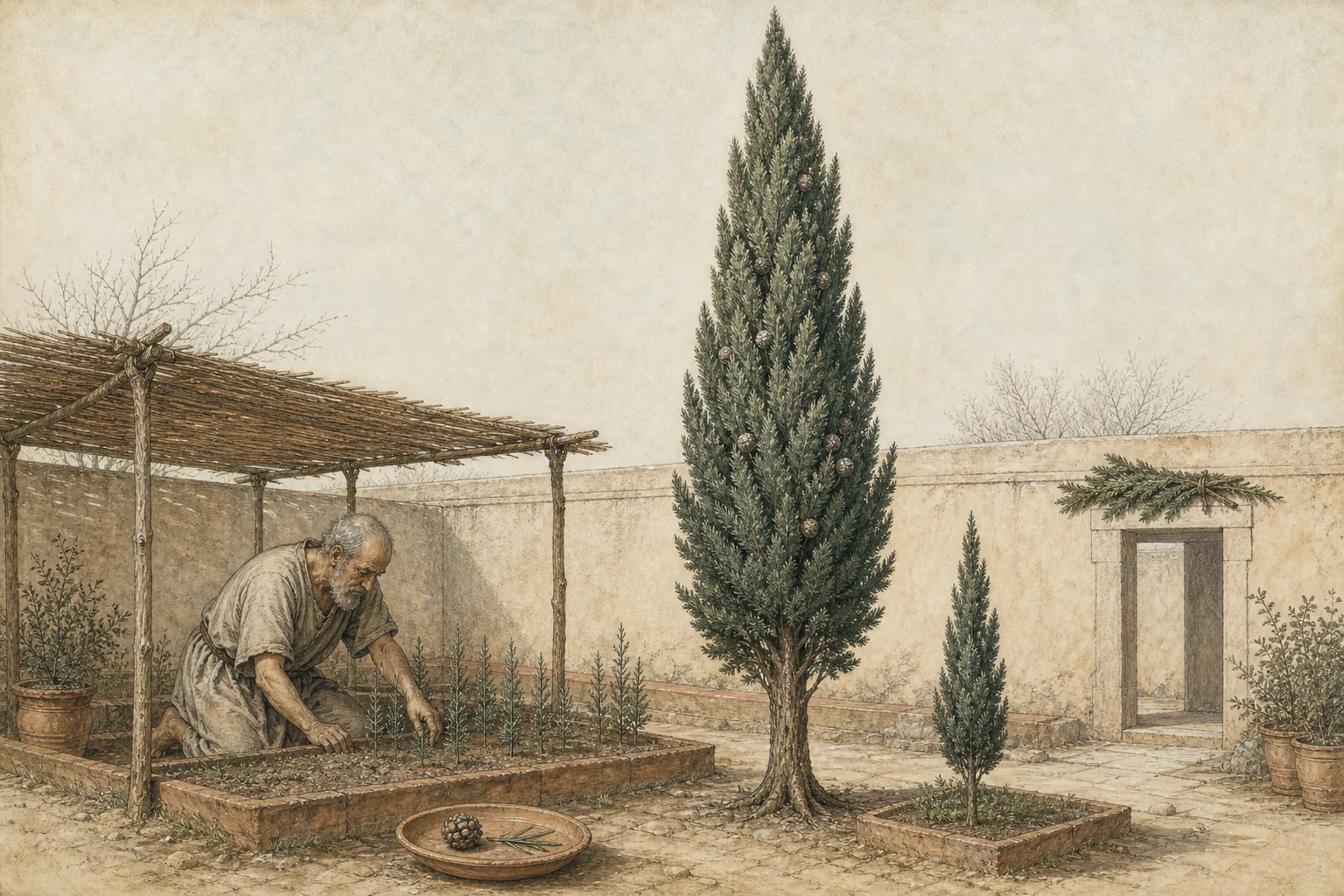
Cupressus advena et difficillime nascentium fuit, ut de qua verbosius saepiusque quam de omnibus aliis prodiderit Cato, satu morosa, fructu supervacua, bacis torva, folio amara, odore violenta ac ne umbra quidem gratiosa, materie rara, ut paene fruticosi generis, Diti sacra et ideo funebri signo ad domos posita. femina.... sterilis. diu metae demum aspectu non repudiata distinguendis tantum pinorum ordinibus, nunc vero tonsilis facta in densitatem parietum coercitaque gracilitate perpetuo teres trahitur etiam in picturas operis topiarii, venatus classesve et imagines rerum tenui folio brevique et virente semper vestiens. duo genera earum: meta in fastigium convoluta, quae et femina appellatur. mas spargit extra se ramos deputaturque et accipit vitem. utraque autem immittitur in perticas asseresve amputation ramorum, qui XIII anno denariis singulis veneunt, quaestuosissima in satus ratione silva, vulgoque dotem filiae antiqui plantaria ea appellabant. huic patria insula Creta, quamquam Cato Tarentinam eam appellat, credo, quod primum eo venerit. et in Aenaria succisa regerminat; sed in Creta quocumque in loco terram moverit quispiam, nisu naturali haec gignitur protinusque emicat, illa vero etiam non appellato solo ac sponte maximeque in Idaeis montibus et quos Albos vocant summisque in his, unde numquam nives absunt, plurima, quod miremur, alibi non nisi in tepore proveniens et nutricem magno opere fastidiens.
Nec terrae tantum natura circa has refert aut perpetua caeli, verum et quaedam temporaria vis. imbres aliqua plerumque semina adferunt et certo fluunt genere, aliquando etiam incognito, quod accidit Cyrenaicae regioni, cum primum ibi laserpicium natum est, ut in herbarum natura dicemus. nata est et silva urbi ei proxima imbre piceo crassoque. *
English · Bostock & Riley 1855–57
The cypress is an exotic, and has been reckoned one of the trees that are naturalized with the greatest difficulty; so much so, indeed, that Cato has expatiated upon it at greater length and more frequently than any of the others. This tree is naturally of a stubborn disposition, bears a fruit that is utterly useless, a berry that causes a wry face when tasted, and a leaf that is bitter: it also gives out a disagreeable pungent smell, and its shade is far from agreeable. The wood that it furnishes is but scanty, so much so indeed, that it may be almost regarded as little more than a shrub. This tree is sacred to Pluto, and hence it is used as a sign of mourning placed at the entrance of a house: the female tree is for a long time barren. The pyramidal appearance that it presents has caused it not to be rejected, but for a long time it was only used for marking the intervals between rows of pines: at the present day, however, it is clipped and trained to form hedge-rows, or else is thinned and lengthened out in the various designs employed in ornamental gardening, and which represent scenes of hunting, fleets, and various other objects: these it covers with a thin small leaf, which is always green.
There are two varieties of the cypress; the one tapering and pyramidal, and which is known as the female; while the male tree throws its branches straight out from the body, and is often pruned and employed as a rest for the vine. Both the male and the female are permitted to throw out their branches, which are cut and employed for poles and props, being worth, after thirteen years’ growth, a denarius a-piece. In respect of income, a plantation of cypress is remarkably profitable, so much so, indeed, that it was a saying in old times that a cypress-wood is a dowry for a daughter. The native country of this tree is the island of Crete, although Cato calls it Tarentine, Tarentum being the first place, I suppose, in which it was naturalized: in the island of Ænaria, also, if the cypress is cut down, it will grow again from the root. But, in the Isle of Crete, in whatever place the earth is moved, this tree will shoot up of its own natural vigour, and immediately appear above the soil; indeed, in that island there is no occasion even to solicit the soil, for it grows spontaneously there, on the mountains of Ida more particularly, and those known as the White Mountains. On the very summit of these elevations, from which the snows never depart, we find the cypress growing in great abundance; a thing that is truly marvellous—seeing that, in other countries, it will only grow in warm localities; from which it would appear to have a great dislike to its native climate.
It is not only the quality of the soil and the unchanging influences of the climate that affect the nature of trees, but wet and showery weather also, temporarily at least. Indeed, the torrents very often bring down with them seeds, and sometimes we find those of unknown kinds even floating along. This took place in the territory of Cyrenaica, at the period when laser was first grown there, as we shall have occasion to mention when we speak of the nature of the various herbs. A forest, too, sprang up in the vicinity of the city of Cyrene, just after a shower of rain, of a dense, pitchy nature, about the year of the City of Rome 430.