LIBER XVI · CAPUT 35
THE SMILAX
Latine · Mayhoff 1906
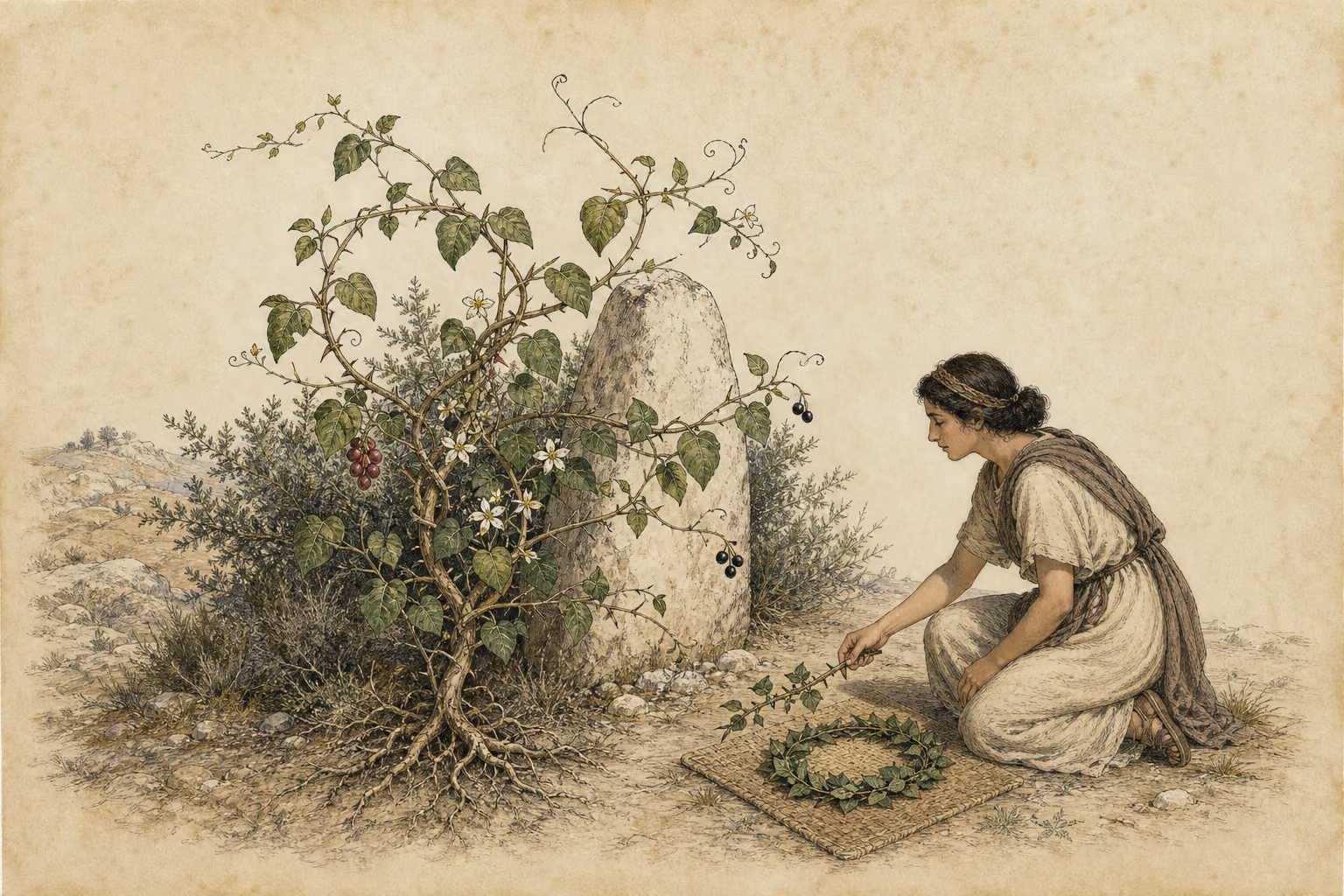
Similis est hederae e Cilicia quidem primum profecta, sed in Graecia frequentior, quam vocant smilacem, densis geniculata caulibus, spinosis frutectosa ramis, folio hederaceo, parvo, non anguloso, a pediculo emittente pampinos, flore candido, olente lilium. fert racemos labruscae modo, non hederae, colore rubro, conplexa acinis maioribus nucleos ternos, minoribus singulos, nigros durosque, infausta omnibus sacris et coronis, quoniam sit lugubris virgine eius nominis propter amorem iuvenis Croci mutata in hunc fruticem. id volgus ignorans plerumque festa sua polluit hederam existimando, sicut in poetis aut Libero patre aut Sileno quis omnino scit quibus coronentur?
E smilace fiunt codicilli, propriumque materiae est, ut admota auribus lenem sonum reddat.—Hederae mira proditur natura ad experienda vina, si vas fiat e ligno eius, vina transfluere ac remanere aquam, si qua fuerit mixta.
English · Bostock & Riley 1855–57
Very similar to the ivy is a plant which first came from Cilicia, but is now more commonly found in Greece, and known by the name of smilax. It has numerous thick stalks covered with joints, and thorny branches of a shrub-like form: the leaf resembles that of the ivy, but is not angular, while from the foot-stalk it throws out tendrils; the flower is white, and has the smell of the lily. It bears clusters like those of the wild vine and not the ivy, and of a reddish colour. The larger berries contain three stones, the smaller but one only: these berries are black and hard. This plant is looked upon as ill-omened, and is consequently banished from all sacred rites, and is allowed to form no part of chaplets; having received this mournful character from the maiden Smilax, who upon her love being slighted by the youth Crocus, was transformed into this shrub. The common people, being mostly ignorant of this, not unfrequently take it for ivy, and pollute their festivities with its presence; for who, in fact, is unaware that the ivy is used as a chaplet by poets, as also by Father Liber and Silenus? Tablets are made of the wood of the smilax, and it is a peculiarity of this wood to give out a slight sound, if held close to the ear. It is said that ivy is remarkably efficacious for testing wine, and that a vessel made of this wood will let the wine pass through it, while the water will remain behind, if there has been any mixed with it.