LIBER XVI · CAPUT 38
THE JUICES OF TREES
Latine · Mayhoff 1906
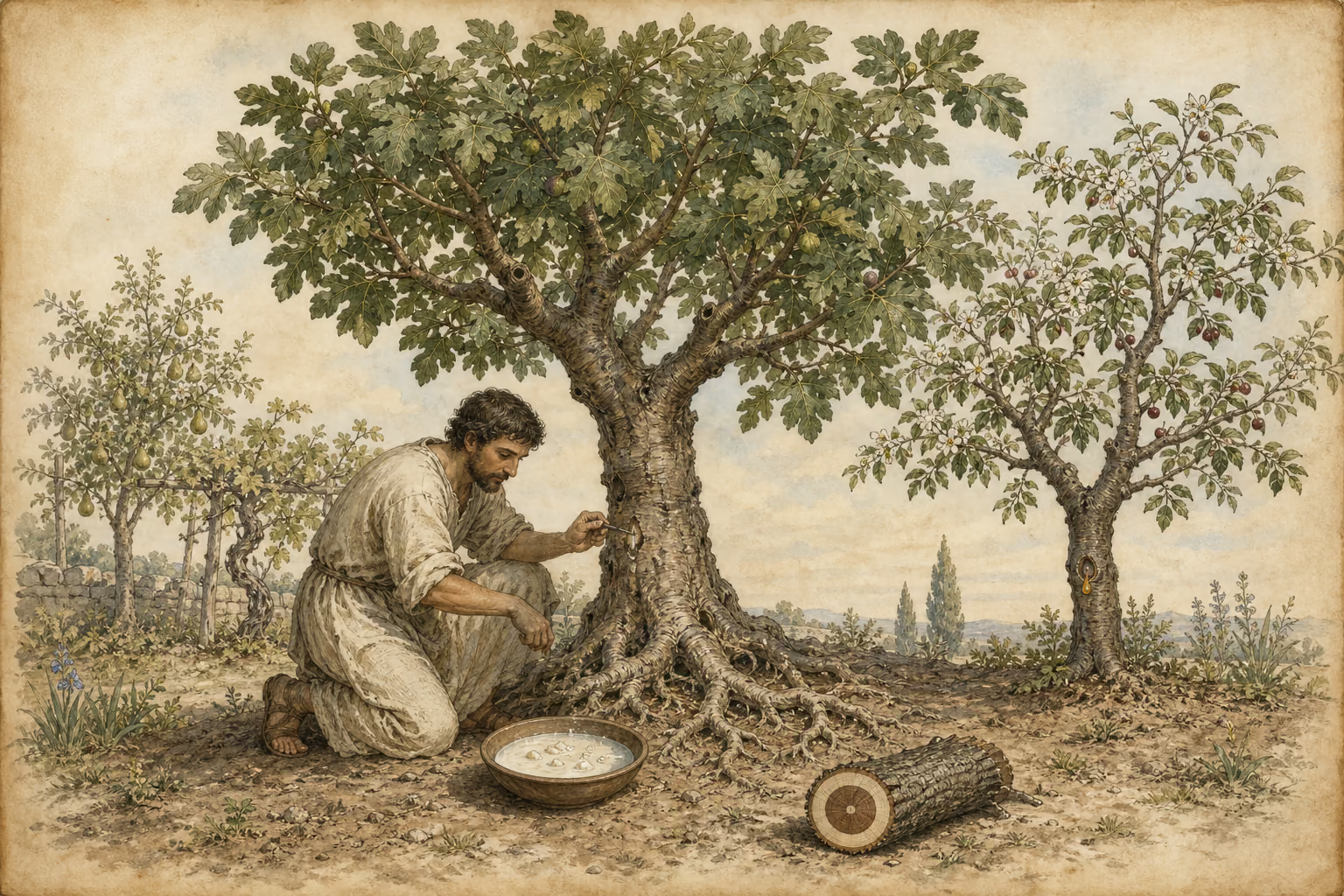
Umor et corpori arborum est, qui sanguis earum intellegi debet, non idem omnibus: ficis lacteus— huic ad caseos figurandos coaguli vis—, cerasis cumminosus, ulmis salivosus, lentus ac pinguis, malis, vitibus, piris aquosus. vivaciora quibus lentior. atque in totum corpori arborum, ut reliquorum animalium, cutis, sanguis, caro, nervi, venae, ossa, medullae. pro cute cortex. mirum, is in moro medicis sucum quaerentibus vere hora diei secunda lapide incisus manat, altius fractus siccus videtur. proximi plerisque adipes. hi vocantur a colore alburnum, mollis ac pessima pars ligni, etiam in robore facile putrescens, teredini obnoxia, quare semper amputabitur. subest huic caro, carni ossa, id est materiae optimum. alternant fructus quibus siccius lignum, ut olea, magis quam quibus carnosum, ut cerasus. nec omnibus adipes carnesve largae, uti nec animalium acerrimis. neutrum habent buxus, cornus, olea, nec medullam minimumque etiam sanguinis, sicuti ossa non habent sorba, carnem sabuci—at plurimam ambae medullam—nec harundines maiore ex parte.
In quarundam arborum carnibus pulpae venaeque sunt. discrimen earum facile; venae latiores candidioresque. pulpae fissilibus insunt. ideo fit, ut aure ad caput trabis quamlibet praelongae admota ictus ab altero capite vel graphii sentiantur penetrante rectis meatibus sono, unde deprehenditur, an torta sit materies nodisque concisa. quibus sunt tubera, sicut sunt in came glandia, in iis nec vena nec pulpa, quodam callo carnis in se convoluto. hoc pretiosissinum in citro et acere. cetera mensarum genera fissis arboribus circinantur in pulpam; alioqui fragilis esset vena in orbem arboris caesa. fagis pectines traversi in pulpa. apud antiquos inde et vasis honos. M'. Curius iuravit se nihil ex praeda attigisse praeter guttum faginum, quo sacrificaret.—Lignum in longitudinem fluvitat, ut quaeque pars fuit ab radice, validius sidit.— quibusdam pulpa sine venis mero stamine et tenui constat. haec maxime fissilia. alia frangi celeriora quam findi, quibus pulpa non est, ut oleae, vites. at e contrario totum e carne corpus fico, tota ossea ilex, ornus, robur, cytisus, morus, hebenus, lotos et quae sine medulla esse diximus. ceteris nigricans color, fulva cornus in venabulis nitet incisuris nodata propter decorem. cedrus et larix et iuniperus rubent.
English · Bostock & Riley 1855–57
There is a juice in the bark of trees, which must be looked upon as their blood, though it is not of a similar nature in all. In the fig it is of a milky consistency, and has the peculiar property of curdling milk, and so forming cheese. In the cherry-tree this juice is gummy, in the elm clammy, in the apple viscous and fatty, while in the vine and the pear it is watery. The more viscous this humour is, the more long-lived the tree. In a word, we find in the bodies of trees—as with all other beings that are animated—skin, blood, flesh, sinews, veins, bones, and marrow; the bark serving them in place of skin. It is a singular fact connected with the mulberry-tree, that when the medical men wish to extract its juice, if the incision is lightly made, by a blow with a stone, and at the second hour of the day in spring, the juice will flow: but if, on the other hand, a wound is inflicted to any depth, it has all the appearance of being dried up.
Immediately beneath the bark in most trees there is a fatty substance, which, from its colour, has obtained the name of alburnum: it is soft, and is the very worst part of the wood, and in the robur even will very easily rot, being particularly liable to wood-worm, for which reason it is invariably removed. Beneath this fat lies the flesh of the tree, and then under that, its bones, or, in other words, the choicest part of the wood. Those trees which have a dry wood, the olive, for instance, bear fruit every other year only: this is more the case with them than with those the wood of which is of a fleshy nature, such as the cherry, for instance. It is not all trees, too, that have this fat and flesh in any abundance, the same as we find to be the case among the more active animals. The box, the cornel, and the olive have none at all, nor yet any marrow, and a very small proportion, too, of blood. In the same way, too, the service-tree has no bones, and the elder no flesh, while both of them have marrow in the greatest abundance. Reeds, too, have hardly any flesh.
In the flesh of some trees we find both fibres and veins: they are easily distinguished. The veins are larger, while the fibres are of whiter material, and are to be found in those woods more particularly which are easily split. Hence it is that if the ear is applied to the extremity of a beam of wood, however long, a tap with a graver even upon the other end may be distinctly heard, the sound penetrating by the passages which run straight through it: by these means it is that we ascertain whether timber runs awry, or is interrupted by knots. The tuberosities which we find on trees resemble the kernels that are formed in flesh: they contain neither veins nor fibres, but only a kind of tough, solid flesh, rolled up in a sort of ball: it is these tuberosities that are the most esteemed parts in the citrus and the maple. As to the other kinds of wood which are employed for making tables, the trees are split into planks lengthwise, and the parts are then selected along which the fibres run, and properly rounded; for the wood would be too brittle to use if it were cut in segments crosswise. In the beech, the grain of the fibrous part runs crosswise; hence it is that the ancients held in such high esteem all vessels made with the wood of it. Manius Curius made oath, on one occasion, that he had not touched an article of all the spoil except a single oil cruet of beech, to use for sacrificing. Wood is always put lengthwise into the water to season, as that part which was nearest the root will sink to a greater depth than the other. In some wood there is fibre, without veins, and merely consisting of filaments slightly knit together: wood of this nature is remarkably fissile. Other wood, again, is more easily broken across than split, such as the wood of those trees that have no fibre, the olive and the vine, for instance: on the other hand, in the fig-tree, the whole of the body consists of flesh. The holm-oak, the cornel, the robur, the cytisus, the mulberry, the ebony, the lotus, and the other trees which we have mentioned as being destitute of marrow, consist entirely of bone. All these woods are of a blackish colour, with the exception of the cornel, of which glossy yellow hunting-spears are made, marked with incisions for their further embellishment. In the cedar, the juniper, and the larch, the wood is red.