LIBER XVI · CAPUT 41
VARIETIES OF THE TEREDO
Latine · Mayhoff 1906
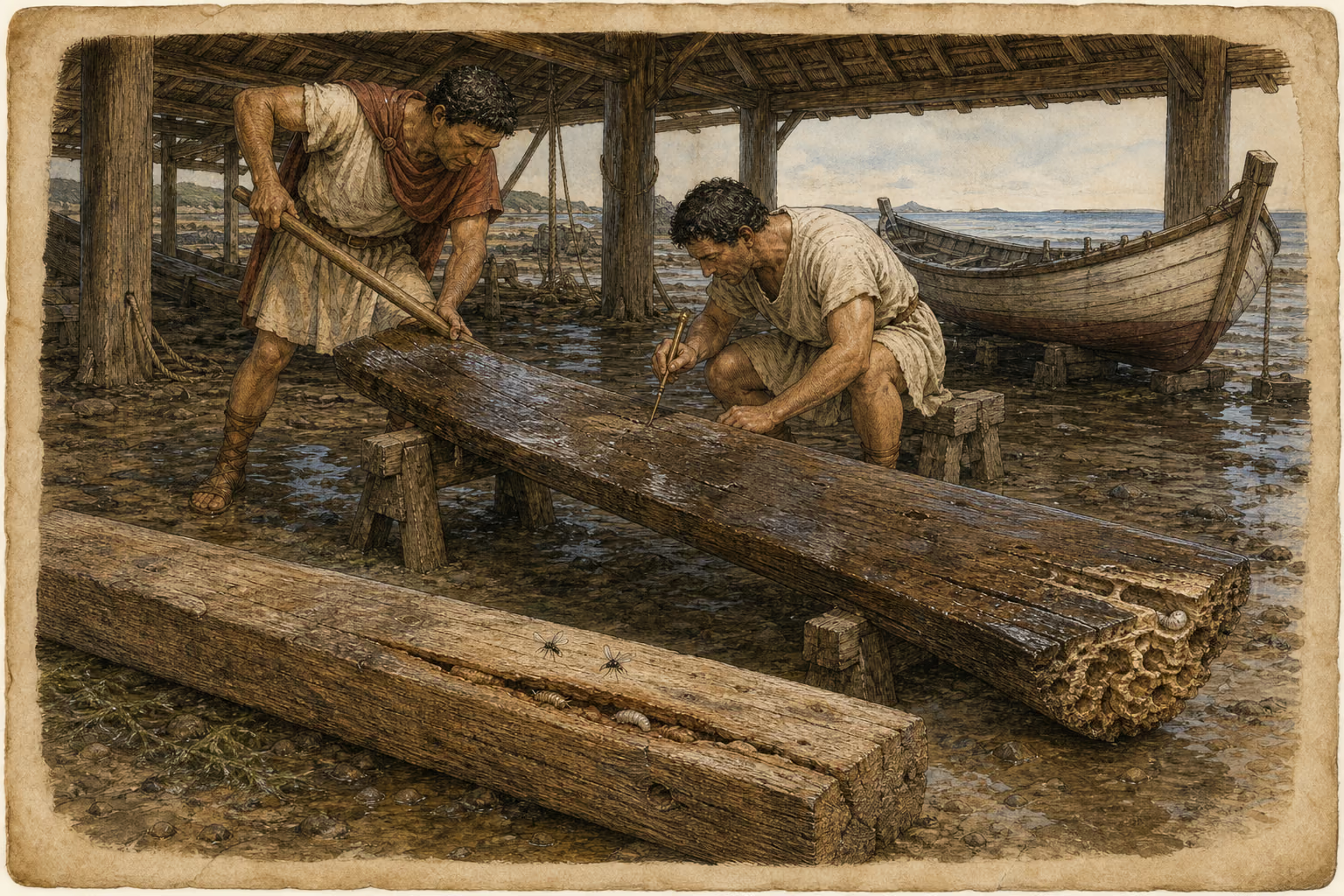
Infestantium quattuor genera: teredines capite ad portionem grandissimo rodunt dentibus. hae tantum in mari sentiuntur, nec aliam putant teredinem proprie dici. terrestres tinias vocant, culicibus vero similes thripas. quartum est et e vermiculorum genere, et eorum alii putrescente suco ipsa materie, alii pariuntur sicut in arboribus ex eo, qui cerastes vocatur. cum tantum erosit, ut circumagat se, generat alium. haec nasci prohibet in aliis amaritudo, ut cupresso, in aliis duritia, ut buxo. tradunt et abietem circa germinationes decorticatam qua diximus luna aquis non corrumpi. Alexandri Magni comites prodiderunt in Tylo Rubri maris insula arbores esse, ex quibus naves fierent; quas ducentis annis durantes inventas, etsi mergerentur, incorruptas. in eadem esse fruticem baculis tantum idoneae crassitudinis, varium tigrium maculis, ponderosum et, cum in spissiora decidat, vitri modo fragilem.
English · Bostock & Riley 1855–57
There are four kinds of insects that attack wood. The teredo has a head remarkably large in proportion to the other part of the body, and gnaws away the wood with its teeth: its attacks, however, are confined solely to the sea, and it is generally thought that this is the only insect that is properly so called. The wood-worm that prevails on the land is known as the “tinea,” while those which resemble a gnat in appearance are called “thripes.” The fourth kind of wood-worm belongs to the maggot class; some of them being engendered by the corruption of the juices of the wood itself, and others being produced, just as in the trees, by the worm known as the cerastes. When this worm has eaten away enough of the wood to enable it to turn round, it gives birth to another. The generation of these insects is prevented, however, by the bitterness that exists in some woods, the cypress, and the hardness of others, the box, for instance.
It is said, too, that the fir, if barked about the time of budding, and at the period of the moon already mentioned, will never spoil in water. The followers of Alexander the Great have left a statement that, at Tylos, an island in the Red Sea, there are trees, of which ships are built, the wood of which has been found uninjured at the end of two hundred years, even if it has been under water all that time. They say, also, that in the same island there is a certain shrub, about the thickness of a walking-stick only, and spotted like a tiger’s skin: it is very heavy, and will break like glass if it happens to fall upon a hard substance.