LIBER XVI · CAPUT 42
THE WOODS USED IN BUILDING
Latine · Mayhoff 1906
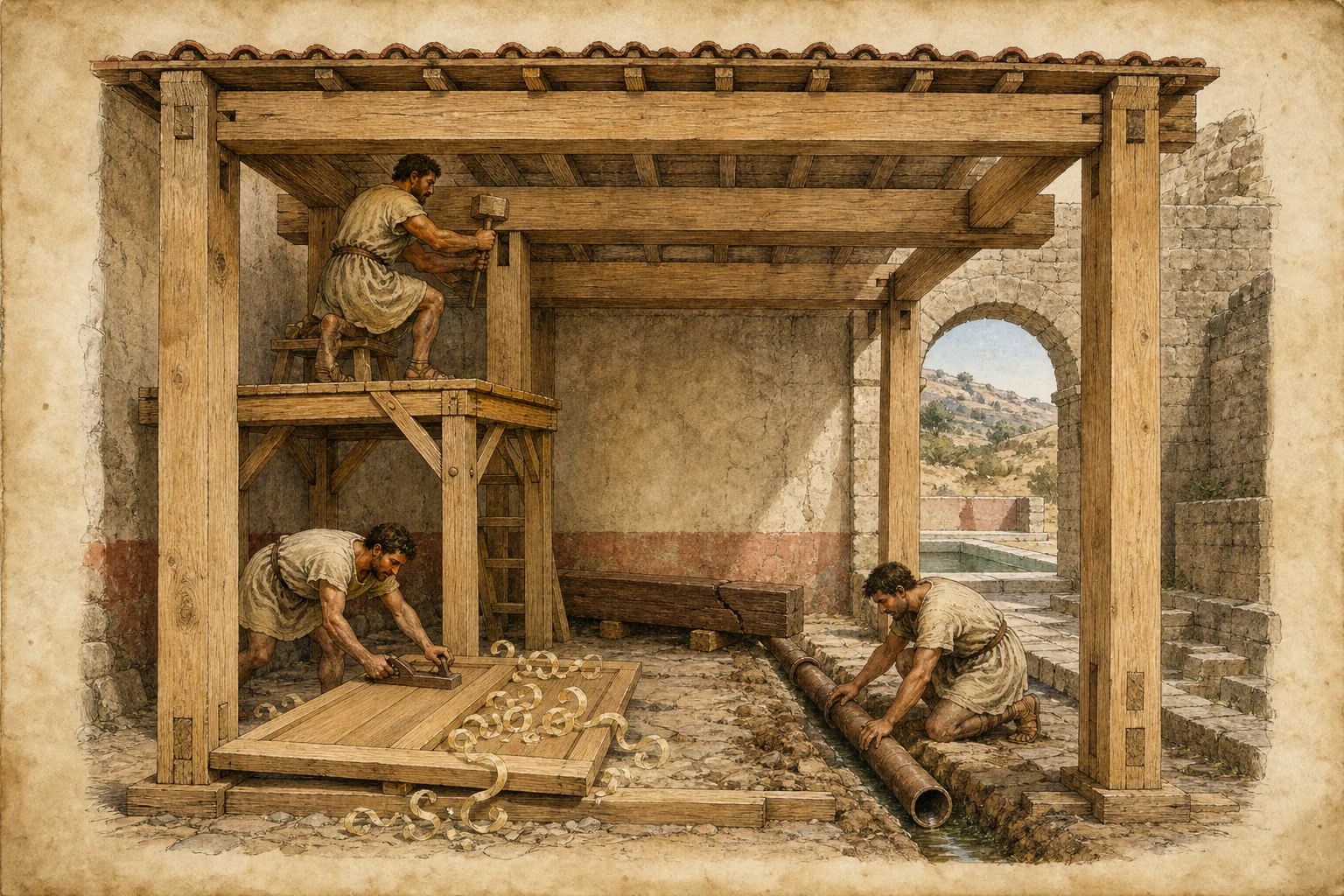
Apud nos materiae finduntur aliquae sponte, ob id architecti eas fimo inlitas siccari iubent, ut adflatus ne noceant. pondus sustinere validae abies, larix, etiam in traversum positae. robur, olea incurvantur ceduntque ponderi. illae renituntur nec temere rumpuntur, priusque carie quam viribus deficiunt. et palmae arbor valida; in diversum enim curvatur, [et populus] cetera omnia in inferiora pandantur, palma ex contrario fornicatim. pinus et cupressus adversus cariem tiniasque firmissimae. facile pandatur iuglans, fiunt enim et ex ea trabes. frangi se praenuntiat crepitu, quod et in Antandro accidit, cum e balineis territi sono profugerunt. pinus, piceae, alni ad aquarum ductus in tubos cavantur; obrutae terra plurimis duraturae annis eaedem, si non integantur, cito senescunt, mirum in modum fortiores, si umor extra quoque supersit.
Firmissima in rectum abies, eadem valvarum paginis et ad quaecumque libeat intestina opera aptissima sive Graeco sive Campano sive Siculo fabricae artis genere, spectabilis ramentorum crinibus, pampinato semper orbe se volvens ad incitatos runcinae raptus, eadem e cunctis maxime sociabilis glutino in tantum, ut findatur ante, qua solida est.
English · Bostock & Riley 1855–57
We have in Italy some woods that are apt to split of themselves: to prevent this, architects recommend that they should be first seasoned in manure and then dried, in order to render them proof against the action of the atmosphere. The woods of the fir and larch are well adapted, even when used transversely, for the support of heavy burdens; while the robur and the olive are apt to bend and give way under a weight. The wood of the poplar and the palm are also strong, but this last will bend, though in a manner different from the others; for, while in all other instances the wood bends downwards, in the palm it bends in the contrary direction, and forms an arch. The woods of the pine and the cypress are proof against decay and all attacks of wood-worm. The walnut is easily warped, but we sometimes see beams even made of it. It gives warning, however, before it breaks, by a loud cracking noise; such was the case at Antandros, at the public baths there—the bathers took the alarm upon hearing the beams crack, and made their escape. The pine, the pitch-tree, and the alder are employed for making hollow pipes for the conveyance of water, and when buried in the earth will last for many years. If, however, they are not well covered over, they will very soon rot; and the resistance they offer to decay will increase in a most surprising degree if the outer surface as well is left in contact with the water.
The wood of the fir is strongest in a vertical position: it is remarkably well adapted for the pannels of doors, and all kinds of in-door joiners’ work, whether in the Grecian, the Campanian, or the Sicilian style. The shavings of this wood when briskly planed, always curl up in circles like the tendrils of the vine. This wood, too, unites particularly well with glue: it is used in this state for making vehicles, and is found to split sooner in the solid parts than in a place where the pieces have been glued together.