LIBER XVI · CAPUT 43
WOODS UNITED WITH GLUE
Latine · Mayhoff 1906
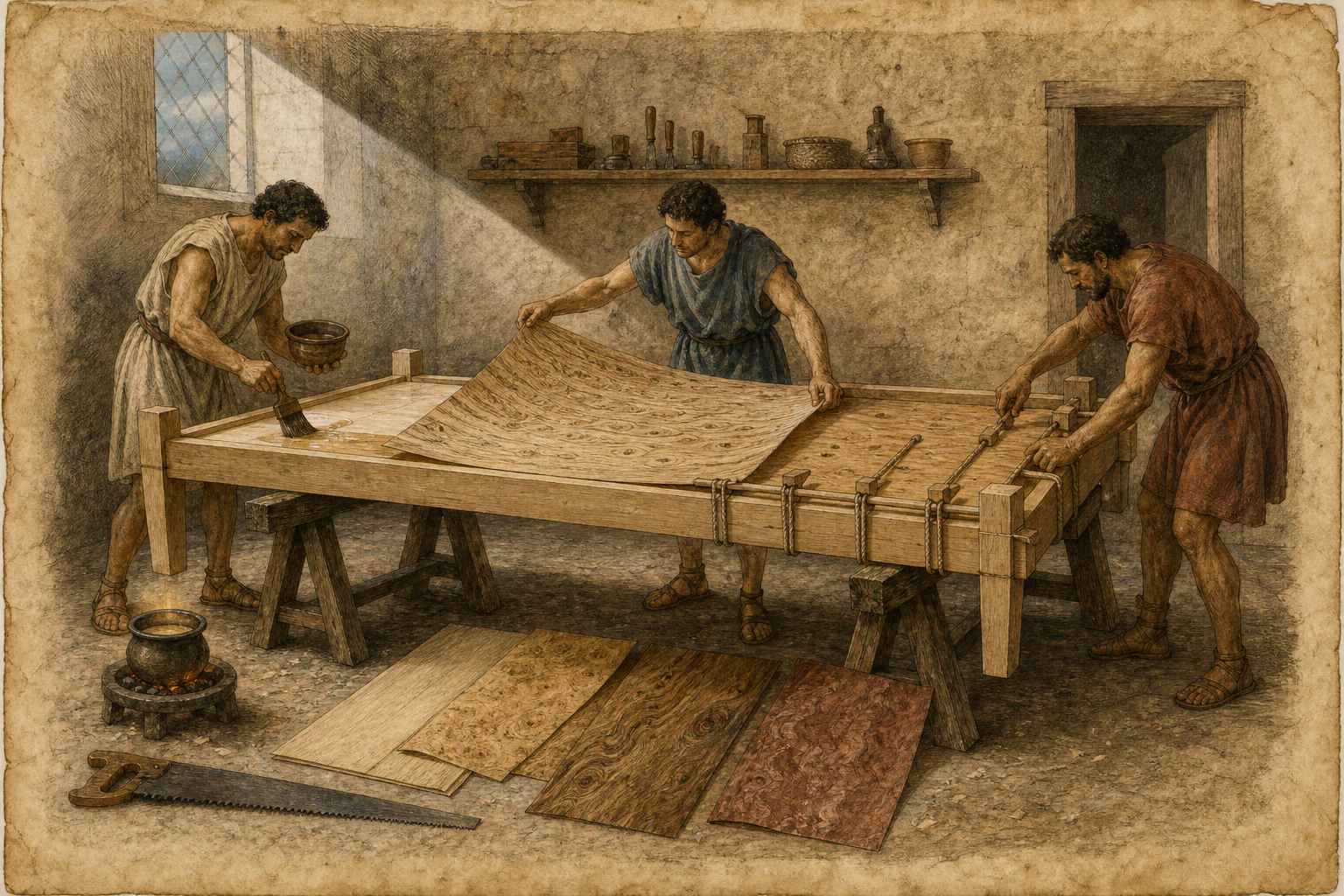
Magna autem et glutinatio propter ea, quae sectilibus laminis aut alio genere operiuntur. stamineam in hoc usu probant venam, et vocant ferulaceam argumento similitudinis, quoniam lacunosa et crispa in omni genere glutinum abdicant. quaedam et inter se et cum aliis insociabilia glutino, sicut robur, nec fere cohaerent nisi similia natura, ut si quis lapidem lignumque coniungat. cornum maxime odit sorbus, carpinus, buxus, postea tilia. cuicumque operi facilia flexilia omnia, quae lenta diximus, praeterque morus et caprificus. forabilia ac sec- tilia, quae modice umida. arida enim latius quam teras cedunt, viridia praeter robur et buxum pertinacius resistunt serrarumque dentes replent aequalitate inerti. qua de causa alterna inclinatione egerunt scobem.
Oboedientissima quocumque in opere fraxinus, eademque hastis corylo melior, cornu levior, sorbo lentior, Gallica vero etiam ad currus flexili levitate. aemularetur ulmus, ni pondus esset in culpa. facilis et fagus, quamquam fragilis et tenera. eadem sectilibus lamnis in tenui flexilis capsisque ac scrineis sola utilis. secatur in lamnas praetenues et ilex, colore quoque non ingrata, sed maxime fida iis, quae terantur, ut rotarum axibus, ad quos lentore fraxinus sicut duritia ilex et utroque legitur ulmus. sunt vero et parvi usus fabriliium ministeriorum insignes, ideoque proditum, terebris vaginas ex oleastro, buxo, ilice, ulmo, fraxino utilissimas fieri, ex iisdem malleos, maioresque e pinu et ilice. et his autem maior ad firmitatem causa tempestivae caesurae quam inmaturae, quippe cum ex olea, durissimo ligno, cardines in foribus diutius immoti plantae modo germinaverint. Cato vectes aquifolios, laureos, ulmeos fieri iubet, Hyginus manubria rusticis carpinea, iligna, cerrea.
Quae in lamnas secentur quorumque operimento vestiatur alia materies, praecipua sunt citrum, terebinthus, aceris genera, buxum, palma, aquifolium, ilex, sabuci radix, populus. dat et alnus, ut dictum est, tuber sectile, sicut citrum acerque. nec aliarum tuber iam in pretio. media pars arborum crispior et, quo propior radici, minoribus magisque flexilibus maculis. haec prima origo luxuriae arborum, alia integi et vilioris ligni e pretiosiore corticem fieri. ut una arbor saepius veniret, excogitatae sunt et ligni bratteae. nec satis, coepere tingui animalium cornua, dentes secari lignumque ebore distingui, mox operiri. placuit deinde materiem et in mari quaeri. testudo in hoc secta, nuperque portentosis ingeniis principatu Neronis inventum, ut pigmentis perderet se plurisque veniret imitata lignum. sic lectis pretia quaeruntur, sic terebinthum vinci iuvat, sic citrum pretiosius fieri, sic acer decipi. modo luxuria non fuerat contenta ligno, iam lignum et e testudine facit.
English · Bostock & Riley 1855–57
Glue, too, plays one of the principal parts in all veneering and works of marqueterie. For this purpose, the workmen usually employ wood with a threaded vein, to which they give the name of “ferulea,” from its resemblance to the grain of the giant fennel, this part of the wood being preferred from its being dotted and wavy. In every variety there are some woods to be found that will not take the glue, and which refuse to unite either with wood of the same kind or of any other; the wood of the robur for example. Indeed, it is mostly the case that substances will not unite unless they are of a similar nature; a stone, for instance, cannot be made to adhere to wood. The wood of the service-tree, the yoke-elm, the box, and, in a less degree, the lime, have a particular aversion to uniting with the cornel. All the yielding woods which we have already spoken of as flexible readily adapt themselves to every kind of work; and in addition to them, the mulberry and the wild fig. Those which are moderately moist are easily sawn and cut, but dry woods are apt to give way beyond the part that is touched by the saw; while, on the other hand, the green woods, with the exception of the robur and the box, offer a more obstinate resistance, filling the intervals between the teeth of the saw with sawdust, and rendering its edge uniform and inert; it is for this reason that the teeth are often made to project right and left in turns, a method by which the saw-dust is discharged. The ash is found the most pliable wood of all for working; and, indeed, for making spears it is better even than the hazel, being lighter than the cornel, and more pliable than the wood of the service-tree. The Gallic variety is so supple, that it is employed in the construction of vehicles even. The elm would rival the trunk of the vine for some purposes, were it not that its weight is so much against it.
The wood, too, of the beech is easily worked, although it is brittle and soft. Cut into thin layers of veneer, it is very flexible, but is only used for the construction of boxes and desks. The wood, too, of the holm-oak is cut into veneers of remarkable thinness, the colour of which is far from unsightly; but it is more particularly where it is exposed to friction that this wood is valued, as being one to be depended upon; in the axle-trees of wheels, for instance; for which the ash is also employed, on account of its pliancy, the holm-oak for its hardness, and the elm, for the union in it of both those qualities. There are also various workman’s tools made of wood, which, though but small, are still remarkably useful; in this respect, it is said that the best materials for making auger handles are the wild olive, the box, the holm-oak, the elm, and the ash. Of the same woods also mallets are made; the larger ones, however, are made of the pine and the holm-oak. These woods, too, have a greater degree of strength and hardness if cut in season than when hewn prematurely; indeed, it has been known for hinge-jambs, made of olive, a wood of remarkable hardness, after having remained a considerable time on the spot, to put out buds like a growing plant. Cato recommends levers to be made of holly, laurel, or elm; and Hyginus speaks highly of the yoke-elm, the holm-oak, and the cerrus, for the handles of agricultural implements.
The best woods for cutting into layers, and employing as a veneer for covering others, are the citrus, the terebinth, the different varieties of the maple, the box, the palm, the holly, the holm-oak, the root of the elder, and the poplar. The alder furnishes also, as already stated, a kind of tuberosity, which is cut into layers like those of the citrus and the maple. In all the other trees the tuberosities are of no value whatever. It is the central part of trees that is most variegated, and the nearer we approach to the root the smaller are the spots and the more wavy. It was in this appearance that originated that requirement of luxury which displays itself in covering one tree with another, and bestowing upon the more common woods a bark of higher price. In order to make a single tree sell many times over, laminæ of veneer have been devised; but that was not thought sufficient—the horns of animals must next be stained of different colours, and their teeth cut into sections, in order to decorate wood with ivory, and, at a later period, to veneer it all over. Then, after all this, man must go and seek his materials in the sea as well! For this purpose he has learned to cut tortoise-shell into sections; and of late, in the reign of Nero, there was a monstrous invention devised of destroying its natural appearance by paint, and making it sell at a still higher price by a successful imitation of wood.
It is in this way that the value of our couches is so greatly enhanced; it is in this way, too, that they bid the rich lustre of the terebinth to be outdone, a mock citrus to be made that shall be more valuable than the real one, and the grain of the maple to be feigned. At one time luxury was not content with wood; at the present day it sets us on buying tortoise-shell in the guise of wood.