LIBER XVII · CAPUT 12
THE INTERVALS TO BE LEFT BETWEEN TREES
Latine · Mayhoff 1906
Huius loci pars est ad intervalla pertinens: quidam punicas et myrtos et lauros densiores seri iusserunt, in pedibus tamen novenis, malos amplius paulo, vel magis etiam piros magisque amygdalas et ficos. Quam- quam optime diiudicabit ramorum amplitudinis ratio locorumque; et umbrae cuiusque arboris, quoniam has quoque observari oportet. breves sunt quamvis magnarum arborum, cum ramos in orbem circinant, ut in malis pirisque; eaedem enormes cerasis, lauris.
Iam quaedam umbrarum proprietas: iuglandum gravis et noxia, etiam capiti humano omnibusque iuxta satis. necat gramina et pinus, sed ventis utraque resistit, quoniam et protecta vinearum ratione egent. stilicidia pinus, quercus, ilicis ponderosissima, nullum cupressi, umbra minima et in se convoluta. ficorum levis, quamvis sparsa, ideoque inter vineas seri non vetentur. ulmorum lenis, etiam nutriens, quacumque opacat. Attico haec quoque videtur e gravissimis, nec dubito, si emittantur in ramos; constrictae quidem illius noxiam esse non arbitror. iucunda et platani, quamquam crassa. licet gramini credere non sub alia laetius operienti toros. populo nulla ludentibus foliis, pinguis alno, sed pascens sata. vitis sibi sufficit, mobili folio iactatuque crebro solem umbra temperans, eodem gravi protegens in imbre. omnium fere levis umbra, quorum pediculi longi. non fastidienda haec quoque scientia atque non in ultimis ponenda, quando satis quibusque umbra aut nutrix aut noverca est. iuglandum quidem pinorumque et picearum et abietis quaecumque attingere non dubie venenum.
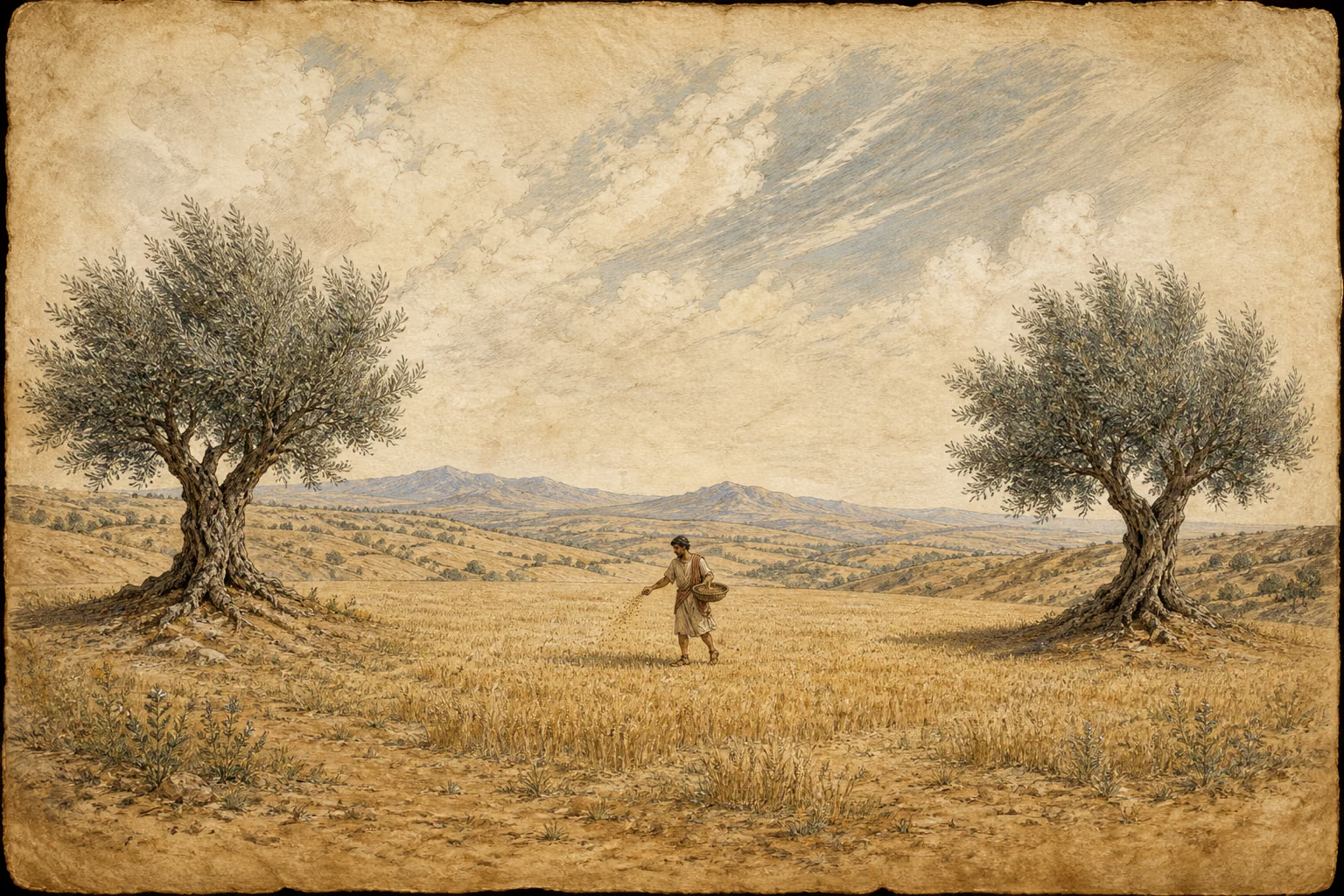
Stilicidii brevis defiuitio est: omnium, quae proiectu frondis ita defenduntur, ut per ipsas non defluant imbres, stilla saeva est. ergo plurimum intererit hac in quaestione, terra, in qua seremus, in quantum arbores quasque alat. iam per se colles minora quaerunt intervalla. ventosis locis crebriores seri conducit, oleam tamen maximo intervallo, de qua Catonis Italica sententia est in XXV pedibus, plurimum XXX seri. sed hoc variatur locorum natura. non alia maior in Baetica arbor, in Africa vero—fides penes auctores erit—miliarias vocari multas narrant a pondere olei, quod ferant annuo proventu. ideo LXXV pedes Mago intervallo dedit undique aut in macro solo ac duro atque ventoso, cum minimum, XLV. Baetica quidem uberrimas messes inter oleas metit. illam inscientiam pudendam esse conveniet adultas interlucare iusto plus et in senectam praecipitare aut, ut plerumque ipsis, qui posuere, coarguentibus imperitiam suam, totas excidere. nihil est foedius agricolis quam gestae rei poenitentia, multo iam ut praestet laxitate delinquere.
English · Bostock & Riley 1855–57
The present seems to me to be the proper occasion for making some mention of the intervals that ought to be left between the trees. Some persons have recommended that pomegranates, myrtles, and laurels should be planted closer together than the other trees, leaving, however, a space of nine feet between them. Apple-trees, they say, should be planted a little wider apart, and pear-trees, almonds, and figs even still more so. The best rule, however, is to consult the length of the branches, and the nature of the spot, as well as the shade that is formed by the tree; for it is of great importance to take this last into consideration. The shadow thrown by the large trees even is but of small dimensions, when the branches are disposed around the body of the tree in a spherical form, as in the apple and the pear, for instance. In the cherry, on the other hand, and the laurel, the shadow projected is of enormous extent.
The shadows of trees are possessed of certain properties. That of the walnut is baneful and injurious to man, in whom it is productive of head-ache, and it is equally noxious to everything that grows in its vicinity. The shadow, too, of the pine has the effect of killing the grass beneath it; but in both of these trees the foliage presents an effectual resistance to the winds, while, at the same time, the vine is destitute of such protection. The drops of water that fall from the pine, the quercus, and the holm-oak are extremely heavy, but from the cypress none fall; the shadow, too, thrown by this last tree is extremely small, its foliage being densely packed. The shadow of the fig, although widely spread, is but light, for which reason it is allowed to be planted among vines. The shadow of the elm is refreshing and even nutrimental to whatever it may happen to cover; though, in the opinion of Atticus, this tree is one of the most injurious of them all; and, indeed, I have no doubt that such may be the case when the branches are allowed to become too long; but at the same time I am of opinion that when they are kept short it can be productive of no possible harm. The plane also gives a very pleasant shade, though somewhat dense: but in this case we must look more to the luxuriant softness of the grass beneath it than the warmth of the sun; for there is no tree that forms a more verdant couch on which to recline.
The poplar gives no shade whatever, in consequence of the incessant quivering of its leaves: while that of the alder is very dense, but remarkably nutritive to plants. The vine affords sufficient shade for its wants, the leaf being always in motion, and from its repeated movement tempering the heat of the sun with the shadow that it affords; at the same time too it serves as an effectual protection against heavy rains. In nearly all trees the shade is thin, where the footstalks of the leaves are long.
This branch of knowledge is one by no means to be despised or deserving to be placed in the lowest rank, for in the case of every variety of plant the shade is found to act either as a kind nurse or a harsh step-mother. There is no doubt that the shadow of the walnut, the pine, the pitch-tree, and the fir is poisonous to everything it may chance to light upon.
A very few words will suffice for the water that drops from the leaves of trees. In all those which are protected by a foliage so dense that the rain will not pass through, the drops are of a noxious nature. In our enquiries, therefore, into this subject it will be of the greatest consequence what will be the nature developed by each tree in the soil in which we are intending to plant it. Declivities, taken by themselves, require smaller intervals between the trees, and in localities that are exposed to the wind it is beneficial to plant them closer together. However, it is the olive that requires the largest intervals to be left, and on this point it is the opinion of Cato, with reference to Italy, that the very smallest interval ought to be twenty-five feet, and the largest thirty: this, however, varies according to the nature of the site. The olive is the largest of all the trees in Bætica: and in Africa—if, indeed, we may believe the authors who say so—there are many olive-trees that are known by the name of milliariæ, being so called from the weight of oil that they produce each year. Hence it is that Mago has prescribed an interval between these trees of no less than seventy-five feet every way, or of forty-five at the very lowest, when the soil happens to be meagre, hard, and exposed to the winds. There is no doubt, however, that Bætica reaps the most prolific harvests from between her olives.
It will be generally agreed that it is a most disgraceful piece of ignorance to lop away the branches more than is absolutely necessary in trees of vigorous growth, and so precipitate old age; as also, on the other hand, what is generally tantamount to an avowal of unskilfulness on the part of those who have planted them, to have to cut them down altogether. Nothing can reflect greater disgrace upon agriculturists than to have to undo what they have done, and it is therefore much the best to commit an error in leaving a superfluity of room.