LIBER XVII · CAPUT 13
TREES WHICH GROW BUT SLOWLY: THOSE WHICH GROW WITH RAPIDITY
Latine · Mayhoff 1906
Quaedam autem natura tarde crescunt, et in primis semine tantum nascentia et longo aevo durantia. at quae cito occidunt, velocia sunt, ut ficus, punica, prunus, malus, pirus, myrtus, salix, et tamen antecedunt divitiis. in trimatu enim ferre incipiunt, ostendentes et ante. ex his lentissima est pirus, ocissima omnium cypirus et pseudocypirus frutex. protinus enim floret semenque perfert. omnia vero celerius adolescunt stolonibus ablatis unamque in stirpem redactis alimentis.
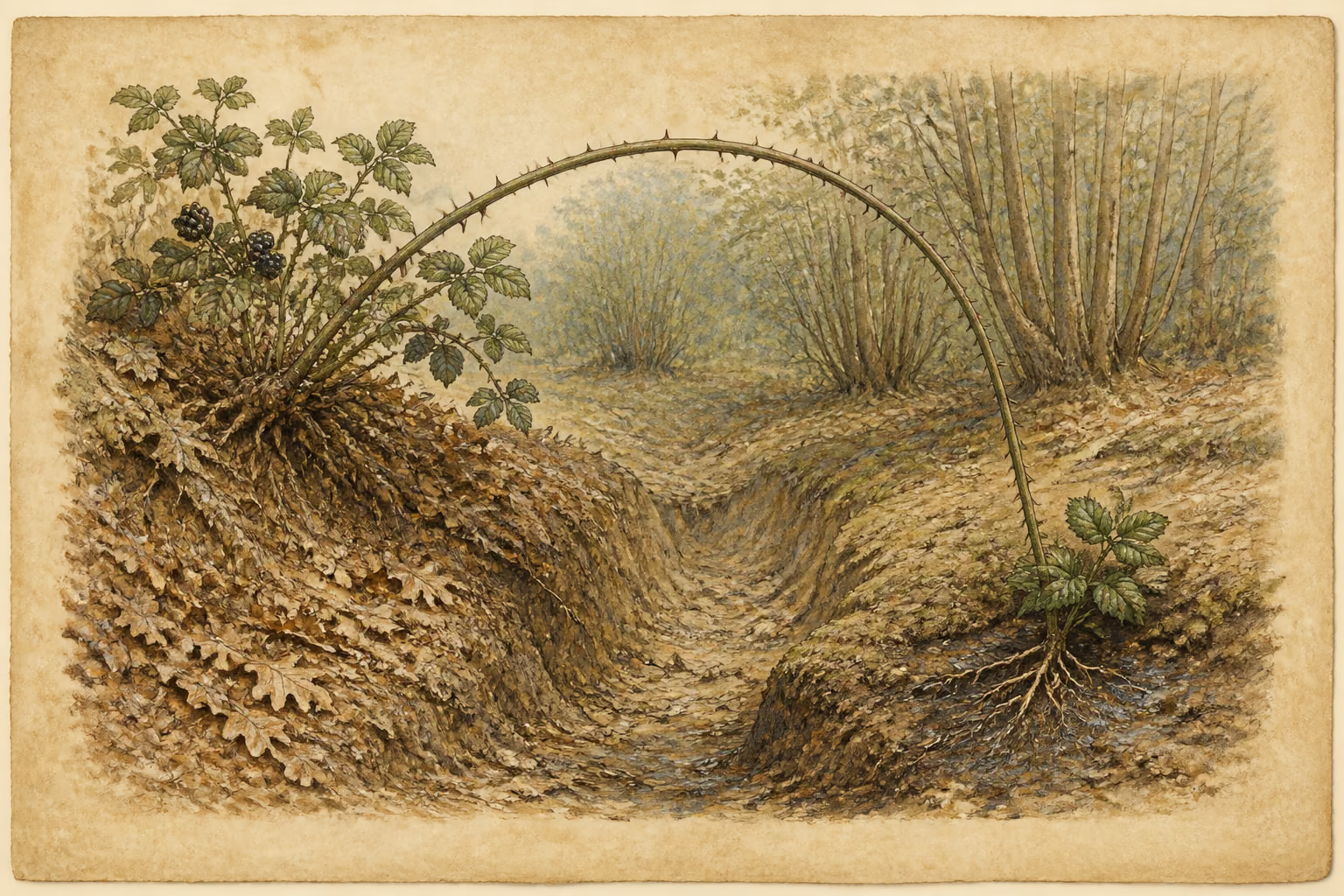
Eadem natura et propagines docuit. rubi namque curvati gracilitate et simul proceritate nimia defigunt rursus in terram capita iterumque nascuntur ex sese repleturi omnia, ni resistat cultura, prorsus ut possint videri homines terrae causa geniti. ita pessima atque execranda res propaginem tamen docuit ac viviradicem. eadem autem natura et hederis. Cato propagari praeter vitem tradit ficum, oleam, punicam, malorum genera omnia, laurus, pruna, myrtum, nuces abellanas et Praenestinas, platanum.
Propaginum duo genera: ramo ab arbore depresso in scrobem IIII pedum quoquo et post biennium amputato flexu plantaque translata post trimatum, quas si longius ferre libeat, in qualis statim aut vasis fictilibus defodere propagines aptissimum, ut in his transferantur. alterum genus luxuriosius, in ipsa arbore radices sollicitando traiectis per vasa fictilia vel qualos ramis terraque circumfartis, atque hoc blandimento inpetratis radicibus inter poma ipsa et cacumina—in summa etenim cacumina hoc modo petuntur audaci ingenio arborem aliam longe a tellure faciendi—eodem quo supra biennii spatio abscisa propagine et cum quasillis sata. Sabina herba propagine seritur et avolsione; tradunt faece vini aut e parietibus latere tuso mire ali. iisdem modis rosmarinum seritur et ramo, quoniam neutri semen, rhododendrum propagine et semine.
English · Bostock & Riley 1855–57
Some trees are naturally slow in their growth; and those in particular which grow solely from seed and are long-lived. On the other hand, those that are short-lived grow with great rapidity, such as the fig, pomegranate, plum, apple, pear, myrtle, and willow, for instance; and yet these are the very first to display their productions, for they begin to bear at three years old, and make some show of it even before that period. The pear is the slowest in bearing of all the trees above enumerated. The cypirus, however, and the shrub known as the pseudo-cypirus are the earliest in coming to maturity, for they flower almost immediately, and then produce their seed. All trees will come to maturity more rapidly when the suckers are removed, and the nutrimental juices are thrown into the stock only.
Nature, too, has taught us the art of reproduction from layers. The bramble, by reason of its thinness and the excessive length to which it grows, bends downwards, and throws the extremities of its branches into the earth; these immediately take root again, and would fill every place far and wide, were it not that the arts of cultivation put a check to it; so much so, indeed, that it would almost appear that men are born for nothing else but to take care of the earth. Hence it is, that a thing that is in itself most noxious and most baneful, has taught us the art of reproduction by layers and quicksets. The ivy, too, has a similar property.
Cato says, that in addition to the vine, the fig, as well as the olive, the pomegranate, every variety of the apple, the laurel, the plum, the myrtle, the filbert, the nut of Præneste, and the plane, are capable of being propagated by layers.
Layers are of two kinds; in the one, a branch, while still adhering to the tree, is pressed downwards into a hole that measures four feet every way: at the end of two years it is cut at the part where it curves, and is then transplanted at the expiration of three years more. If it is intended to carry the plant to any distance, it is the best plan to place the layer, directly it is taken up, either in an osier basket or any earthen vessel, for its better security when carried. The other mode of reproduction by layers is a more costly one, and is effected by summoning forth a root from the trunk of the tree even. For this purpose, earthen vessels or baskets are provided, and are then well packed with earth; through these the extremities of the branches are passed, and by this mode of encouragement a root is obtained growing amid the fruit itself, and at the very summit of the tree; for it is at the summit that this method is generally adopted. In this way has a bold and daring inventiveness produced a new tree aloft and far away from the ground. At the end of two years, in the manner already stated, the layer is cut asunder, and then planted in the ground, basket and all.
The herb savin is reproduced by layers, as also by slips; it is said, too, that lees of wine or pounded wall-bricks make it thrive wonderfully well. Rosemary also is reproduced in a similar manner, as also from cuttings of the branches; neither savin nor rosemary having any seed. The rhododendrum is propagated by layers and from seed.