LIBER XVII · CAPUT 19
CLEANING AND BARING THE ROOTS, AND MOULDING THEM
Latine · Mayhoff 1906
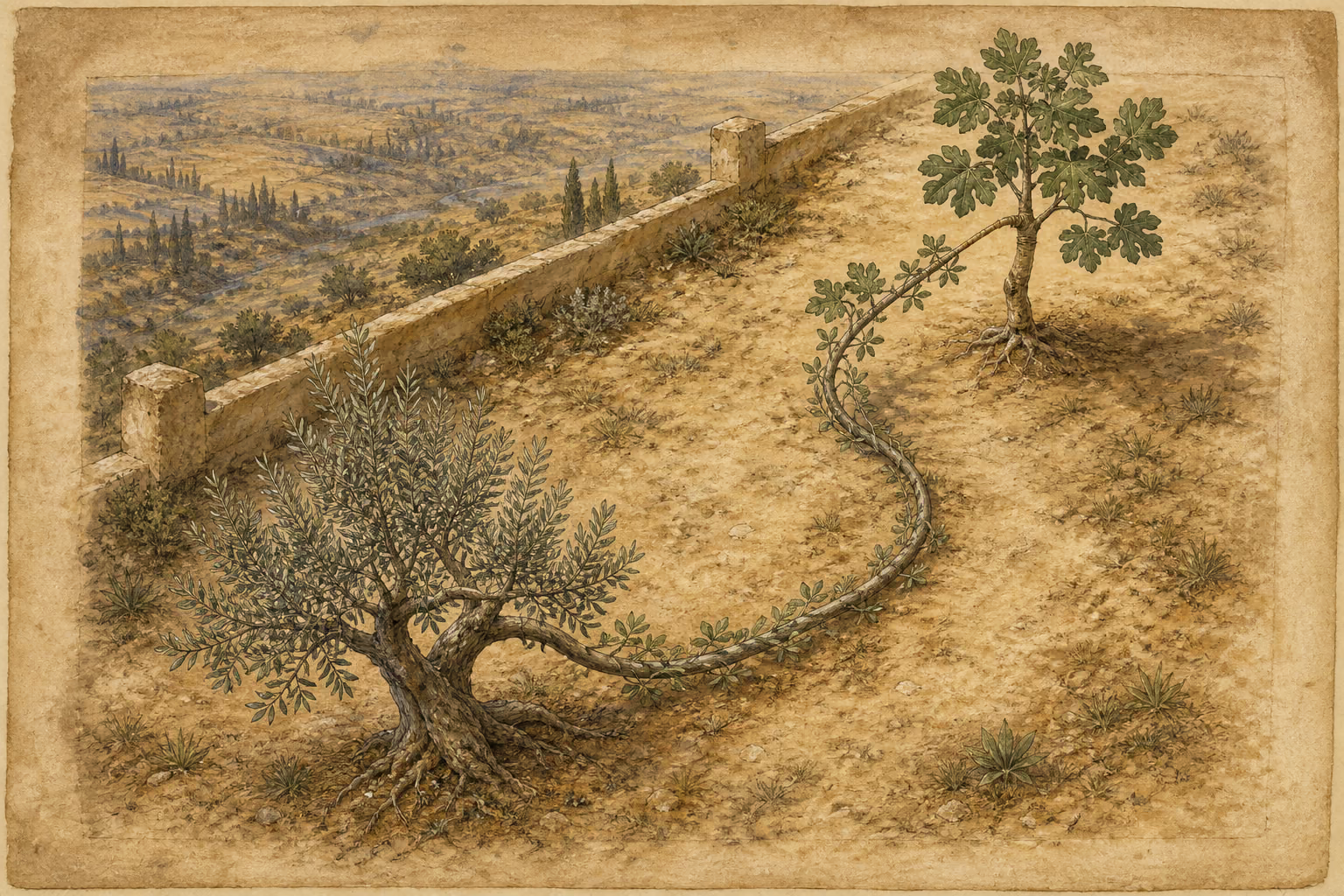
<7> Est etiamnum nova inserendi ratio, ne quid sciens quidem praeteream, quod usquam invenerim, Columellae excogitata, ut adfirmat ipse, qua vel diversae insociabilesque arborum naturae copulentur, ut fici atque oleae. iuxta hanc seri ficum iubet non ampliore intervallo, quam ut contingi large possit ramo oleae quam maxime sequaci atque oboedituro, eumque omni interim tempore edomari meditatione curvandi. postea fico adepta vires, quod evenire trimae aut utique quinquenni, detruncata superficie ipsumquoque deputatum et, ut dictum est, adraso cacumine defigi in crure fici, custoditum vinculis, ne curvatura fugiat. ita quodam propaginum insitorumque temperamento triennio communem inter duas matres coalescere, quarto anno abscisum totum adoptantis esse, nondum vulgata ratione aut mihi certe satis conperta.
Cetero eadem illa de calidis frigidisque et umidis aut siccis supra dicta ratio et scrobes fodere monstravit. in aquosis enim neque amplos neque altos facere expediet, aliter in aestuoso et sicco, ut quam maxime accipiant aquam contineantque. haec et veteres arbores colendi ratio est. ferventibus enim locis adcumulant aestate radices operiuntque, ne solis ardor exurat. aliubi ablaqueant perflatusque admittunt. iidem hieme cumulis a gelu vindidicant. contra illi hieme aperiunt umoremque sitientibus quaerunt. ubicumque circumfodiendi [arbores] ratio [in circuitum] pedes in orbem ternos, neque id in pratis, quoniam amore solis umorisque in summa tellure oberrant.
Et de arboribus quidem fructus gratia serendis inserendisque in universum sint dicta haec:
English · Bostock & Riley 1855–57
That I may omit nothing to my knowledge of the facts that I have anywhere been able to ascertain, I shall here add a new method of grafting, which has been discovered by Columella, as he asserts, by the aid of which trees even of a heterogeneous or dissociable nature may be made to unite; such, for instance, as the fig and the olive. In accordance with this plan, he recommends that a fig-tree should be planted near an olive, at a distance sufficiently near to admit of the fig being touched by a branch of the olive when extended to its full length; as supple and pliant a one as possible being selected for the purpose, and due care being taken all the time to render it seasoned by keeping it constantly on the stretch. After this, when the fig has gained sufficient vigour, a thing that generally happens at the end of three or five years at most, the top of it is cut off, the end of the olive branch being also cut to a point in the manner already stated. This point is then to be inserted in the trunk of the fig, and made secure with cords, lest, being bent, it should happen to rebound: in this way we find the method of propagating by layers combined with that of grafting. This union between the two parent trees is allowed to continue for three years, and then in the fourth the branch is cut away and left entirely upon the tree that has so adopted it. This method, however, is not at present universally known, at all events, so far as I have been able to ascertain.
In addition to these particulars, the same considerations that I have already mentioned in reference to warm or cold, moist or dry soils, have also taught us the necessity of trenching around the roots. These trenches, however, in a moist, watery soil, should be neither wide nor deep; while the contrary is the case where the ground is hot and dry; it being the object, in the latter instance, to let them receive and retain as much water as possible. This rule is applicable to the culture of old trees as well; for in very hot places the roots are well moulded in summer, and carefully covered up, to prevent the heat of the sun from parching them. In other places, again, the ground is cleared away from the roots, in order to give free access to the air, while in winter they are carefully moulded to protect them from the frost. The contrary is the case, however, in hot climates, for there they bare the roots in winter for the purpose of ensuring a supply of moisture to the parched fibres.
In all places the rule is to make a circular trench three feet in width at the foot of the tree; this, however, it is not possible to do in meadows, where the roots, in their fondness for the sun and showers, range near the surface far and wide. Such, then, are the general observations that we have to make in reference to the planting and grafting of trees that we value for their fruits.