LIBER XVII · CAPUT 21
THE CULTURE OF THE VINE AND THE VARIOUS SHRUBS WHICH SUPPORT IT
Latine · Mayhoff 1906
<1> Et praedictis velut armamentis vinearum restat ipsarum natura praecipua tradenda cura. vitium surculis et quarundam arborum, quibus fungosior intus natura, geniculati scaporum nodi intersaepiunt medullam. ferulae ipsae breves, et ad summa breviores articuli utrimque sua internodia includunt. medulla, sive ilia vitalis anima est, ante se tendit longitudinem inplens, quamdiu nodi pervia patent fistula. cum vero concreti ademere transitum, repercussa erumpit ab ima sui parte iuxta priorem nodum alternis laterum semper inguinibus, ut dictum est in harundine ac ferula, quorum dexterum ab imo intellegitur articulo, laevum in proximo, atque ita per vices. hoc vocatur in vite gemma, cum ibi caespitem fecit; ante vero quam faciat, in concavo oculus et in cacumine ipso germen. sic palmites, nepotes, uvae, folia, pampini gignuntur, mirumque firmiora esse in dextera parte genita.
<2> Hos ergo in surculis nodos, cum seruntur, medios secare oportet ita, ne profluat medulla. et in fico quidem dodrantales, paxillis solo patefacto, seruntur sic, ut descendant quae proxima arbori fuerint, II oculi extra terram emineant. oculi autem in arborum surculis proprie vocantur, unde germinantur. hac de causa et in plantariis aliquando eodem anno ferunt, quo fuere laturi fructus in arbore, cum tempestive sati praegnates inchoatos conceptus aliubi pariunt. ita satas ficos tertio anno transferre facile. hoc pro senescendi celeritate adtributum huic arbori, ut citissime proveniat.
<3> Vitium numerosior satus est. primum omnium nihil seritur ex his nisi inutile et deputatum in sarmenta. opputatur autem quidquid proximo tulit fructum. solebat capitulatus utrimque e duro surculus seri, eoque argumento malleolus vocatur etiamnunc. postea avelli cum sua calce coeptus est, ut in fico, neque est aliud vivacius. tertium genus adiectum etiamnum expeditius sine calce, quod sagittae vocantur, cum intorti panguntur, iidem cum recisi nec intorti, trigemmes. plures autem ex eodem surculo hoc modo fiunt. serere e pampinariis sterile est, nec nisi fecundo oportet. quae raros habet nodos, infecunda iudicatur; densitas gemmarum fertilitatis indicium est. quidam seri vetant nisi eos qui floruerint surculos. sagittas serere.minus utile, quoniam in transferendo facile rumpitur quod intortum fuit. seruntur pedali, non breviores, longitudine, quinque sexve nodorum. pauciores tribus gemmis in hac mensura esse non poterunt. inseri eodem die, quo deputentur, utilissimum; si multo postea necesse sit serere custoditos, uti praecepimus, caveri utique, ne extra terram positi sole inarescant, vento aut frigore hebetentur. qui diutius in sicco fuerint, priusquam serantur, in aqua pluribus diebus revirescant.
<4> Solum apricum et quam amplissimum in seminario sive in vinea bidente pastinari debet, ternos pedes bipalio alto, marra reici quaternum pedum fermento, ita utin pedes binos fossa procedat, fossum purgari et extendi, ne crudum relinquatur, verum exigi mensura. male pastinatum deprendunt scamna inaequalia. metienda est et ea pars, quae interiacet, pulvini. surculi seruntur et in scrobe et in sulco longiore; super quam tenerrima ingeritur terra, sed in gracili solo frustra nisi substrate pinguiore corio...... quam duas integi oportet et proximam attingi, terram eodem paxillo deprimi et spissari, interesse in plantario sesquipedes inter bina semina in latitudinem, in longitudinem semisses; ita satos malleolos XXIIII mense recidere ad imum articulum, nisi ipsi parcatur. oculorum inde materia emicat, cum qua XXXVI mense viveradix transfertur.
<5> Est et luxuriosa ratio vites serendi, ut quattuor malleoli vehementi vinculo colligentur ima parte [luxuriosa] atque ita vel per ossa bubuli cruris vel per colla fictilia traiecti obruantur binis eminentibus gemmis. uniscunt hoc modo recisisque palmitem emittunt. postea fistula fracta radix libere capit vires, uvaque fert omnium corporum suorum acinos. in alio genere invento novicio finditur malleolus, medullaque erasa in se colligantur ipsi caules ita, ut gemmis parcatur omni modo. tum malleolus in terra fimo mixta seritur et, cum spargere caules coepit, deciditur foditurque saepius. talis uvae acinos nihil intus ligni habituros Columella promittit, cum vivere semina ipsa perquam mirun sit medulla adempta.
Nasci surculis etiam, quibus non sit articulatio, arbores non omittendum videtur. namque buxi tenuissimis quinis senisve colligatis depacti proveniunt. quondam in observatione erat, ut defringerentur ex inputata buxo, aliter vivere non crediti. detraxere hoc experimenta.
<6> Seminarii curam sequitur vinearum ratio. quinque generum hae: sparsis per terram palmitibus aut per se vite subrecta vel cum amminiculo sine iugo aut pedatae simplici iugo aut conpluviatae quadriplici. quae pedatae ratio, eadem intellegetur eius quoque, in qua sine amminiculo vitis per se stabit. id enim non fit nisi pedamenti inopia. simplici iugo constat porrecto ordine quem canterium appellant. melior ea vino, quoniam sibi ipsa non obumbrat adsiduoque sole coquitur et adflatum magis sentit, celerius rorem dimittit, pampinationi quoque et occationi omnique operi facilior. super cetera deflorescit utilius. iugum fit pertica aut harundine aut crine funiculove, ut in Hispania Brundisique. conpluviata copiosior vino est, dicta a cavis aedium conpluviis. dividitur in quaternas partes totidem iugis. huius serendi ratio dicetur, eadem valitura in omni genere, in hoc vero numerosior tantum. <7> III vero seritur modis: optime in pastinato, proxime in sulco, novissime in scrobe.
English · Bostock & Riley 1855–57
Having now described what we may call the armoury of the vine, it remains for us to treat with a particular degree of care of the nature of the vine itself.
The shoots of the vine, as also of certain other trees, the interior of which is naturally of a spongy quality, have certain knots or joints upon the stem that intercept the pith. The intervals between these joints in the branches are short, and more particularly so towards the extremities. The pith, in itself the vivifying spirit of the tree, is always taking an onward direction, so long as the knot, by being open in the centre, allows it a free passage. If, however, the knot should become solidified and deny it a passage, the pith is then thrown downward upon the knot that lies next below it, and making its escape, issues forth there in the shape of a bud, these buds always making their appearance on each side alternately, as already mentioned in the case of the reed and the giant-fennel; in other words, where one bud makes its appearance at the bottom of a knot to the right, the next one takes its place on the left, and so on alternately. In the vine this bud is known as the “gem,” as soon as the pith has formed there a small round knob; but before it has done this, the concavity that is left upon the surface is merely called the “eye:” when situate at the extremity of the shoot, it is known as the “germ.” It is in the same way, too, that the stock branches, suckers, grapes, leaves, and tendrils of the vine are developed: and it is a very surprising fact, that all that grows on the right side of the tree is stronger and stouter than on the left.
Hence it is, that when slips of this tree are planted, it is necessary to cut these knots in the middle, in order to prevent the pith from making its escape. In the same way, too, when planting the fig, suckers are taken, nine inches in length, and after the ground is opened they are planted with the part downwards that grew nearest to the tree, and with a couple of eyes protruding from the earth—in slips of trees, that part is properly called the eye which is to give birth to the future bud. It is for this reason that, in the seed-plots even the slips that are thus planted sometimes bear the same year the fruit that they would have borne if they had remained upon the tree: this takes place when they have been planted in good seasons and are replete with fecundity, for then they bring to maturity the fruits the conception of which was commenced in another spot. Fig-trees that are thus planted may very easily be transplanted in the third year. As some compensation for the rapidity with which this tree becomes old, it has thus received the privilege of coming to maturity at a very early period.
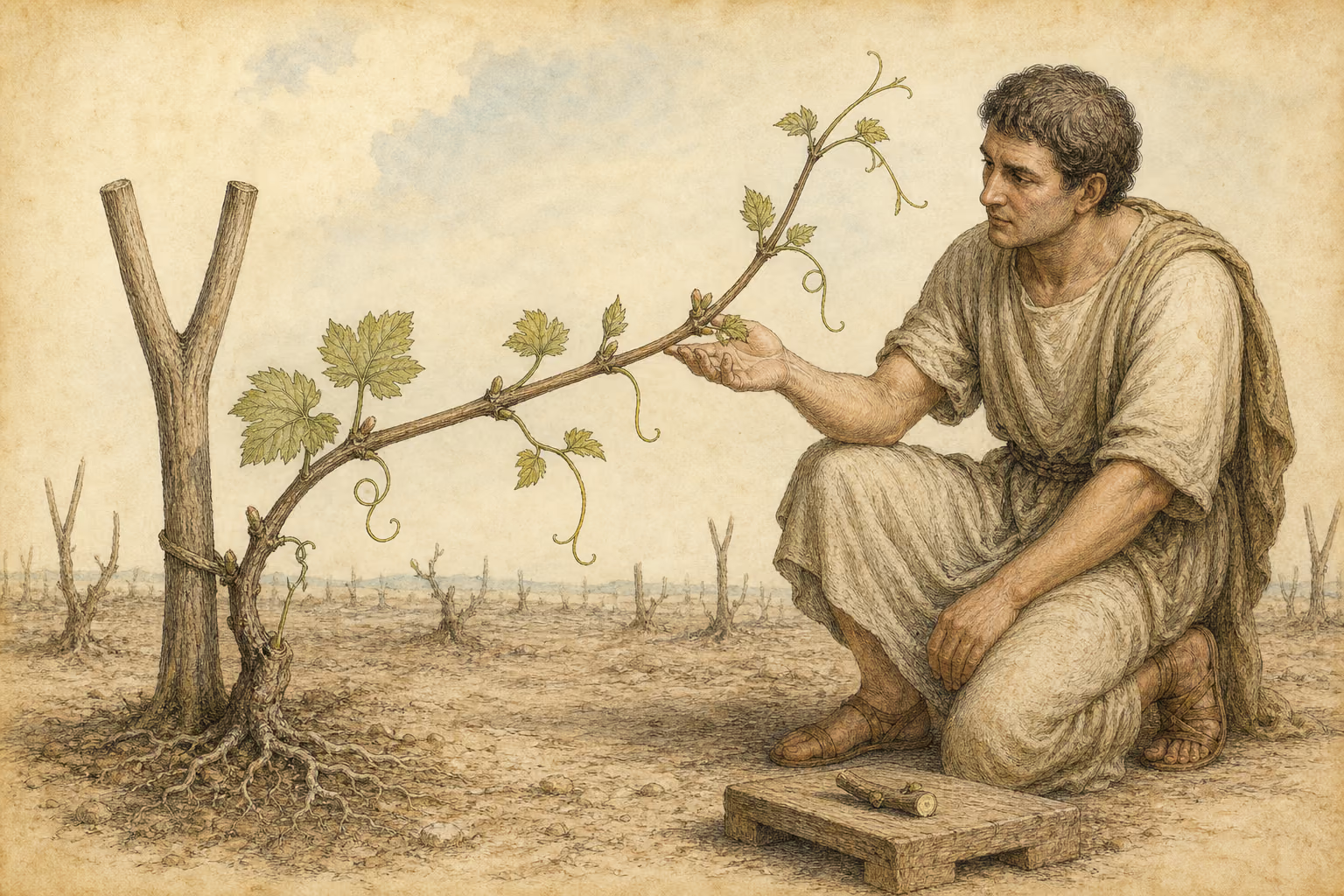
The vine throws out a great number of shoots. In the first place, however, none of them are ever used for planting, except those which are useless, and would have been cut away as mere brushwood; while, on the other hand, every part is pruned off that has borne fruit the previous year. In former times, it was the custom to plant the slip with a head at the extremity, consisting of a piece of the hard wood on each side of it, the same, in fact, that is called a mallet shoot at the present day. In more recent times, however, the practice has been adopted of pulling it off merely with a heel attached to it, as in the fig; and there is no kind of slip that takes with greater certainty. A third method, again, has been added to the former ones, and a more simple one as well, that of taking the slip without any heel at all. These slips are known by the name of arrow- shoots, when they are twisted before planting; and the same, when they are neither cut short nor twisted, are called three-budded slips. The same sucker very often furnishes several slips of this kind. To plant a stock-shoot of the vine is unproductive, and, indeed, no shoots will bear unless they are taken from a part that has borne fruit already. A slip that has but few knots upon it, is looked upon as likely not to bear; while a great number of buds is considered an indication of fruitfulness. Some persons say that no suckers ought to be planted, but those which have already blossomed. It is far from advantageous to plant arrow-slips, for after being twisted, they are apt to break in transplanting. The slips when planted should be a foot in length, and not less, and they ought to have five or six knots upon them; with the dimensions above stated, they cannot, however, possibly have less than three buds. It is considered the most advantageous plan to plant them out the same day that they are cut; but if it is found necessary to plant them some time after, they should be kept in the way that we have already mentioned; particular care being taken not to let them protrude from the earth, lest they should become dried by the action of the sun, or nipped by the wind or frost. When they have been kept too long in a dry place, they must be put in water for several days, for the purpose of restoring their verdancy and freshness.
The spot selected, whether for nursery or vineyard, ought to be exposed to the sun, and of as great extent as possible; the soil being turned up to a depth of three feet with a two-pronged fork. The earth, on being thrown up with the mattock, swells naturally, and ridges are formed with it four feet in height, intersected by trenches a couple of feet in depth. The earth in the trenches is carefully cleansed and raked out, so that none of it may be left unbroken, care being taken also to keep it exactly level; if the ridges are unequal, it shows that the ground has been badly dug. At the same time the breadth should be measured of each ridge that lies between the trenches. The slips are planted either in holes or else in elongated furrows, and then covered with very fine earth; but where it is a light soil, the grower will lose his pains should he neglect to place a layer of richer mould beneath. Not less than a couple of slips should be planted together, keeping them exactly on a level with the adjoining earth, which should be pressed down and made compact with the dibble. In the seed-plot there should be intervals left between each two settings a foot and a half in breadth and half a foot in length: when thus planted, it is usual, at the end of two years, to cut the mallet-shoots at the knot nearest the ground, unless there is some good reason for sparing them. When this is done, they throw out eyes, and with these upon them at the end of three years the quicksets are transplanted.
There is another method, also, of planting the vine, which a luxurious refinement in these matters has introduced. Four mallet-shoots are tightly fastened together with a cord in the greenest part, and when thus arranged are passed through the shank-bone of an ox or else a tube of baked earth, after which they are planted in the ground, care being taken to leave a couple of buds protruding: in this way they become impregnated with moisture, and, immediately on being cut, throw out fresh wood. The tube is then broken, upon which the root, thus set at liberty, assumes fresh vigour, and the clusters ultimately bear upon them grapes belonging to the four kinds thus planted together.
In consequence of a more recent discovery, another method has been adopted. A mallet-shoot is split down the middle and the pith extracted, after which the two portions are fastened together, every care being taken not to injure the buds. The mallet-shoot is then planted in a mixture of earth and manure, and when it begins to throw out branches it is cut, the ground being repeatedly dug about it. Columella assures us that the grapes of this plant will have no stones, but it is a more surprising thing that the slip itself should survive when thus deprived of the pith. Still, however, I think I ought not to omit the fact that there are some slips that grow without the ordinary articulations of trees upon them; thus, for instance, five or six very small sprigs of box, if tied together and put in the ground, will take root. It was formerly made a point to take these sprigs from a box-tree that had not been lopped, as it was fancied that in the last case they would not live; experience, however, has since put an end to that notion.
The culture of the vineyard naturally follows the training of the nursery. There are five different kinds of vine: that with the branches running along the ground, the vine that stands without support, the vine that is propped and requires no cross-piece, the vine that is propped and requires a single cross-piece, and the vine that requires a trellis of four compartments. The mode of cultivation requisite for the propped vine may be understood as equally adapted to the one that stands by itself and requires no support, for this last method is only employed where there is a scarcity of wood for stays. The stay with the single cross-piece in a straight line is known by the name of “canterius.” It is the best of all for the wine, for then the tree throws no shadow, and the grape is ripened continuously by the sun, while, at the same time, it derives more advantage from the action of the wind, and disengages the dew with greater facility: the superfluous leaves and shoots, too, are more easily removed, and the breaking up of the earth and other operations about the tree are effected with greater facility. But, above all, by the adoption of this method, the tree sheds its blossoms more beneficially than under any other circumstances. This cross-piece is generally made of a stake, or a reed, or else of a rope of hair or hemp, as is usually the case in Spain and at Brundisium. When the trellis is employed, wine is produced in greater quantities; this method has its name of “compluviata” from the “compluvium” or square opening in the roofs of our houses; the trellis is divided into four compartments by as many cross-pieces. This mode of planting the vine will now be treated of, and it will be found equally applicable to every kind, with the only difference that under this last method the operation is somewhat more complicated.
The vine is planted three different ways; in a soil that has been turned up with the spade—the best of the three; in furrows, which is the next best; and in holes, the least advisable method of all: of the way in which ground is prepared by digging, we have made sufficient mention already.