LIBER XVII · CAPUT 28
MEDICAMENTS FOR TREES
Latine · Mayhoff 1906
Quaedam poena emendantur aut morsu excitantur, ut palmae ac lentisci; salsis enim aquis aluntur. salis vim et cineres, sed leniorem, habent; ideo ficis adsperguntur rutaeque, ne fiant vermiosae neve radices putrescant. quin et vitium radicibus aquam salsam iubent adfundi, si sint lacrimosae; si vero fructus earum decidant, cinerem aceto conspergi ipsasque inlini aut sandaraca, si putrescat uva; si vero fertiles non sint, aceto acri subacto cinere rigari atque oblini; quod si fructum non maturent prius inarescentem, praecisarum ad radices plagam fibrasque aceto acri et urina vetusta madefacere atque eo luto obruere, saepe fodere. olearum, si parum promisere fructus, nudatas radices hiberno frigori opponunt, eaque castigatione proficiunt. omnia haec annua caeli ratione constant et aliquando serius poscuntur, aliquando celerius. nec non ignis aliquis prodest, ut harundini. ambusta namque densior mitiorque surgit. Cato et medicamenta quaedam conponit, mensurae quoque distinction, ad maiorum arborum radices amphoram, ad minorum urnam, amurcae et aquae portione aequa, ablaqueatis prius radicibus paulatim, adfundi iubens, in olea hoc amplius stramentis ante circumpositis, item fico; huius praecipue vere terrain adaggerari radicibus; ita futurum, ut non decidant grossi maiorque fecunditas nec scabra proveniat. simili modo, ne convolvolus fiat in vinea, amurcae congios duos decoqui in crassitudinem mellis, rursusque cum bituminis tertia parte et sulpuris quarta sub diu coqui, quoniam exardescat sub tecto. hoc vites circa capita ac sub bracchiis ungui; ita non fore convolvolum. quidam contenti sunt fumo huius mixturae suffire vineas secundo flatu continuo triduo. plerique non minus auxilii et alimenti arbitrantur in urina quam Cato in amurca, addita modo pari aquae portione, quoniam per se noceat. aliqui volucre appellant animal praerodens pubescentes uvas. quod ne accidat, falces, cum sint exacutae, fibrina pelle detergent atque ita putant aut sanguine ursino linunt post putationem easdem. sunt arborum pestes et formicae. has abigunt rubrica ac pice liquida perunctis caudicibus, nec non et pisce suspenso iuxta in unum locum congregant aut lupino trito cum oleo radices linunt. multi et has et talpas amurca necant, contraque urucas et, ne mala putrescant, lacerti viridis felle tangi cacumina iubent, privatim autem contra urucasambiri arbores singulas a muliere incitati mensis, nudis pedibus, recincta. item ne quod animal pastu malefico decerpat frondem, fimo boum diluto spargi folia, quotiens imber interveniat, quoniam abluatur ita virus medicaminis, mira quaedam excogitante sollertia humana, quippe cum averti grandines carmine credant plerique, cuius verba inserere non equidem serio ausim, quamquam a Catone proditis contra luxata membra iungenda harundinum fissurae. idem arbores religiosas lucosque succidi permisit, sacrificio prius facto, cuius rationem precationemque eodem volumine tradidit.
English · Bostock & Riley 1855–57
There are some trees, again, which thrive all the better for being maltreated, or else are stimulated by pungent substances; the palm and the mastich for instance, which derive nutriment from salt water. Ashes have the same virtues as salt, only in a more modified degree; for which reason it is, that fig-trees are sprinkled with them; as also with rue, to keep away worms, and to prevent the roots from rotting. What is still more even, it is recommended to throw salt water on the roots of vines, if they are too full of humours; and if the fruit falls off, to sprinkle them with ashes and vinegar, or with sandarach if the grapes are rotting. If, again, a vine is not productive, it should be sprinkled and rubbed with strong vinegar and ashes; and if the grapes, instead of ripening, dry and shrivel up, the vine should be lopped near the roots, and the wound and fibres drenched with strong vinegar and stale urine; after which, the roots should be covered up with mud annealed with these liquids, and the ground spaded repeatedly.
As to the olive, if it gives promise of but little fruit, the roots should be bared, and left exposed to the winter cold, a mode of treatment for which it is all the better.
All these operations depend each year upon the state of the weather, and require to be sometimes retarded, and at other times precipitated. The very element of fire even has its own utility, in the case of the reed for instance; which, after the reed-bed has been burnt, will spring up all the thicker and more pliable.
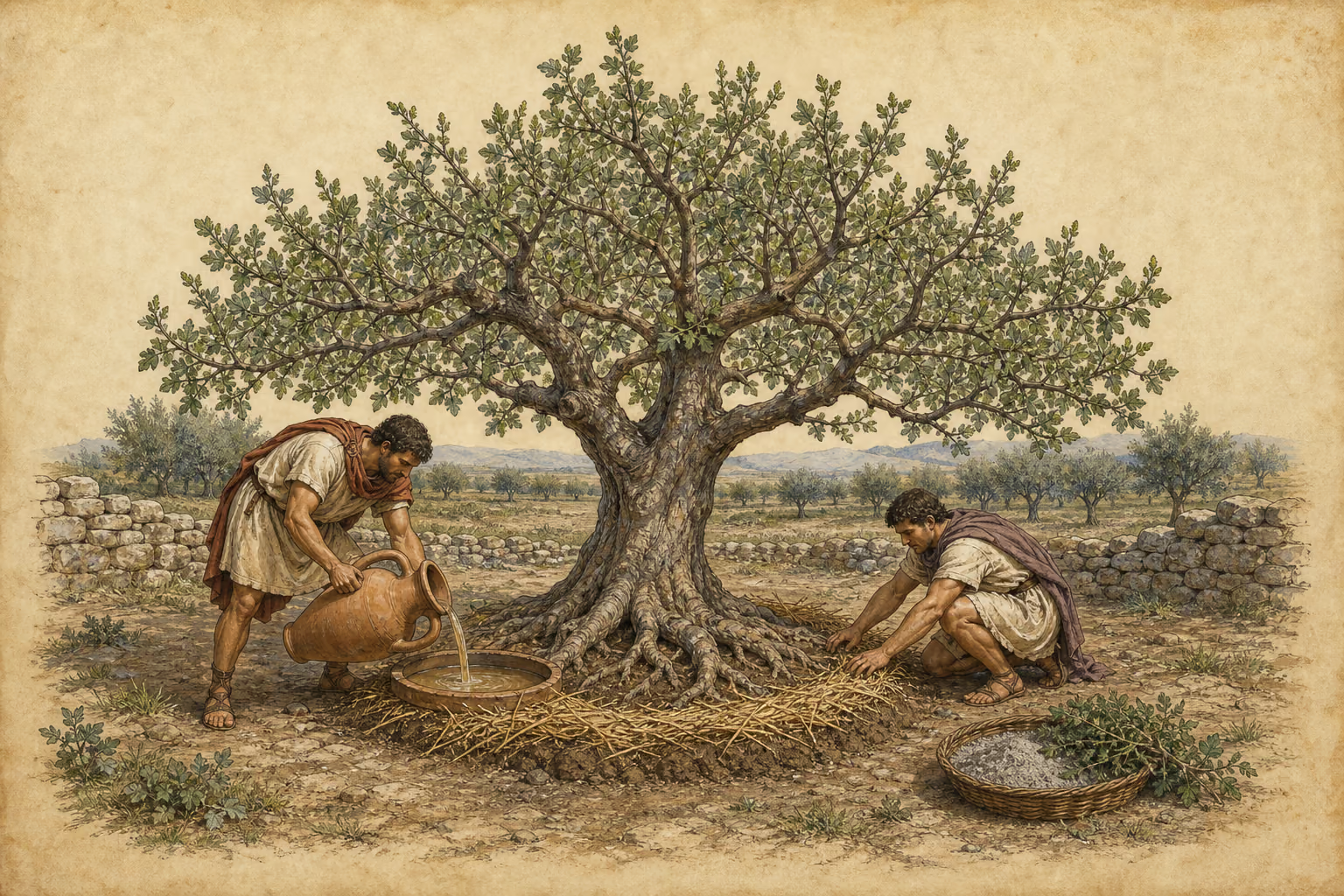
Cato, too, gives receipts for certain medicaments, specifying the proportions as well; for the roots of the large trees he prescribes an amphora, and for those of the smaller ones, an urna, of amurca of olives, mixed with water in equal proportions, recommending the roots to be cleared, and the mixture to be gradually poured upon them. In addition to this, in the case of the olive and the fig, he recommends that a layer of straw should be first placed around them. In the fig, too, more particularly, he says that in spring the roots should be well moulded up; the result of which is, that the fruit will not fall off while green, and the tree will be all the more productive, and not affected with roughness of the bark. In the same way, too, to prevent the vine-fretter from attacking the tree, he recommends that two congii of amurca of olives should be boiled down to the consistency of honey, after which it must be boiled again with one-third part of bitumen, and one-fourth of sulphur; and this should be done, he says, in the open air, for fear of its igniting if prepared in-doors; with this mixture, the vine is to be anointed at the ends of the branches and at the axils; after which, no more fretters will be seen. Some persons are content to make a fumigation with this mixture while the wind is blowing towards the vine, for three days in succession.
Many persons, again, attribute no less utility and nutritious virtue to urine than Cato does to amurca; only they add to it an equal proportion of water, it being injurious if employed by itself. Some give the name of “volucre” to an insect which eats away the young grapes: to prevent this, they rub the pruning-knife, every time it is sharpened, upon a beaver-skin, and then prune the tree with it: it is recommended also, that after the pruning, the knife should be well rubbed with the blood of a bear. Ants, too, are a great pest to trees; they are kept away, however, by smearing the trunk with red earth and tar: if a fish, too, is hung up in the vicinity of the tree, these insects will collect in that one spot. Another method, again, is to pound lupines in oil, and anoint the roots with the mixture. Many people kill both ants as well as moles with amurca, and preserve apples from caterpillars as well as from rotting, by touching the top of the tree with the gall of a green lizard.
Another method, too, of preventing caterpillars, is to make a woman, with her monthly courses on her, go round each tree, barefooted and ungirt. Again, for the purpose of preventing animals from doing mischief by browsing upon the leaves, they should be sprinkled with cow-dung each time after rain, the showers having the effect of washing away the virtues of this application.
The industry of man has really made some very wonderful discoveries, and, indeed, has gone so far as to lead many persons to believe, that hail-storms may be averted by means of a certain charm, the words of which I really could not venture seriously to transcribe; although we find that Cato has given those which are employed as a charm for sprained limbs, employing splints of reed in conjunction with it. The same author, too, has allowed of consecrated trees and groves being cut down, after a sacrifice has first been offered: the form of prayer, and the rest of the proceedings, will be found fully set forth in the same work of his.