LIBER XVIII · CAPUT 1
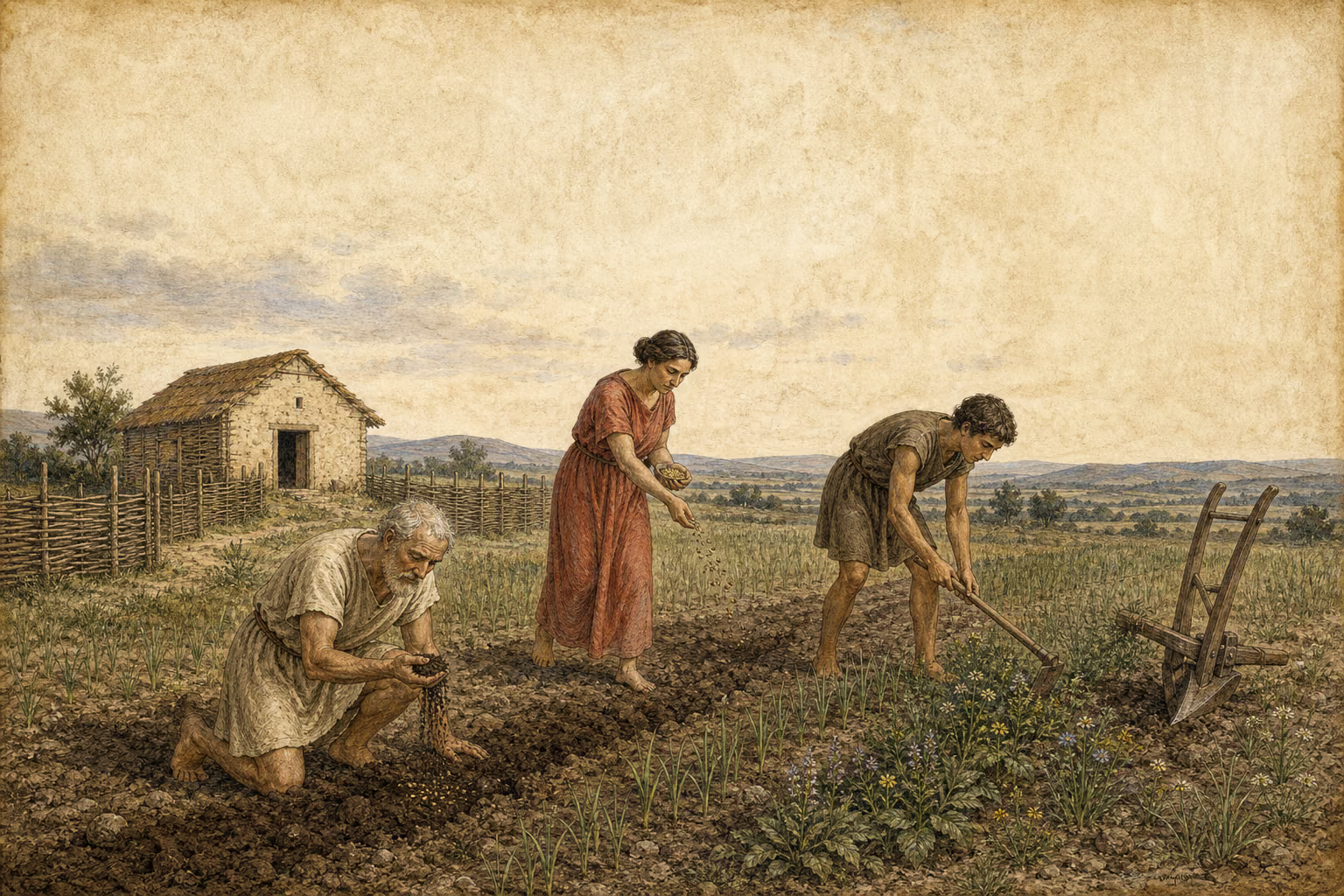
TASTE OF THE ANCIENTS FOR AGRICULTURE
Latine · Mayhoff 1906
Sequitur natura frugum hortorumque ac florum quaeque alia praeter arbores aut frutices benigna tellure proveniunt, vel per se tantum herbarum inmensa contemplatione, si quis aestimet varietatem, numerum, flores, odores coloresque et sucos ac vires earum, quas salutis aut voluptatis hominum gratia gignit. qua in parte primum omnium patrocinari terrae et adesse cunctorum parenti iuvat, quamquam inter initia operis defensae. quoniam tamen ipsa materia accedimus ad reputationem eiusdem parientis et noxia: nostris eam criminibus urguemus nostramque culpam illi inputamus. genuit venena. set quis invenit illa praeter hominem? cavere ac refugere alitibus ferisque satis est. atque cum arbore exacuant limentque cornua elephanti et uri, saxo rhinocerotes, utroque apri dentium sicas, sciantque ad nocendum praeparare se animalia, quod tamen eorum excepto homine et tela sua venenis tinguit? nos et sagittas tinguimus ac ferro ipsi nocentius aliquid damus, nos et flumina inficimus et rerum naturae elementa, ipsumque quo vivitur in perniciem vertimus. neque est, ut putemus ignorari ea ab animalibus; quae praepararent contra serpentium dimicationes, quae post proelium ad medendum excogitarent, indicavimus. nec ab ullo praeter hominem veneno pugnatur alieno. fateamur ergo culpam ne iis quidem, quae nascuntur, contenti; etenim quanto plura eorum genera humana manu fiunt! quid? non et homines quidem ut venena nascuntur? atra ceu serpentium lingua vibrat tabesque animi contacta adurit culpantium omnia ac dirarum alitum modo tenebris quoque suis et ipsarum noctium quieti invidentium gemitu, quae sola vox eorum est, ut inauspicatarum animantium vice obvii quoque vetent agere aut prodesse vitae. nec ullum aliud abominati spiritus praemium novere quam odisse omnia. verum et in hoc eadem naturae maiestas. quanto plures bonos genuit ut fruges! quanto fertilior in his, quae iuvent alantque! quorum aestimatione et gaudio nos quoque, relictis exustioni suae istis hominum rubis, pergemus excolere vitam eoque constantius, quo operae nobis maior quam famae gratia expetitur. quippe sermo circa rura est agrestesque usus, sed quibus vita constet honosque apud priscos maximus fuerit.
English · Bostock & Riley 1855–57
We now pass on to the Natural History of the various grains, of the garden plants and flowers, and indeed of all the other productions, with the exception of the trees and shrubs, which the Earth, in her bounteousness, affords us—a boundless field for contemplation, if even we regard the herbs alone, when we take into consideration the varieties of them, their numbers, the flowers they produce, their odours, their colours, their juices, and the numerous properties they possess—all of which have been engendered by her with a view to either the preservation or the gratification of the human race.
On entering, however, upon this branch of my subject, it is my wish in the first place to plead the cause of the Earth, and to act as the advocate of her who is the common parent of all, although in the earlier part of this work I have already had occasion to speak in her defence. For my subject matter, as I proceed in the fulfilment of my task, will now lead me to consider her in the light of being the producer of various noxious substances as well; in consequence of which it is that we are in the habit of charging her with our crimes, and imputing to her a guilt that is our own. She has produced poisons, it is true; but who is it but man that has found them out? For the birds of the air and the beasts of the field, it is sufficient to be on their guard against them, and to keep at a distance from them. The elephant, we find, and the urus, know how to sharpen and renovate their teeth against the trunks of trees, and the rhinoceros against rocks; wild boars, again, point their tusks like so many poniards by the aid of both rocks and trees; and all animals, in fact, are aware how to prepare themselves for the infliction of injury upon others; but still, which is there among them all, with the exception of man, that dips his weapons in poison? As for ourselves, we envenom the point of the arrow, and we contrive to add to the destructive powers of iron itself; by the aid of poisons we taint the waters of the stream, and we infect the various elements of Nature; indeed, the very air even, which is the main support of life, we turn into a medium for the destruction of life.
And it is not that we are to suppose that animals are ignorant of these means of defence, for we have already had occasion to point out the preparations which they make against the attacks of the serpent, and the methods they devise for effecting a cure when wounded by it; and yet, among them all, there is not one that fights by the aid of the poison that belongs to another, with the sole exception of man. Let us then candidly confess our guilt, we who are not contented even with the poisons as Nature has produced them; for by far the greater portion of them, in fact, are artificially prepared by the human hand!
And then besides, is it not the fact, that there are many men, the very existence of whom is a baneful poison, as it were? Like that of the serpent, they dart their livid tongue, and the venom of their disposition corrodes every object upon which it concentrates itself. Ever vilifying and maligning, like the ill-omened birds of the night, they disturb the repose of that darkness which is so peculiarly their own, and break in upon the quiet of the night even, by their moans and wailings, the only sounds they are ever heard to emit. Like animals of inauspicious presage, they only cross our path to prevent us from employing our energies or becoming useful to our fellow-men; and the only enjoyment that is sought by their abominable aspirations is centred in their universal hatred of mankind.
Still, however, even in this respect Nature has asserted her majestic sway; for how much more numerous are the good and estimable characters which she has produced! just in the same proportion that we find her giving birth to productions which are at once both salutary and nutritious to man. It is in our high esteem for men such as these, and the commendations they bestow, that we shall be content to leave the others, like so many brakes and brambles, to the devouring flames of their own bad passions, and to persist in promoting the welfare of the human race; and this, with all the more energy and perseverance, from the circumstance that it has been our object throughout, rather to produce a work of lasting utility than to ensure ourselves a widely-spread renown. We have only to speak, it is true, of the fields and of rustic operations; but still, it is upon these that the enjoyment of life so materially depends, and that the ancients conferred the very highest rank in their honours and commendations.