LIBER XVIII · CAPUT 2
WHEN THE FIRST WREATHS OF CORN WERE USED AT ROME
Latine · Mayhoff 1906
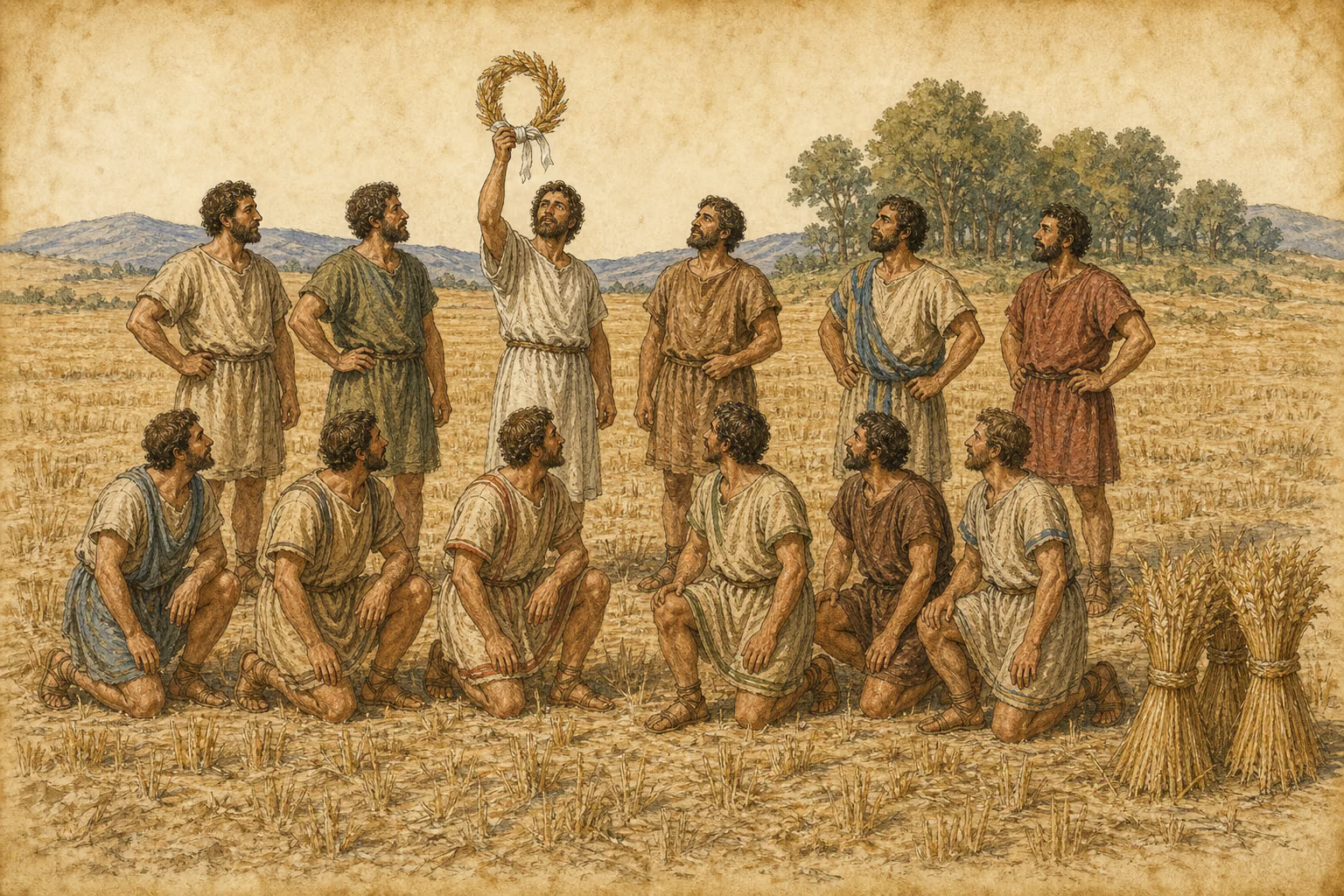
Arvorum sacerdotes Romulus in primis instituit seque duodecimum fratrem appellavit inter illos Acca Larentia nutrice sua genitos, spicea corona, quae vitta alba colligaretur, sacerdotio ei pro religiosissimo insigni data; quae prima apud Romanos fuit corona, honosque is non nisi vita finitur et exules etiam captosque comitatur. bina tunc iugera p. R. satis erant, nullique maiorem modum adtribuit, quo servorum paulo ante principis Neronis contento huius spatii viridiariis? piscinas iuvat maiores habere, gratumque, si non aliquem culinas. Numa instituit deos fruge colere et mola salsa supplicare atque, ut auctor est Hemina, far torrere, quoniam tostum cibo salubrius esset, id uno modo consecutus, statuendo non esse purum ad rem divinam nisi tostum. is et Fornacalia instituit farris torrendi ferias et aeque religiosas Terminis agrorum. hos enim deos tum maxime noverant, Seiamque a serendo, Segestam a segetibus appellabant, quarum simulacra in circo videmus—tertiam ex his nominare sub tecto religio est—, ac ne degustabant quidem novas fruges aut vina, antequam sacerdotes primitias libassent.
English · Bostock & Riley 1855–57
Romulus was the first who established the Arval priesthood at Rome. This order consisted of the eleven sons of Acca Larentia, his nurse, together with Romulus himself, who assumed the appellation of the twelfth of the brotherhood. Upon this priesthood he bestowed, as being the most august distinction that he could confer upon it, a wreath of ears of corn, tied together with a white fillet; and this, in fact, was the first chaplet that was ever used at Rome. This dignity is only ended with life itself, and whether in exile or in captivity, it always attends its owner. In those early days, two jugera of land were considered enough for a citizen of Rome, and to none was a larger portion than this allotted. And yet, at the present day, men who but lately were the slaves of the Emperor Nero have been hardly content with pleasure-gardens that occupied the same space as this; while they must have fishponds, forsooth, of still greater extent, and in some instances I might add, perhaps, kitchens even as well.
Numa first established the custom of offering corn to the gods, and of propitiating them with the salted cake; he was the first, too, as we learn from Hemina, to parch spelt, from the fact that, when in this state, it is more wholesome as an aliment. This method, however, he could only establish one way: by making an enactment, to the effect that spelt is not in a pure state for offering, except when parched. He it was, too, who instituted the Fornacalia, festivals appropriated for the parching of corn, and others, observed with equal solemnity, for the erection and preservation of the “termini,” or boundaries of the fields: for these termini, in those days, they particularly regarded as gods; while to other divinities they gave the names of Seia, from “sero,” “to sow,” and of Segesta, from the “segetes,” or “crops of standing corn,” the statues of which goddesses we still see erected in the Circus. A third divinity it is forbidden by the rules of our religion to name even beneath a roof. In former days, too, they would not so much as taste the corn when newly cut, nor yet wine when just made, before the priests had made a libation of the first-fruits.