LIBER XVIII · CAPUT 27
WORK TO BE DONE AFTER THE RISING OF THE VERGILIÆ: HAY-MAKING
Latine · Mayhoff 1906
<1> iam vergilias in caelo notabiles caterva fecerat, non tamen his contenta terrestres fecit alias veluti vociferans: ecur caelum intuearis, agricola? cur sidera quaeras, rustice? iam te breviore somno fessum premunt noctes. ecce tibi inter herbas tuas spargo peculiares stellas easque vespera et ab opere disiungenti ostendo ac, ne possis praeterire, miraculo sollicito. videsne ut fulgor igni similis alarum conpressu obtegatur, secumque lucem habeat et nocte? dedi tibi herbas horarum indices et, ut ne sole quidem oculos tuos a terra avoces, heliotropium ac lupinum circumaguntur cum illo. cur etiamnum altius spectes ipsumque caelum scrutere? habes ante pedes tuos ecce vergilias.' incertis hae diebus proveniunt durantque, sed esse sideris huiusce partum eas certum est. proinde quisquis aestivos fructus ante illas severit, ipse frustrabitur sese. hoc intervallo et apicula procedens fabam florere indicat, fabaque florescens eam evocat. dabitur et aliud finiti frigoris indicium: cum germinare videris morum, iniuriam postea frigoris timere nolito.
<2> Ergo opera: taleas olivarum ponere ipsasque oleas interradere, rigare prata aequinoctii diebus primis, cum herba creverit in festucam, arcere aquas, vineam pampinare —et huic lex sua: cum pampini nil digitos longitudine expleverint; pampinat una opera iugerum —, segetes iterare. saritur diebus xx. ab aequinoctio sartura nocere et vineae et segeti existimatur. et oves lavandi hoc idem tempus est.
<3> A vergiliarum exortu significant Caesari postridie arcturi occasus matutinus, III id. Mai. fidiculae exortus, XII kal. Iun. capella vesperi occidens et in Attica canis. XI kal. Caesari Orionis gladius occidere incipit, IIII non. Iun. Caesari et Assyriae aquila vesperi oritur, VII id. arcturus matutino occidit Italiae, IIII delphinus vesperi exoritur. XVII kal. lul. gladius Orionis exoritur, quod in Aegypto post quatriduum. XI kal. eiusdem Orionis gladius Caesari occidere incipit. VIII kal. vero Iul. longissimus dies totius anni et nox brevissima solstitium conficiunt.
<4> In hoc temporis intervallo vineae pampinantur, curatur ut vinea vetus semel fossa sit, bis novella, oves tondentur, lupinum slercorandi causa vertitur, terra proscinditur, vicia in pabulum secatur, faba metitur, dein cuditur.
English · Bostock & Riley 1855–57
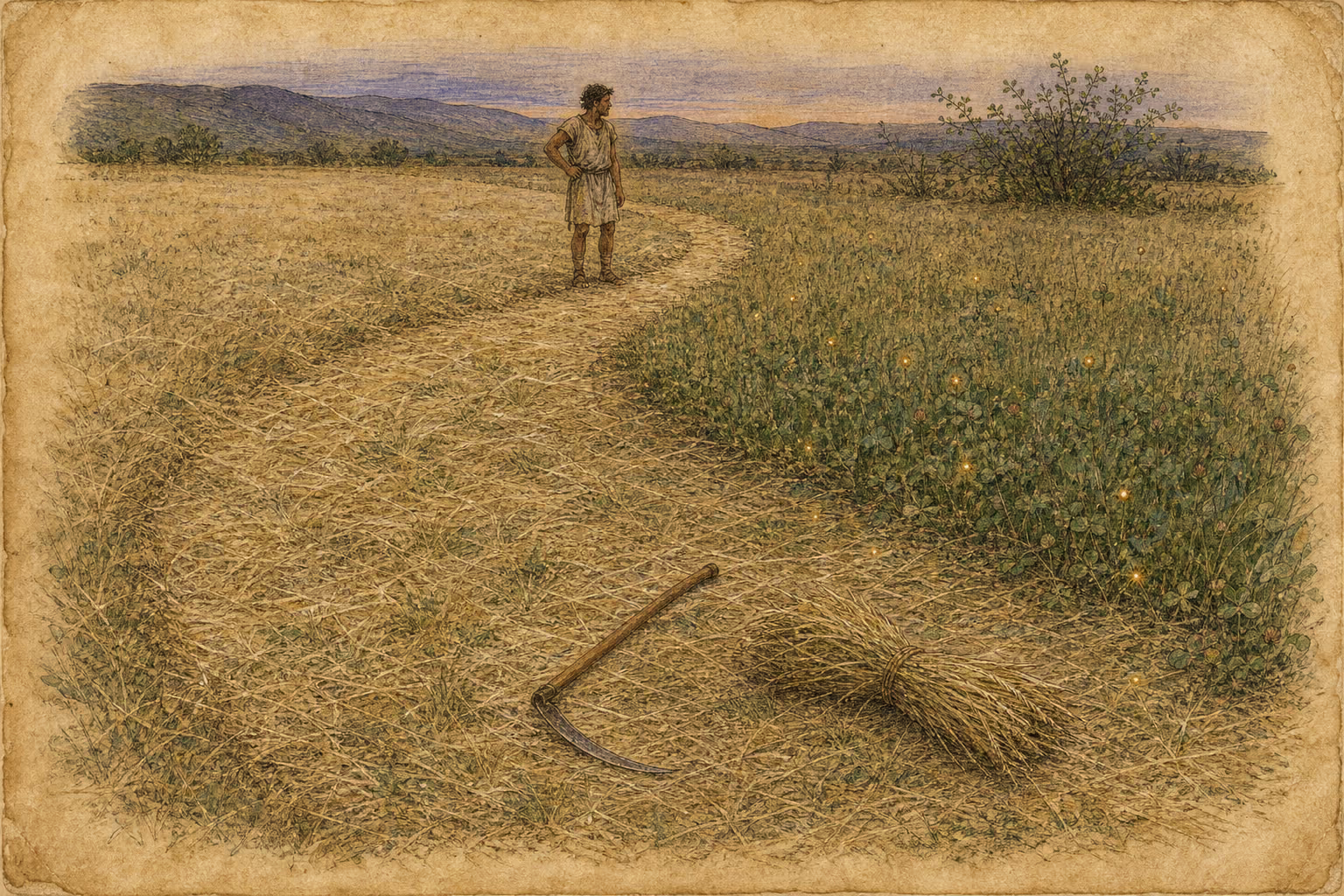
Nature had already formed the Vergiliæ, a noble group of stars, in the heavens; but not content with these, she has made others as well for the face of the earth, crying aloud, as it were: “Why contemplate the heavens, husbandman? Why, rustic, look up at the stars? Do not the nights already afford you a sleep too brief for your fatigues? Behold now! I scatter stars amid the grass for your service, and I reveal them to you in the evening, as you return from your work; and that you may not disregard them, I call your attention to this marvel. Do you not see how the wings of this insect cover a body bright and shining like fire, and how that body gives out light in the hours of the night even? I have given you plants to point out to you the hours, and, that you may not have to turn your eyes from the earth, even to view the sun, the heliotropium and the lupine have been made by me to move with his movements. Why then still look upwards, and scan the face of heaven? Behold, here before your very feet are your Vergiliæ; upon a certain day do they make their appearance, and for a certain time do they stay. Equally certain, too, it is that of that constellation they are the offspring. Whoever, then, shall put in his summer seeds before they have made their appearance, will infallibly find himself in the wrong.”
It is in this interval, too, that the little bee comes forth, and announces that the bean is about to blossom; for it is the bean in flower that summons it forth. We will here give another sign, which tells us when the cold is gone; as soon as ever you see the mulberry in bud, you have no occasion to fear any injury from the rigour of the weather.
It is the time, now, to put in cuttings of the olive, to clear away between the olive-trees, and, in the earlier days of the equinox, to irrigate the meadows. As soon, however, as the grass puts forth a stem, you must shut off the water from the fields. You must now lop the leafy branches of the vine, it being the rule that this should be done as soon as the branches have attained four fingers in length; one labourer will be sufficient for a jugerum. The crops of corn, too, should be hoed over again, an operation which lasts twenty days. It is generally thought, however, that it is injurious to both vine and corn to begin hoeing directly after the equinox. This is the proper time, too, for washing sheep.
After the rising of the Vergiliæ the more remarkable signs are, according to Cæsar, the morning rising of Arcturus, which takes place on the following day; and the rising of the Lyre on the third before the ides of May. The She-goat sets in the evening of the twelfth before the calends of June, and in Attica the Dog. On the eleventh before the calends of June, according to Cæsar, Orion’s Sword begins to appear; and, according to the same writer, on the fourth before the nones of June the Eagle rises in the evening, and in Assyria as well. On the seventh before the ides of June Arcturus sets in the morning to the people of Italy, and on the fourth before the ides the Dolphin rises in the evening. On the seventeenth before the calends of July Orion’s Sword rises in Italy, and, four days later, in Egypt. On the eleventh before the calends of July, according to Cæsar’s reckoning, Orion’s Sword begins to set; and the eighth before the calends of July, the longest day in the year, with the shortest night, brings us to the summer solstice.
In this interval of time the vine should be cleared of its superfluous branches, and care taken to give an old vine one turning up at the roots, a young tree two. Sheep, too, are sheared at this period, lupines turned up for manuring the land, the ground dug, vetches cut for fodder, and beans gathered in and threshed.