LIBER XIX · CAPUT 12
THE PROPER METHOD OF WATERING GARDENS
Latine · Mayhoff 1906
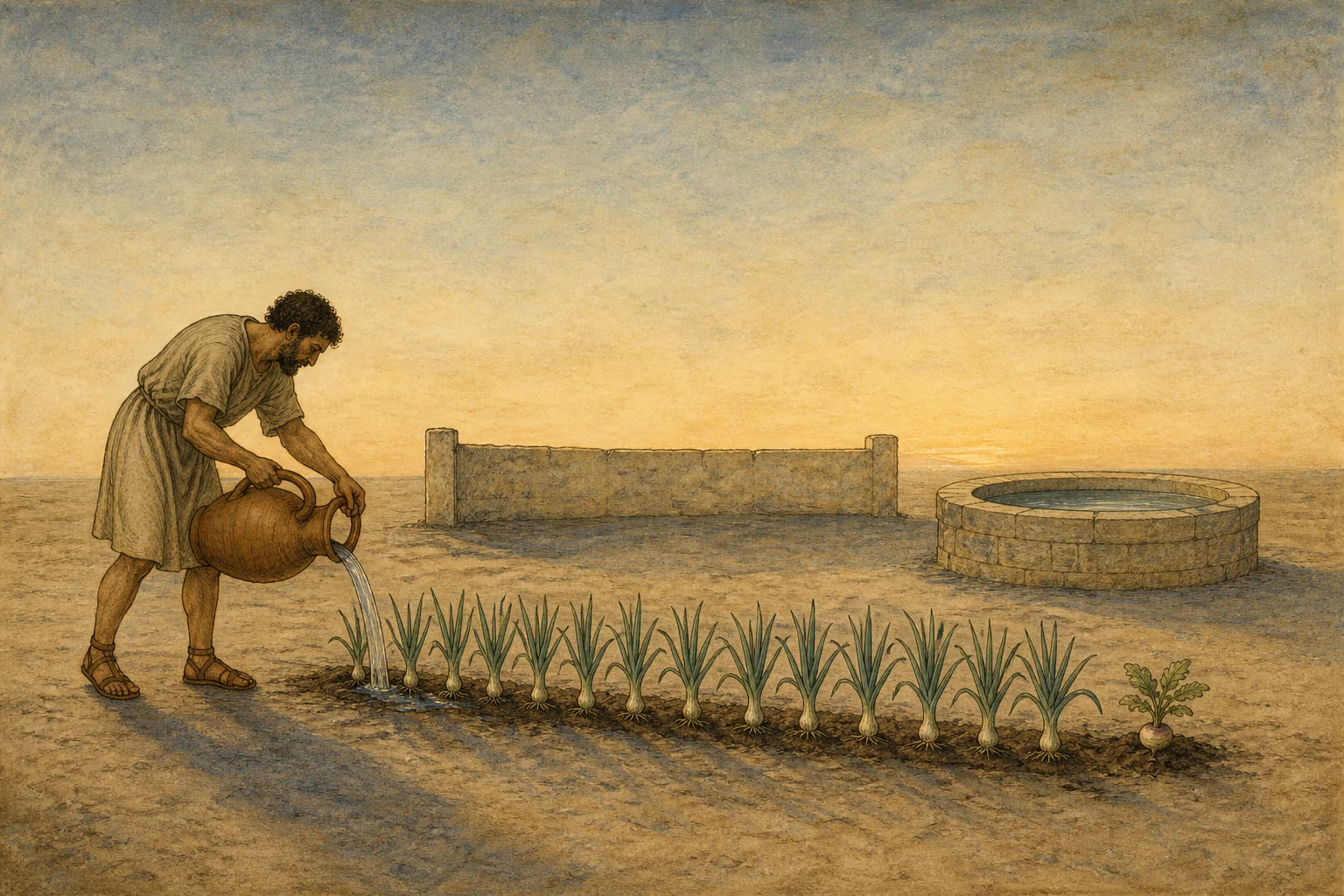
His horae rigandi matutino atque vespera, ne infervescat aqua sole, ocimo tantum et meridie; nam etiam satum celerrime erumpere putant inter initia ferventi aqua aspersum. omnia autem tralata meliora grandioraque fiunt, maxime porri napique. in tralatione et medicina est, desinuntque sentire iniurias, ut gethyum, porrum, raphani, apium, lactucae, rapa, cucumis. omnia autem fere silvestria sunt et foliis minora et caulibus, suco acriora, sicut cunila, origanum, ruta. solum vero ex omnibus lapathum silvestre melius. hoc in sativis rumix vocatur, omnium, quae seruntur nascunturque, fortissimum; tradunt certe semel satum durare nec vinci umquam a terra, maxime iuxta aquas. usus eius cum tisana tantum in cibis; leniorem gratioremque saporem praestat. silvestre ad multa medicamina utile est.—(Adeoque nihil omisit cura, ut carmine quoque comprehensum reperiam, fabis caprini fimi singulis cavatis, si porri, erucae, lactucae, apii, intubi, nasturtii semina inclusa serantur, mire provenire.—Quae sunt et silvestria, eadem sativis sicciora intelleguntur et acriora.)—
Namque et sucorum saporumque dicenda differentia est, vel maior in his quam in pomis. sunt autem acres cunilae, origani, nasturti, sinapis, amari absinthi, centaurei; aquatiles cucumeris, cucurbitae, lactucae; acuti thymi, cunilae; acuti et odorati apii, aneti, feniculi. salsus tantum e saporibus non nascitur; aliquando extra insidit pulveris modo, et cicerculis tantum.
Atque ut intellegatur vana ceu plerumque vitae persuasio, panax piperis saporem reddit et magis etiam siliquastrum, ob id piperitidis nomine accepto, libanotis odorem turis, zmyrnium murrae. de panace abunde dictum est. libanotis locis putribus et macris ac roscidis seritur semine. radicem habet olusatri, nihil ture differentem. usus eius post annum stomacho saluberrimus. quidam eam nomine alio rosmarinum appellant. Zmyrnium olus seritur iisdem locis murramque radice resipit. eadem et siliquastro satio. reliqua a ceteris et odore et sapore differunt, ut anetum, tantaque est diversitas atque vis, ut non solum aliud alio mutetur, sed etiam in totum auferatur. apio eximunt coqui obsoniis acetum, eodem cellarii in saccis odorem vino gravem.
Et hactenus hortensia dicta sint, ciborum gratia dumtaxat. maximum quidem opus in iisdem naturae restat, quoniam proventus tantum adhuc summasque quasdam tractavimus, vera autem cuiusque natura non nisi medico effectu pernosci potest, opus ingens occultumque divinitatis et quo nullum reperiri possit maius. ne singulis id rebus contexeremus, iusta fecit ratio, cum ad alios medendi desideria pertinerent, longis utriusque dilationibus futuris, si miscuissemus. nunc suis quaeque partibus constabunt poteruntque a volentibus iungi.
English · Bostock & Riley 1855–57
The proper times for watering are the morning and the evening, to prevent the water from being heated by the sun; with the sole exception, however, of ocimum, which requires to be watered at midday; indeed, this plant, it is generally thought, will grow with additional rapidity, if it is watered with boiling water when sown. All plants, when transplanted, grow all the better and larger for it, leeks and turnips more particularly. Transplanting, too, is attended with certain remedial effects, and acts as a preservative to certain plants, such as scallions, for instance, leeks, radishes, parsley, lettuces, rape, and cucumbers. All the wild plants are generally smaller in the leaf and stalk than the cultivated ones, and have more acrid juices, cunila, wild marjoram, and rue, for example. Indeed, it is only the lapathum that is better in a wild state than cultivated: in its cultivated state it is the same plant that is known to us as the “rumix,” being the most vigorous by far of all the plants that are grown; so much so, indeed, that it is said that when it has once taken root, it will last for ever, and can never be extirpated from the soil, more particularly if water happens to be near at hand. Its juices, which are employed only in ptisans, as an article of food, have the effect of imparting to them a softer and more exquisite flavour. The wild variety is employed for many medicinal purposes.
So true it is, that the careful research of man has omitted nothing, that I have even met with a poem, in which I find it stated, that if pellets of goats’ dung, the size of a bean, are hollowed out, and the seed of leeks, rocket, lettuces, parsley, endive, and cresses is inserted in them, and then sown, the plants will thrive in a marvellous degree. Plants in a wild state, it is generally thought, are more dry and acrid than when cultivated.
This, too, reminds me that I ought to make some mention of the difference between the juices and flavours of the garden herbs, a difference which is more perceptible here than in the fruits even. In cunila, for instance, wild marjoram, cresses, and mustard, the flavour is acrid; in wormwood and centaury, bitter; in cucumbers, gourds, and lettuces, watery; and in parsley, anise, and fennel, pungent and odoriferous. The salt flavour is the only one that is not to be found in plants, with the sole exception, indeed, of the chicheling vetch, though even then it is to be found on the exterior surface only of the plant, in the form of a kind of dust which settles there.
To come to a full understanding, too, both here as elsewhere, how unfounded are the notions which are generally entertained, I shall take this opportunity of remarking that panax has the flavour of pepper, and siliquastrum even more so, a circumstance to which it owes its name of piperitis: libanotis, again, has just the odour of frankincense, and smyrnium of myrrh. As to panax, we have spoken of it at sufficient length already. Libanotis grows in a thin, crumbly soil, and is generally sown in spots exposed to the falling dews; the root, which is just like that of olusatrum, has a smell in no way differing from that of frankincense; when a year old, it is extremely wholesome for the stomach; some persons give it the name of rosmarinum. Smyrnium is a garden herb that grows in similar soils, and has a root which smells like myrrh: siliquastrum too, is grown in a similar manner.
Other plants, again, differ from the preceding ones, both in smell and taste, anise for example; indeed, so great is the difference in this respect, and in their relative virtues, that not only are the properties of each modified by the other, but quite neutralized even. It is in this way that our cooks correct the flavour of vinegar in their dishes with parsley, and our butlers employ the same plant, enclosed in sachets, for removing a bad odour in wine.
Thus far, then, we have treated of the garden plants, viewed as articles of food only; it remains for us now (for up to the present we have only spoken of their various methods of cultivation, with some succinct details relative thereto), to enlarge upon the more elaborate operations of Nature in this respect; it being quite impossible to come to a full understanding as to the true characteristics of each individual plant, without a knowledge of its medicinal effects, a sublime and truly mysterious manifestation of the wisdom of the Deity, than which nothing can possibly be found of a nature more elevated. It is upon principle that we have thought proper not to enlarge upon the medicinal properties of each plant when treating of it; for it is a quite different class of persons that is interested in knowing their curative properties, and there is no doubt that both classes of readers would have been inconvenienced in a very material degree, if these two points of view had engaged our attention at the same moment. As it is, each class will have its own portion to refer to, while those who desire to do so, will experience no difficulty in uniting them, with reference to any subject of which we may happen to treat.