LIBER XX · CAPUT 1
THE WILD CUCUMBER; TWENTY-SIX REMEDIES
Latine · Mayhoff 1906
Maximum hine opus naturae ordiemur et cibos suos homini narrabimus faterique cogemus ignota esse per quae vivat. nemo id parvum ac modicum existimaverit, nominum vilitate deceptus. pax secum in his aut bellum naturae dicetur, odia amicitiaeque rerum surdarum ac sensu carentium et, quo magis miremur, omnia ea hominum causa. quod Graeci sympathiam et antipathiam appellavere, quibus cuncta constant, ignes aquis restinguentibus, aquas sole devorante, luna pariente, altero alterius iniuria deficiente sidere atque, ut a sublimioribus recedamus, ferrum ad se trahente magnete lapide et alio rursus abigente a sese, adamanta, rarum opum gaudium, Infragilem omni cetera vi et invictum, sanguine hircino rumpente, quaeque alia in suis locis dicemus paria vel maiora miracula. tantum venia sit a minimis, sed a salutaribus ordienti primumque ab hortensiis.
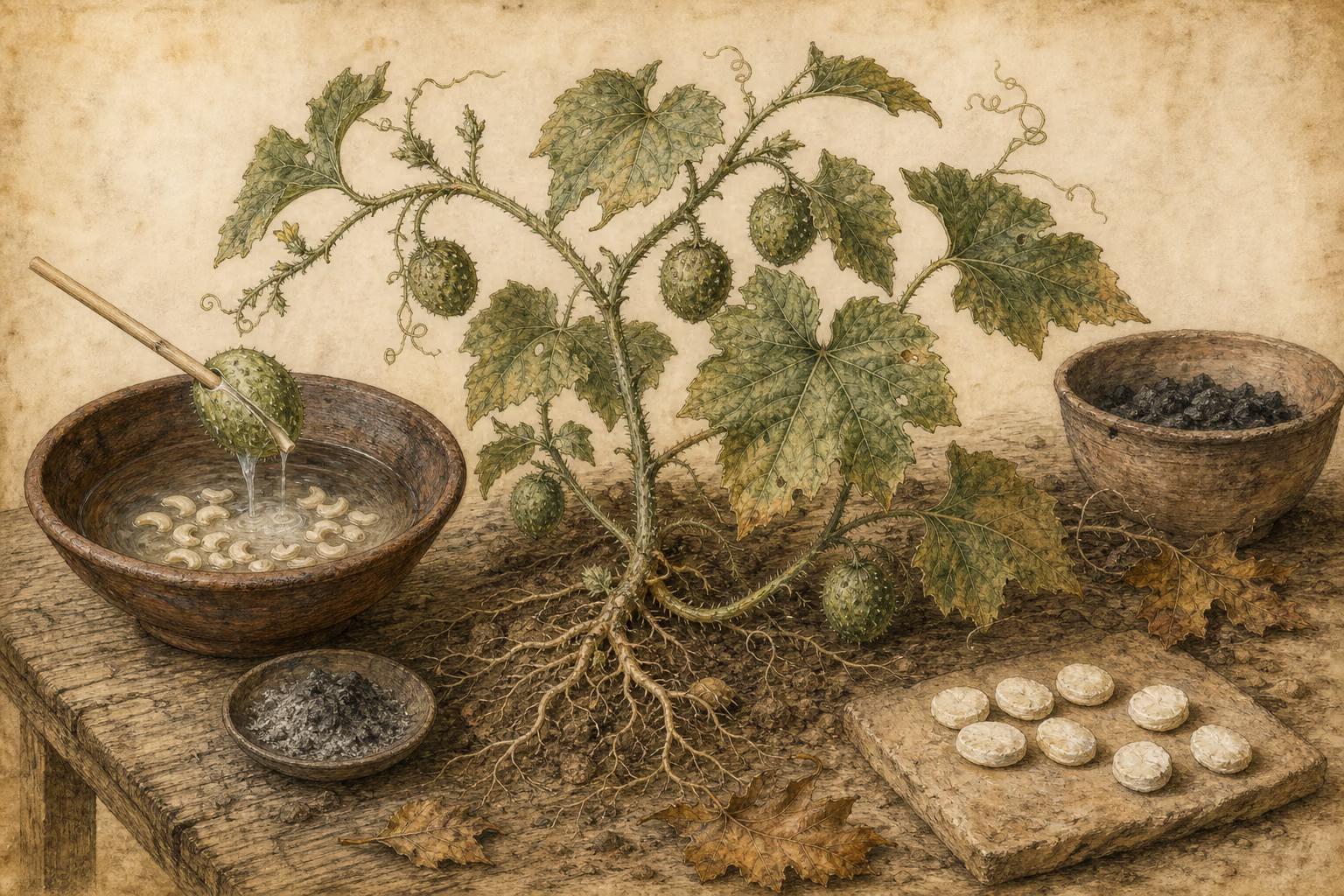
Cucumin silvestrem esse diximus, multo infra magnitudinem sativi. ex eo fit medicamentum, quod vocatur elaterium, suco expresso semini, cuius causa nisi maturius incidatur, semen exilit oculorum etiam periculo. servatur autem decerptus una nocte, postero die inciditur harundine, semenque cinere conditur ad coercendam suci abundantiam, qui expressus suscipitur aqua caelesti atque subsidit, deinde sole cogitur in pastillos ad magnos mortalium usus, obscuritates et vitia oculorum, genarum ulcera. tradunt hoc suco tactis radicibus vitium non attingi uvas ab avibus. radix autem ex aceto cocta podagris inlinitur sucoque dentium dolori medetur, arida cum resina inpetiginem et scabiem quaeque psoram et lichenas vocant, parotidas, panos sanat et cicatricibus colorem reddit, et foliorum sucus auribus surdis cum aceto instillatur.
Elaterio tempestivus est autumno, nec ullum ex medicamentis longiore aevo durat. incipit a trimatu. si quis recentiore uti velit, pastillos in novo fictili igni lento in aceto domet. melius quo vetustius, fuitque iam cc annis servatum, ut auctor est Theophrastus, et usque ad quinquagesimum lucernarum lumina extinguit. hoc enim veri experimentum est, si admotum, priusquam extinguat, scintillare sursum ac deorsum cogat. pallidum ac leve herbaceo ac scabro melius ac leniter amarum.
Putant conceptus adiuvari adalligato semine, si terram non adtigerit, partus vero, si in arietis lana alligatum inscientis lumbis fuerit, ita ut protinus ab enixu rapiatur extra domum. ipsum cucumin qui magnificant, nasci praecipuum in Arabia, mox in Arcadia; Cyrenis alii tradunt similem heliotropio cucumin inter folia et ramos provenire magnitudine nucis iuglandis, semen autem esse ad speciem scorpionum caudae reflexum, sed candidum. aliqui etiam ab scorpione cucumim vocant, efficacissimo contra scorpionum ictus et semine et elaterio. est ad purgandam utrimque alvum modus pro portione virium ab dimidio obolo ad solidum; copiosius necat. sic et contra phthiriasim bibitur et hydropicis. inlitum anginas et arterias cum melle aut oleo vetere sanat.
English · Bostock & Riley 1855–57
We are now about to enter upon an examination of the greatest of all the operations of Nature—we are about to discourse to man upon his aliments, and to compel him to admit that he is ignorant by what means he exists. And let no one, misled by the apparent triviality of the names which we shall have to employ, regard this subject as one that is frivolous or contemptible: for we shall here have to set forth the state of peace or of war which exists between the various departments of Nature, the hatreds or friendships which are maintained by objects dumb and destitute of sense, and all, too, created—a wonderful subject for our contemplation!—for the sake of man alone. To these states, known to the Greeks by the respective appellations “sympathia” and “antipathia,” we are indebted for the first principles of all things; for hence it is that water has the property of extinguishing fire, that the sun absorbs water, that the moon produces it, and that each of those heavenly bodies is from time to time eclipsed by the other.
Hence it is, too, descending from the contemplation of a loftier sphere, that the loadstone possesses the property of attracting iron, and another stone, again, that of repelling it; and that the diamond, that pride of luxury and opulence, though infrangible by every other object, and presenting a resistance that cannot be overcome, is broken asunder by a he-goat’s blood —in addition to numerous other marvels of which we shall have to speak on more appropriate occasions, equal to this or still more wonderful even. My only request is that pardon may be accorded me for beginning with objects of a more humble nature, though still so greatly conducive to our health—I mean the garden plants, of which I shall now proceed to speak.
We have already stated that there is a wild cucumber, considerably smaller than the cultivated one. From this cucumber the medicament known as “elaterium” is prepared, being the juice extracted from the seed. To obtain this juice the fruit is cut before it is ripe—indeed, if this precaution is not taken at an early period, the seed is apt to spirt out and be productive of danger to the eyes. After it is gathered, the fruit is kept whole for a night, and on the following day an incision is made in it with a reed. The seed, too, is generally sprinkled with ashes, with the view of retaining in it as large a quantity of the juice as possible. When the juice is extracted, it is received in rain water, where it falls to the bottom; after which it is thickened in the sun, and then divided into lozenges, which are of singular utility to mankind for healing dimness of sight, diseases of the eyes, and ulcerations of the eyelids. It is said that if the roots of a vine are touched with this juice, the grapes of it will be sure never to be attacked by birds.
The root, too, of the wild cucumber, boiled in vinegar, is employed in fomentations for the gout, and the juice of it is used as a remedy for tooth-ache. Dried and mixed with resin, the root is a cure for impetigo and the skin diseases known as “psora” and “lichen:” it is good, too, for imposthumes of the parotid glands and inflammatory tumours, and restores the natural colour to the skin when a cicatrix has formed.—The juice of the leaves, mixed with vinegar, is used as an injection for the ears, in cases of deafness.
The proper season for making elaterium is the autumn; and there is no medicament known that will keep longer than this. It begins to be fit for use when three years old; but if it is found desirable to make use of it at an earlier period than this, the acridity of the lozenges may be modified by putting them with vinegar upon a slow fire, in a new earthen pot. The older it is the better, and before now, as we learn from Theophrastus, it has been known to keep so long as two hundred years. Even after it has been kept so long as fifty years, it retains its property of extinguishing a light; indeed, it is the proper way of testing the genuineness of the drug to hold it to the flame and make it scintillate above and below, before finally extinguishing it. The elaterium which is pale, smooth, and slightly bitter, is superior to that which has a grass-green appearance and is rough to the touch.
It is generally thought that the seed of this plant will facilitate conception if a woman carries it attached to her person, before it has touched the ground; and that it has the effect of aiding parturition, if it is first wrapped in ram’s wool, and then tied round the woman’s loins, without her knowing it, care being taken to carry it out of the house the instant she is delivered.
Those persons who magnify the praises of the wild cucumber say that the very best is that of Arabia, the next being that of Arcadia, and then that of Cyrenæ: it bears a resemblance to the heliotropium, they say, and the fruit, about the size of a walnut, grows between the leaves and branches. The seed, it is said, is very similar in appearance to the tail of a scorpion thrown back, but is of a whitish hue. Indeed, there are some persons who give to this cucumber the name of “scorpionium,” and say that its seed, as well as the elaterium, is remarkably efficacious as a cure for the sting of the scorpion. As a purgative, the proper dose of either is from half an obolus to an obolus, according to the strength of the patient, a larger dose than this being fatal. It is in the same proportions, too, that it is taken in drink for phthiriasis and dropsy; applied externally with honey or old olive oil, it is used for the cure of quinsy and affections of the trachea.