LIBER XX · CAPUT 2
THE ANGUINE OR ERRATIC CUCUMBER: FIVE REMEDIES
Latine · Mayhoff 1906
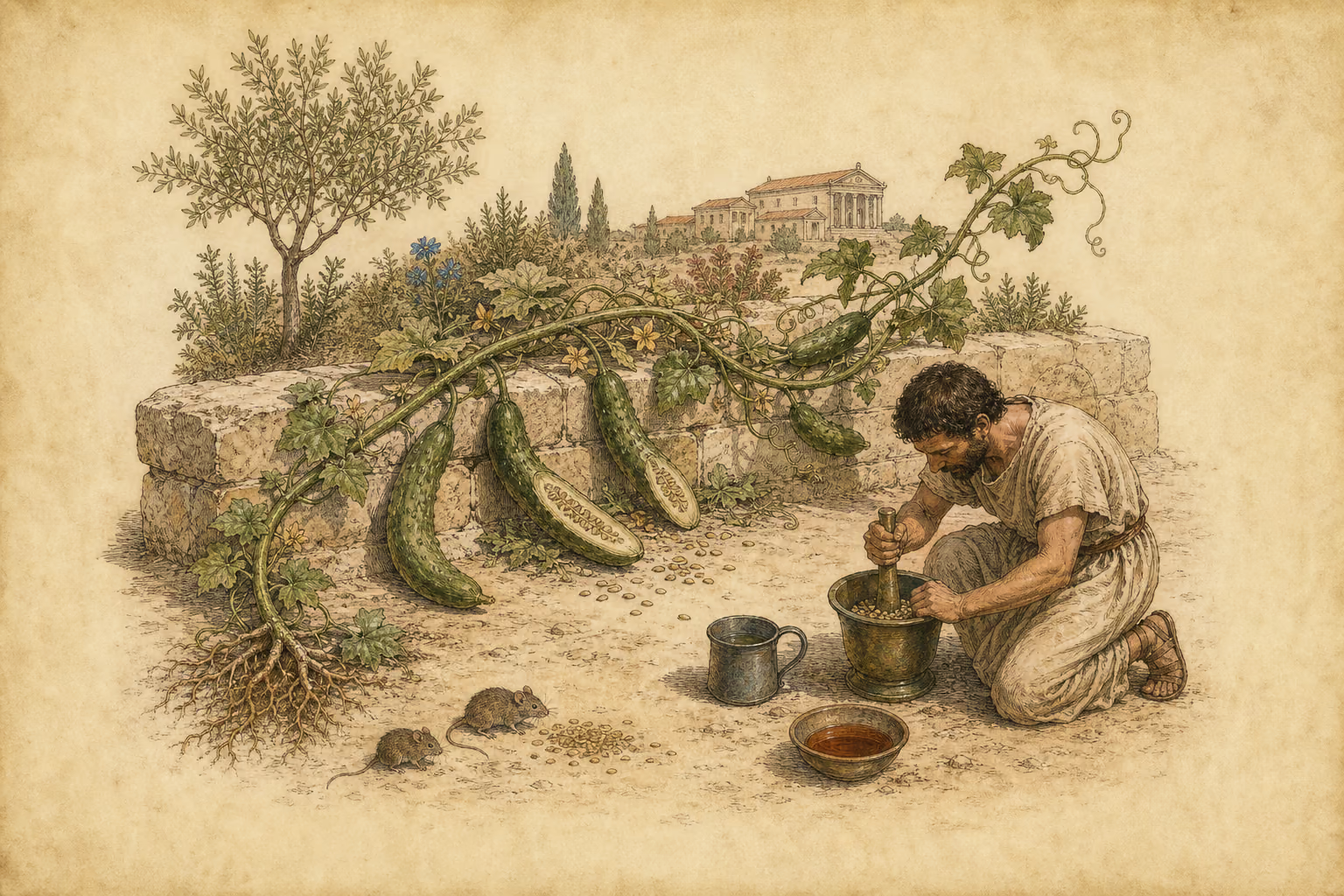
Multi hunc esse aput nos, qui anguinus vocetur, ab aliis erraticus, arbitrantur, quo decocto sparsa mures non adtingunt. iidem podagris eum et articulariis morbis decoctum in aceto inlinunt praesentaneo remedio, lumborum vero dolores seine sole siccato, dein trito, X??? XX pondere in hemina aquae dato sanant, tumores subitos inlito cum lacte mulierum. purgat eas elaterium, sed gravidis abortum facit. suspiriosis prodest, morbo vero regio in nares coniectum. lentigines ac maculas e facie tollit in sole inlitum.
Multi eadem omnia sativis adtribuunt, magni etiam sine is momenti. namque et eorum semen quantum tres digiti adprehenderint cum cumino tritum potumque in vino tussientibus auxiliatur, et phreneticis in lacte mulieris, et dysintericis acetabuli mensura, purulenta autem expuentibus cum cumino pari pondere, et iocineris vitiis in aqua mulsa. urinam movet ex vino dulci, et in renium dolore clysteribus simul cum cumino infunditur.
Ei, qui pepones vocantur, refrigerant maxime in cibo et emolliunt alvum. caro eorum epiphoris oculorum aut doloribus inponitur. radix sanat ulcera concreta in modum favi, quae ceria vocant. eadem concitat vomitiones; siccatur, in farinam tunsa datur quattuor obolis in aqua mulsa, ita ut qui biberit quingentos passus postea ambulet. haec farina et in smegmata adicitur. cortex quoque vomitionem movet, faciem purgat. hoc et folia cuiuscumque sativi inlita. eadem cum melle et epinyctidas sanant, cum vino canis morsus, item multipedae; sepa Graeci vocant, oblongam, pilosis pedibus, pecori praecipue nocivam; morsum tumor insequitur et putrescit locus. ipse cucumis odore defectum animi refovet.—(Coctos deraso cortice ex oleo et aceto ac melle iucundiores esse certum est.)—
English · Bostock & Riley 1855–57
Many authors are of opinion that the wild cucumber is identical with the plant known among us as the “anguine,” and by some persons as the “erratic” cucumber. Objects sprinkled with a decoction of this plant will never be touched by mice. The same authors say, too, that a decoction of it in vinegar, externally applied, gives instantaneous relief in cases of gout and diseases of the joints. As a remedy, too, for lumbago, the seed of it is dried in the sun and pounded, being given in doses of twenty denarii to half a sextarius of water. Mixed with woman’s milk and applied as a liniment, it is a cure for tumours which have suddenly formed.
Elaterium promotes the menstrual discharge; but if taken by females when pregnant, it is productive of abortion. It is good, also, for asthma, and, injected into the nostrils, for the jaundice. Rubbed upon the face in the sun, it removes freckles and spots upon the skin.
Many persons attribute all these properties to the cultivated cucumber as well, a plant which even without them would be of very considerable importance, in a medicinal point of view. A pinch of the seed, for instance, in three fingers, beaten up with cummin and taken in wine, is extremely beneficial for a cough: for phrenitis, also, doses of it are administered in woman’s milk, and doses of one acetabulum for dysentery. As a remedy for purulent expectorations, it is taken with an equal quantity of cummin; and it is used with hydromel for diseases of the liver. Taken in sweet wine, it is a diuretic; and, in combination with cummin, it is used as an injection for affections of the kidneys.
The fruit known as pepones are a cool and refreshing diet, and are slightly relaxing to the stomach. Applications are used of the pulpy flesh in defluxions or pains of the eyes. The root, too, of this plant cures the hard ulcers known to us as “ceria,” from their resemblance to a honeycomb, and it acts as an emetic. Dried and reduced to a powder, it is given in doses of four oboli in hydromel, the patient, immediately after taking it, being made to walk half a mile. This powder is employed also in cosmetics for smoothing the skin. The rind, too, has the effect of promoting vomiting, and, when applied to the face, of clearing the skin; a result which is equally produced by an external application of the leaves of all the cultivated cucumbers. These leaves, mixed with honey, are employed for the cure of the pustules known as “epinyctis;” steeped in wine, they are good, too, for the bites of dogs and of multipedes, insects known to the Greeks by the name of “seps,” of an elongated form, with hairy legs, and noxious to cattle more particularly; the sting being followed by swelling, and the wound rapidly putrifying.
The smell of the cucumber itself is a restorative in fainting fits. It is a well-known fact, that if cucumbers are peeled and then boiled in oil, vinegar, and honey, they are all the more pleasant eating for it.