LIBER XX · CAPUT 3
THE GOURD: SEVENTEEN REMEDIES. THE SOMPHUS: ONE REMEDY
Latine · Mayhoff 1906
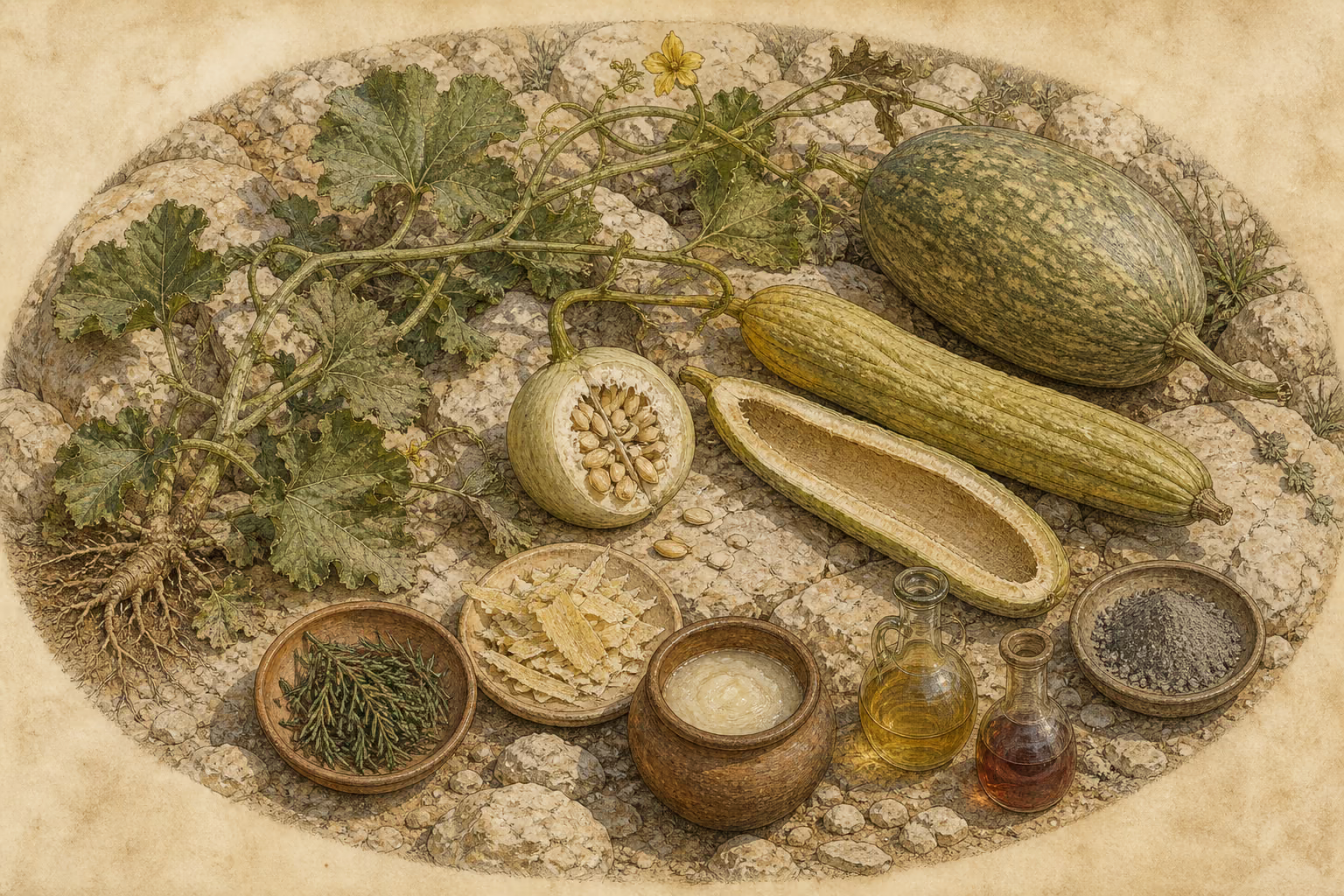
Cucurbita quoque silvestris invenitur, σομφὸς a Graecis appellata, intus inanis, unde et nomen, digitali crassitudine, non nisi in saxosis nascens. huius conmanducatae sucus stomacho admodum prodest.
Colocynthis vocatur alia, ipsa plena semine, sed minor quam sativa. utilior pallida quam herbacea. arefacta per se inanit alvum. infusa quoque clysteribus intestinorum omnibus vitiis medetur et renium et lumborum et paralysi. eiecto semine aqua mulsa in ea decoquitur ad dimidias; sic tutissimo infunduntur oboli quattuor. prodest stomacho et farinae aridae pilulis cum decocto melle sumptis. in morbo regio semina eius VII sumuntur et protinus aqua mulsa. carnes eius cum absinthio ac sale dentium dolorem tollunt, sucus vero cum aceto calefactus mobiles sistit. item spinae et lumborum ac coxendicum dolores, cum oleo si infricetur. praeterea, mirum dictu, semina eius, si fuerint pari numero, in linteo adalligata febribus liberare dicuntur, quas Graeci periodicas vocant. sativae quoque derasae sucus tepefactus auribus medetur; caro eius interior sine semine clavis pedum et suppurationibus, quae Graeci vocant ἀποστήματα. decoctae autem universae sucus dentium motus stabilit et dolores inhibet; vinum cum ea fervefactum oculorum etiam impetus. folia eius cum recentibus cupressi contusa et inposita, ipsa quoque tosta in argilla ac trita cum adipe anseris vulneribus medetur. nec non ramentis corticis recentis podagras refrigerat et ardores capitis, infantium maxime, et ignes sacros vel iisdem strigmentis inpositis vel seminibus. sucus ex strigmentis inlitus cum rosaceo et aceto febrium ardores refrigerat. aridae cinis inpositus mire combusta sanat. Chrysippus medicus damnabat eas in cibis, sed omnium consensu stomacho utilissimae iudicantur et interaneorum vesicarumque exulcerationibus.
Est et rapo vis medica. perniones fervens inpositum sanat, item frigus pellit e piedibus. aqua decocti eius fervens podagris etiam frigidis medetur, et crudum tusum cum sale cuicumque vitio pedum. semen inlitum et potum in vino contra serpentes et toxica salutare esse proditur, a multis vero antidoti vim habere in vino et oleo. Democritus in totum ea abdicavit in cibis propter inflationes, Diocles magnis laudibus tulit, etiam venerem stimulari ab iis professus, item Dionysius, magisque si eruca condirentur; tosta quoque articulorum dolori cum adipe prodesse.
Silvestre rapum in arvis maxime nascitur, fruticosum, semine candido, duplo maiore quam papaver. hoc ad levigandam cutem in facie totoque corpore utuntur mixtafarina pari mensura ervi, hordei et tritici et lupini. radix ad omnia inutilis.
English · Bostock & Riley 1855–57
There is found also a wild gourd, called “somphos” by the Greeks, empty within (to which circumstance it owes its name), and long and thick in shape, like the finger: it grows nowhere except upon stony spots. The juice of this gourd, when chewed, is very beneficial to the stomach.
There is another variety of the wild gourd, known as the “colocynthis:” this kind is full of seeds, but not so large as the cultivated one. The pale colocynthis is better than those of a grass-green colour. Employed by itself when dried, it acts as a very powerful purgative; used as an injection, it is a remedy for all diseases of the intestines, the kidneys, and the loins, as well as for paralysis. The seed being first removed, it is boiled down in hydromel to one half; after which it is used as an injection, with perfect safety, in doses of four oboli. It is good, too, for the stomach, taken in pills composed of the dried powder and boiled honey. In jaundice seven seeds of it may be taken with beneficial effects, with a draught of hydromel immediately after.
The pulp of this fruit, taken with wormwood and salt, is a remedy for toothache, and the juice of it, warmed with vinegar, has the effect of strengthening loose teeth. Rubbed in with oil, it removes pains of the spine, loins, and hips: in addition to which, really a marvellous thing to speak of! the seeds of it, in even numbers, attached to the body in a linen cloth, will cure, it is said, the fevers to which the Greeks have given the name of “periodic.” The juice, too, of the cultivated gourd shred in pieces, applied warm, is good for ear-ache, and the flesh of the inside, used without the seed, for corns on the feet and the suppurations known to the Greeks as “apostemata.” When the pulp and seeds are boiled together, the decoction is good for strengthening loose teeth, and for preventing toothache; wine, too, boiled with this plant, is curative of defluxions of the eyes. The leaves of it, bruised with fresh cypress-leaves, or the leaves alone, boiled in a vessel of potters’ clay and beaten up with goose-grease, and then applied to the part affected, are an excellent cure for wounds. Fresh shavings of the rind are used as a cooling application for gout, and burning pains in the head, in infants more particularly; they are good, too, for erysipelas, whether it is the shavings of the rind or the seeds of the plant that are applied to the part affected. The juice of the scrapings, employed as a liniment with rose-oil and vinegar, moderates the burning heats of fevers; and the ashes of the dried fruit applied to burns are efficacious in a most remarkable degree.
Chrysippus, the physician, condemned the use of the gourd as a food: it is generally agreed, however, that it is extremely good for the stomach, and for ulcerations of the intestines and of the bladder.
Rape, too, has its medicinal properties. Warmed, it is used as an application for the cure of chilblains, in addition to which, it has the effect of protecting the feet from cold. A hot decoction of rape is employed for the cure of cold gout; and raw rape, beaten up with salt, is good for all maladies of the feet. Rape-seed, used as a liniment, and taken in drink, with wine, is said to have a salutary effect against the stings of serpents, and various narcotic poisons; and there are many persons who attribute to it the properties of an antidote, when taken with wine and oil.
Democritus has entirely repudiated the use of rape as an article of food, in consequence of the flatulence which it produces; while Diocles, on the other hand, has greatly extolled it, and has even gone so far as to say that it acts as an aphrodisiac. Dionysius, too, says the same of rape, and more particularly if it is seasoned with rocket; he adds, also, that roasted, and then applied with grease, it is excellent for pains in the joints.
Wild rape is mostly found growing in the fields; it has a tufted top, with a white seed, twice as large as that of the poppy. This plant is often employed for smoothing the skin of the face and the body generally, meal of fitches, barley, wheat, and lupines, being mixed with it in equal proportions.
The root of the wild rape is applied to no useful purpose whatever.