LIBER XX · CAPUT 4
TURNIPS; THOSE KNOWN AS BUNION AND BUNIAS: FIVE REMEDIES
Latine · Mayhoff 1906
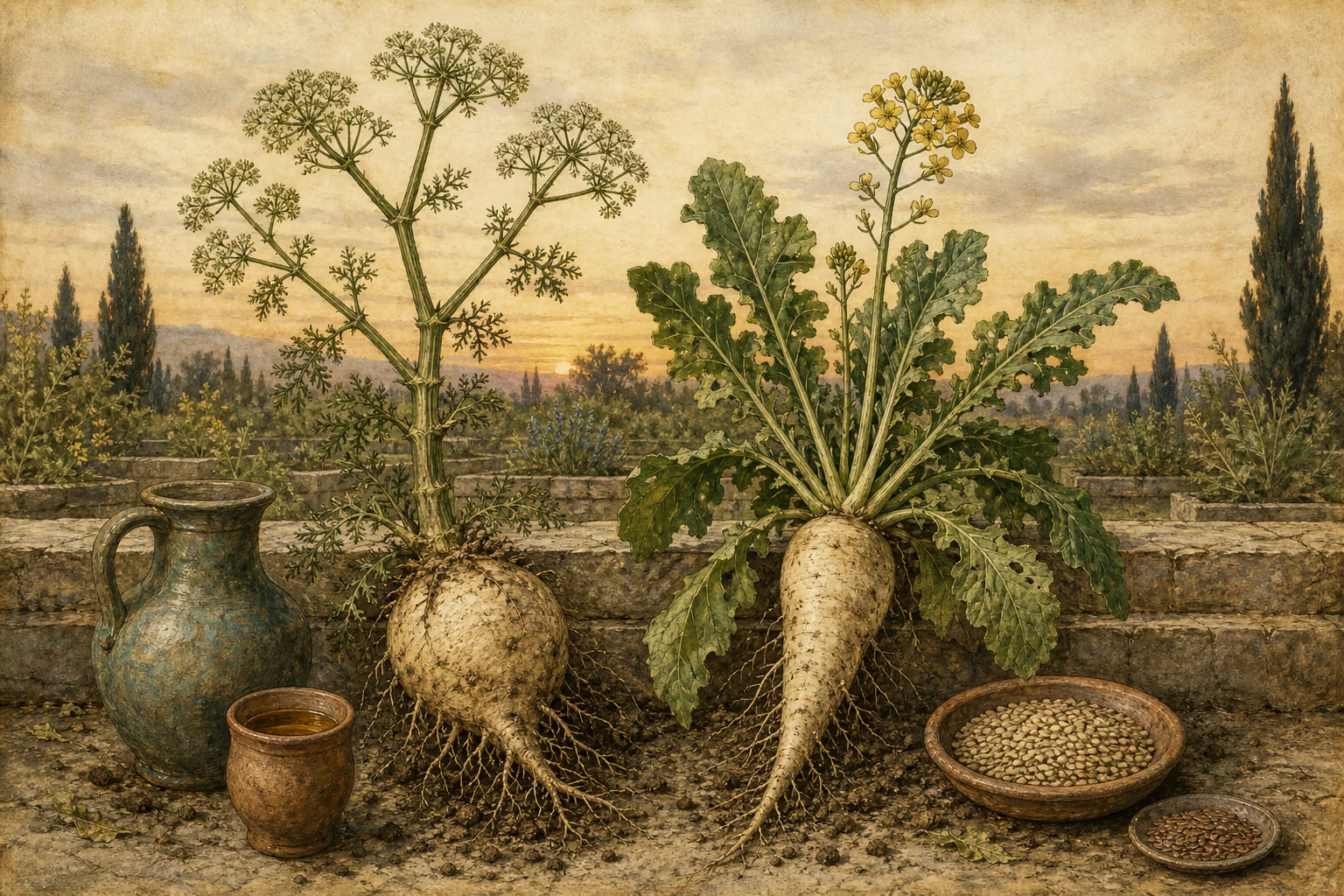
Naporum duas differentias et in medicina Graeci servant. angulosis foliorum caulibus, flore aneti, quod bunion vocant, purgationibus ferminarum et vesicae et urinae utile decoctum, potum ex aqua mulsa vel suci drachma; semen dysintericis tostum tritumque in aquae calidae cyathis quattuor. sed urinam inhibet, si non lini semen una bibatur. alterum genus buniada appellant, et raphano et rapo simile, seminis praeclari contra venena. ob id et in antidotis utuntur illo.
Raphanum et silvestrem esse diximus. laudatissimus in Arcadia, quamquam et alibi nascitur, utilior urinae dumtaxat ciendae, cetero aestuosus. in Italia et armoraciam vocant.
Et sativi vero praeter ea, quae circa eos dicta sunt, stomachum purgant, pituitam extenuant, urinam concitant, bilem detrahunt. praeterea cortices in vino decocti mane poti ad ternos cyathos conminuunt et eiciunt calculos. iidem in posca decocti contra serpentium morsus inlinuntur. ad tussim etiam mane ieiunis raphanos prodest esse cum melle, semen eorum tostum ipsumque conmanducatum, adligato raphano aquam foliis eius decoctis bibere vel sucum ipsius cyathis binis contra phthiriases, phlegmoni ipsos inlinere tusos, livori vero recenti corticem cum melle, veternosis autem quam acerrimos mandere, semenque tostum, dein contritum cum melle suspiriosis. iidem et contra venena prosunt, cerastis et scorpionibus adversantur—vel ipso vel semine infectis manibus inpune tractaveris, inpositoque raphano scorpiones moriuntur—, salutares et contra fungorum aut hyoscyami venena atque, ut Nicander tradit, et contra sanguinem tauri. contra viscum quoque dari Apollodori duo iubent, sed Citieus semen ex aqua tritum, Tarentinus sucum. lienem item extenuant, iocineri prosunt et lumborum doloribus, hydropicis quoque ex aceto aut sinapi sumpti et lethargicis et comitialibus et melancholicis. Praxagoras et iliosis dandos censet, Plistonicus et coeliacis. intestinorum etiam ulcera sanant ac purulenta praecordiorum, si cum melle edantur. quidam ad haec coquere eos luto inlitos malunt; sic et feminas purgari. ex aceto et melle sumpti intestinorum animalia detrahunt, iidem ad tertias decocto eorum poto cum vino enterocelicis prosunt; sanguinem quoque inutilem sic extrahunt. Medius ad haec et sanguinem excreantibus coctos dari iubet, et puerperis ad lactis copiam augendam, Hippocrates capitis mulierum defluvia perfricari raphanis, et super umbilicum inponi contra tormenta volvae. reducunt et cicatrices ad colorem. semen quoque ex aqua inpositum sistit ulcera, quae phagedaenas vocant. Democritus venerem hoc cibo stimulari putat, ob id fortassis voci nocere aliqui tradiderunt. folia, quae in oblongis dumtaxat nascuntur, excitare oculorum aciem dicuntur. ubi vero acrior raphani medicina admota sit, hysopum dari protinus imperant; haec antipathia est. et aurium gravitati sucum raphani instillant. nam vomituris summo cibo esse eos utilissimum est.
Pastinacae simile hibiscum, quod molochen agrian vocant et aliqui πλειστολοχείαν, ulceribus, cartilagini et ossibus fractis medetur. folia eius ex aqua pota alvum solvunt; serpentes abigunt, apium, vesparum, crabronum ictibus inlita medentur. radicem eius ante solis ortum erutam involvunt lana coloris, quem nativum vocant, praeterea ovis, quae feminam peperit, strumisque vel suppuratis alligant. quidam ad hunc usum auro effodiendam censent cavendumque, ne terram adtingat. Celsus et podagris, quae sine tumore sint, radicem eius in vino decoctam inponi iubet.
English · Bostock & Riley 1855–57
The Greeks distinguish two kinds of turnips, also, as employed in medicine. The turnip with angular stalks and a flower like that of anise, and known by them as “bunion,” is good for promoting the menstrual discharge in females and for affections of the bladder; it acts, also, as a diuretic. For these purposes, a decoction of it is taken with hydromel, or else one drachma of the juice of the plant. The seed, parched, and then beaten up, and taken in warm water, in doses of four cyathi, is a good remedy for dysentery; it will stop the passage of the urine, however, if linseed is not taken with it.
The other kind of turnip is known by the name of “bunias,” and bears a considerable resemblance to the radish and the rape united, the seed of it enjoying the reputation of being a remedy for poisons; hence it is that we find it employed in antidotes.
We have already said, that there is also a wild radish. The most esteemed is that of Arcadia, though it is also found growing in other countries as well. It is only efficacious as a diuretic, being in other respects of a heating nature. In Italy, it is known also by the name of “armoracia.”
The cultivated radish, too, in addition to what we have already said of it, purges the stomach, attenuates the phlegm, acts as a diuretic, and detaches the bilious secretions. A decoction of the rind of radishes in wine, taken in the morning in doses of three cyathi, has the effect of breaking and expelling calculi of the bladder. A decoction, too, of this rind in vinegar and water, is employed as a liniment for the stings of serpents. Taken fasting in the morning with honey, radishes are good for a cough. Parched radish-seed, as well as radishes themselves, chewed, is useful for pains in the sides. A decoction of the leaves, taken in drink, or else the juice of the plant taken in doses of two cyathi, is an excellent remedy for phthiriasis. Pounded radishes, too, are employed as a liniment for inflammations under the skin, and the rind, mixed with honey, for bruises of recent date. Lethargic persons are recommended to eat them as hot as possible, and the seed, parched and then pounded with honey, will give relief to asthmatic patients.
Radishes, too, are useful as a remedy for poisons, and are employed to counteract the effects of the sting of the cerastes and the scorpion: indeed, after having rubbed the hands with radishes or radish-seed, we may handle those reptiles with impunity. If a radish is placed upon a scorpion, it will cause its death. Radishes are useful, too, in cases of poisoning by fungi or henbane; and according to Nicander, they are salutary against the effects of bullock’s blood, when drunk. The two physicians of the name of Apollodorus, prescribe radishes to be given in cases of poisoning by mistletoe; but whereas Apollodorus of Citium recommends radish-seed pounded in water, Apollodorus of Tarentum speaks of the juice. Radishes diminish the volume of the spleen, and are beneficial for maladies of the liver and pains in the loins: taken, too, with vinegar or mustard, they are good for dropsy and lethargy, as well as epilepsy and melancholy. Praxagoras recommends that radishes should be given for the iliac passion, and Plistonicus for the cœliac disease.
Radishes are good, too, for curing ulcerations of the intestines and suppurations of the thoracic organs, if eaten with honey. Some persons say, however, that for this purpose they should be boiled in earth and water; a decoction which, according to them, promotes the menstrual discharge. Taken with vinegar or honey, radishes expel worms from the intestines; and a decoction of them boiled down to one-third, taken in wine, is good for intestinal hernia. Employed in this way, too, they have the effect of drawing off the superfluous blood. Medius recommends them to be given boiled to persons troubled with spitting of blood, and to women who are suckling, for the purpose of increasing the milk. Hippocrates recommends females whose hair falls off, to rub the head with radishes, and he says that for pains of the uterus, they should be applied to the navel.
Radishes have the effect, too, of restoring the skin, when scarred, to its proper colour; and the seed, steeped in water, and applied topically, arrests the progress of ulcers known as phagedænic. Democritus regards them, taken with the food, as an aphrodisiac; and it is for this reason, perhaps, that some persons have spoken of them as being injurious to the voice. The leaves, but only those of the long radish, are said to have the effect of improving the eye-sight.
When radishes, employed as a remedy, act too powerfully, it is recommended that hyssop should be given immediately; there being an antipathy between these two plants. For dulness of hearing, too, radish-juice is injected into the ear. To promote vomiting, it is extremely beneficial to eat radishes fasting.
The hibiscum, by some persons known as the wild mallow, and by others as the “plistolochia,” bears a strong resemblance to the parsnip; it is good for ulcerations of the cartilages, and is employed for the cure of fractured bones. The leaves of it, taken in water, relax the stomach; they have the effect, also, of keeping away serpents, and, employed as a liniment, are a cure for the stings of bees, wasps, and hornets. The root, pulled up before sunrise, and wrapped in wool of the colour known as “native,” taken from a sheep which has just dropped a ewe lamb, is employed as a bandage for scrofulous swellings, even after they have suppurated. Some persons are of opinion, that for this purpose the root should be dug up with an implement of gold, and that care should be taken not to let it touch the ground.
Celsus, too, recommends this root to be boiled in wine, and applied in cases of gout unattended with swelling.