LIBER XX · CAPUT 5
THE STAPHYLINOS, OR WILD PARSNIP: TWENTY-TWO REMEDIES
Latine · Mayhoff 1906
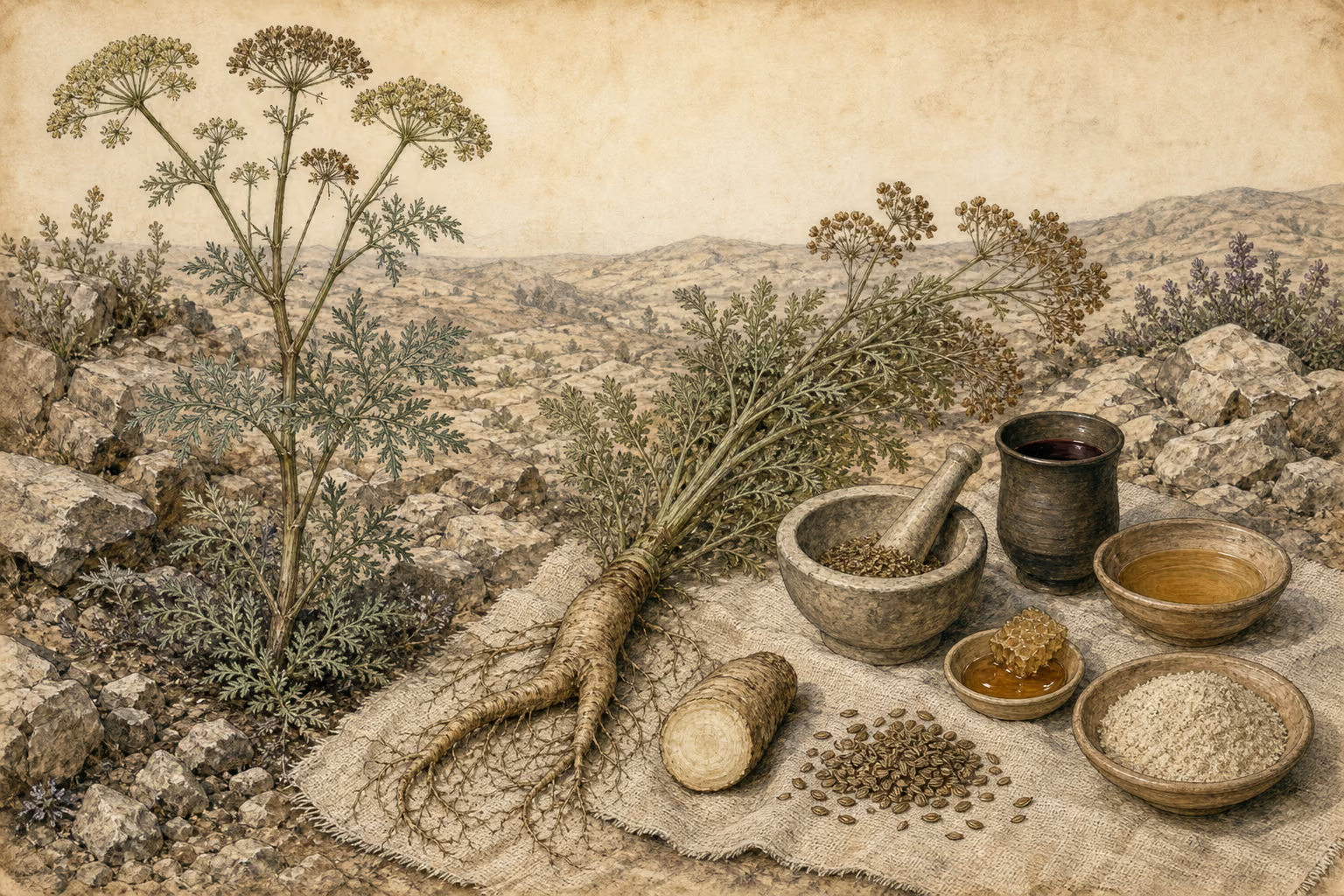
Alterum genus est staphylinus, quod pastinacam erraticam vocant. eius semen contritum et in vino potum tumentem alvum et suffocationes mulierum doloresque lenit in tantum, ut vulvas corrigat. inlitum quoque e passo ventri earum prosit; et viris vero prosit cum panis portione aequa tritum ex vino potum contra ventris dolores. pellit et urinam, et phagedaenas ulcerum sistit recens cum melle inpositum vel arida farina inspersa. radicem eius Dieuches contra iocineris aut lienis ac lumborum et renium vitia ex aqua mulsa dari iubet, Cleophantus et dysintericis veteribus. Philistio in lacte coquit et ad stranguriam dat radicis uncias quattuor, ex aqua hydropicis, similiter et opisthotonicis et pleuriticis et comitialibus. habentes ear feriri a serpentibus negantur aut, qui ante gustaverint, non laedi; percussis inponitur cum axungia. folia contra cruditates manduntur. Orpheus amatorium inesse staphylino dixit, fortassis quoniam venerem stimulari hoc cibo certum est. ideo conceptus adiuvari aliqui prodiderunt. ad reliqua et sativa pollet, efficacior tamen silvestris magisque in petrosis nata. semen sativae quoque contra scorpionum ictus ex vino aut posca salutare est. radice eius circumscalpti dentes dolore liberantur.
Syria, in hortis operosissima—utique in proVerbi o Graecis multa Syrorum olera—, simillimam staphylino herbam serit, quam alii gingidion vocant, tenuius tantum et amarius eiusdemque effectus. estur coctum crudumque stomachi magna utilitate; siccat enim ex alto omnes eius umores.
Siser erraticum sativo simile est et effectu: stomachum excitat, fastidium absterget ex aceto laserpiciato sumptum aut ex pipere et mulso vel ex garo. urinam ciet, ut Ophion credit, et venerem. in eadem sententia est et Diocles; praeterea cordi convenire convalescentium aut post multas vomitiones perquam utile. Heraclides contra argentum vivum dedit et venerem subinde offensantem aegrisque se recolligentibus. Hicesius ideo stomacho inutile videri dixit, quoniam nemo tres siseres edendo continuaret, esse tamen utile convalescentibus ad vinum transeuntibus. sativi privatim sucus cum lacte caprino potus sistit alvum.
Et quoniam plerosque similitudo nominum Graecorum confundit, conteximus et de sili [sed hoc est vulgatae notitiae]. optimum Massiliense, lato enim grano et fulvo est, secundum Aethiopicum nigrius, Creticum odoratissimum *omnium. radix iucundi odoris est. semen esse et vultures dicuntur. prodest homini ad tussim veterem, rupta, convulsa in vino albo potum, item opisthotonicis et iocinerum vitiis et torminibus et stranguriae duarum aut trium lingularum mensura. sunt et folia utilia, ut quae partus adiuvent etiam quadripedum; hoc maxime pasci dicuntur cervae pariturae. inlinuntur et igni sacro. multumque in summo cibo concoctionibus confert vel folio vel semine. quadripedum quoque alvum sistit sive tritum potui infusum sive mandendo commendatum sale. boum morbis sic tritum infunditur.
Inula quoque a ieiunis commanducata dentes confirmat. si, ut eruta est, terram non adtingat, condita tussim emendat; radicis vero decoctae sucus taenias pellit, siccatae autem in umbra farina tussi et convulsis et inflationibus et arteriis medetur. venenatorum morsus abigit. folia ex vino lumborum dolori inlinuntur.
Cepae silvestres non sunt. sativae olfactu ipso et delacrimatione caligini medentur, magis vero suci inunctione. somnum etiam facere traduntur et ulcera oris sanare commanducatae cum pane, et canis morsus virides ex aceto inlitae aut siccae cum melle..... et vino, ita ut post diem tertium solvantur. sic et attrita sanant. coctam in cinere et epiphoris multi inposuere cum farina hordeacia et genitalium ulceribus. suco et cicatrices oculorum et albugines et argema inunxere et serpentium morsus et omnia vulnera cum melle; item auricularum.... cum lacte mulierum et in iisdem sonitum aut gravitatem emendantes cum adipe anserino aut cum melle stillavere. et ex aqua bibendum dederunt repente obmutescentibus. in dolore quoque ad dentes conluendos instillavere et plagis bestiarum omnium, privatim scorpionum. alopecias fricuere et psoras tusis cepis. coctas dysintericis vescendas dedere et contra lumborum dolores, purgamenta quoque earum cremata in cinerem inlinentes ex aceto serpentium morsibus, ipsasque multipedae ex aceto. reliqua inter medicos mira diversitas. proximi inutiles esse praecordiis et concoctioni inflationemque et sitim facere dixerunt. Asclepiadis schola ad colorem quoque validum profici hoc cibo et, si ieiuni cotidie edant, firmitatem valetudinis custodiri, stomacho utiles esse, spiritus agitatione ventrem mollire, haemorrhoidas aperire subditas pro balanis; sucum cum suco feniculi contra incipientes hydropis es mire proficere, item contra anginas cum rutae et melle; excitari eodem lethargicos.—(Varro quae sale et aceto pista est arefactaque, vermiculis non infestari auctor est).—
English · Bostock & Riley 1855–57
The staphylinos, or, as some persons call it, “erratic parsnip,” is another kind. The seed of this plant, pounded and taken in wine, reduces swelling of the abdomen, and alleviates hysterical suffocations and pains, to such a degree as to restore the uterus to its natural condition. Used as a liniment, also, with raisin wine, it is good for pains of the bowels in females; for men, too, beaten up with an equal proportion of bread, and taken in wine, it may be found beneficial for similar pains. It is a diuretic also, and it will arrest the progress of phagedænic ulcers, if applied fresh with honey, or else dried and sprinkled on them with meal.
Dieuches recommends the root of it to be given, with hydromel, for affections of the liver and spleen, as also the sides, loins, and kidneys; and Cleophantus prescribes it for dysentery of long standing. Philistio says that it should be boiled in milk, and for strangury he prescribes four ounces of the root. Taken in water, he recommends it for dropsy, as well as in cases of opisthotony, pleurisy, and epilepsy. Persons, it is said, who carry this plant about them, will never be stung by serpents, and those who have just eaten of it will receive no hurt from them. Mixed with axle-grease, it is applied to parts of the body stung by reptiles; and the leaves of it are eaten as a remedy for indigestion.
Orpheus has stated that the staphylinos acts as a philtre, most probably because, a very-well-established fact, when employed as a food, it is an aphrodisiac; a circumstance which has led some persons to state that it promotes conception. In other respects the cultivated parsnip has similar properties; though the wild kind is more powerful in its operation, and that which grows in stony soils more particularly. The seed, too, of the cultivated parsnip, taken in wine, or vinegar and water, is salutary for stings inflicted by scorpions. By rubbing the teeth with the root of this plant, tooth-ache is removed.
The Syrians devote themselves particularly to the cultivation of the garden, a circumstance to which we owe the Greek proverb, “There is plenty of vegetables in Syria.”
Among other vegetables, that country produces one very similar to the staphylinos, and known to some persons as “gingidion,” only that it is smaller than the staphylinos and more bitter, though it has just the same properties. Eaten either raw or boiled, it is very beneficial to the stomach, as it entirely absorbs all humours with which it may happen to be surcharged.
The wild skirret, too, is very similar to the cultivated kind, and is productive of similar effects. It sharpens the stomach, and, taken with vinegar flavoured with silphium, or with pepper and hydromel, or else with garum, it promotes the appetite. According to Opion, it is a diuretic, and acts as an aphrodisiac. Diocles is also of the same opinion; in addition to which, he says that it possesses cordial virtues for convalescents, and is extremely beneficial after frequent vomitings.
Heraclides has prescribed it against the effects of mercury, and for occasional impotence, as also generally for patients when convalescent. Hicesius says that skirrets would appear to be prejudicial to the stomach, because no one is able to eat three of them following; still, however, he looks upon them as beneficial to patients who are just resuming the use of wine. The juice of the cultivated skirret, taken in goats’-milk, arrests looseness of the stomach.
As the similitude which exists between their Greek names has caused most persons to mistake the one for the other, we have thought it as well to give some account here of sile or hartwort, though it is a plant which is very generally known. The best hartwort is that of Massilia, the seed of it being broad and yellow; and the next best is that of Æthiopia, the seed of which is of a darker hue. The Cretan hartwort is the most odoriferous of the several kinds. The root of this plant has a pleasant smell; the seed of it is eaten by vultures, it is said. Hartwort is useful to man for inveterate coughs, ruptures, and convulsions, being usually taken in white wine; it is employed also in cases of opisthotony, and for diseases of the liver, as well as for griping pains in the bowels and for strangury, in doses of two or three spoonfuls at a time.
The leaves of this plant are useful also, and have the effect of aiding parturition—in animals even: indeed, it is generally said that roes, when about to bring forth, are in the habit of eating these leaves in particular. They are topically applied, also, in erysipelas; and either the leaves or the seed, taken fasting in the morning, are very beneficial to the digestion. Hartwort has the effect, too, of arresting looseness in cattle, either bruised and put into their drink, or else eaten by them after it has been chewed with salt. When oxen are in a diseased state, it is beaten up and poured into their food.
Elecampane, too, chewed fasting, has the effect of strengthening the teeth, if, from the moment that it is plucked, it is not allowed to touch the ground: a confection of it is a cure for cough. The juice of the root boiled is an expellent of intestinal tapeworm; and dried in the shade and reduced to powder, the root is curative in cases of cough, convulsions, flatulency, and affections of the trachea. It is useful too, for the bites of venomous animals; and the leaves steeped in wine are applied topically for pains in the loins.
There are no such things in existence as wild onions. The cultivated onion is employed for the cure of dimness of sight, the patient being made to smell at it till tears come into the eyes: it is still better even if the eyes are rubbed with the juice. It is said, too, that onions are soporific, and that they are a cure for ulcerations of the mouth, if chewed with bread. Fresh onions in vinegar, applied topically, or dried onions with wine and honey, are good for the bites of dogs, care being taken not to remove the bandage till the end of a couple of days. Applied, too, in the same way, they are good for healing excoriations. Roasted in hot ashes, many persons have applied them topically, with barley meal, for defluxions of the eyes and ulcerations of the genitals. The juice, too, is employed as an ointment for sores of the eyes, albugo, and argema. Mixed with honey, it is used as a liniment for the stings of serpents and all kinds of ulcerous sores. In combination with woman’s milk, it is employed for affections of the ears; and in cases of singing in the ears and hardness of hearing, it is injected into those organs with goose-grease or honey. In cases where persons have been suddenly struck dumb, it has been administered to them to drink, mixed with water. In cases, too, of toothache, it is sometimes introduced into the mouth as a gargle for the teeth; it is an excellent remedy also for all kinds of wounds made by animals, scorpions more particularly.
In cases of alopecy and itch-scab, bruised onions are rubbed on the parts affected: they are also given boiled to persons afflicted with dysentery or lumbago. Onion peelings, burnt to ashes and mixed with vinegar, are employed topically for stings of serpents and multipedes.
In other respects, there are remarkable differences of opinion among medical men. The more modern writers have stated that onions are good for the thoracic organs and the digestion, but that they are productive of flatulency and thirst. The school of Asclepiades maintains that, used as an aliment, onions impart a florid colour to the complexion, and that, taken fasting every day, they are promoters of robustness and health; that as a diet, too, they are good for the stomach by acting upon the spirits, and have the effect of relaxing the bowels. He says, too, that, employed as a suppository, onions disperse piles, and that the juice of them, taken in combination with juice of fennel, is wonderfully beneficial in cases of incipient dropsy. It is said, too, that the juice, taken with rue and honey, is good for quinsy, and has the effect of dispelling lethargy. Varro assures us that onions, pounded with salt and vinegar and then dried, will never be attacked by worms.