LIBER XX · CAPUT 6
CUTLEEK: THIRTY-TWO REMEDIES
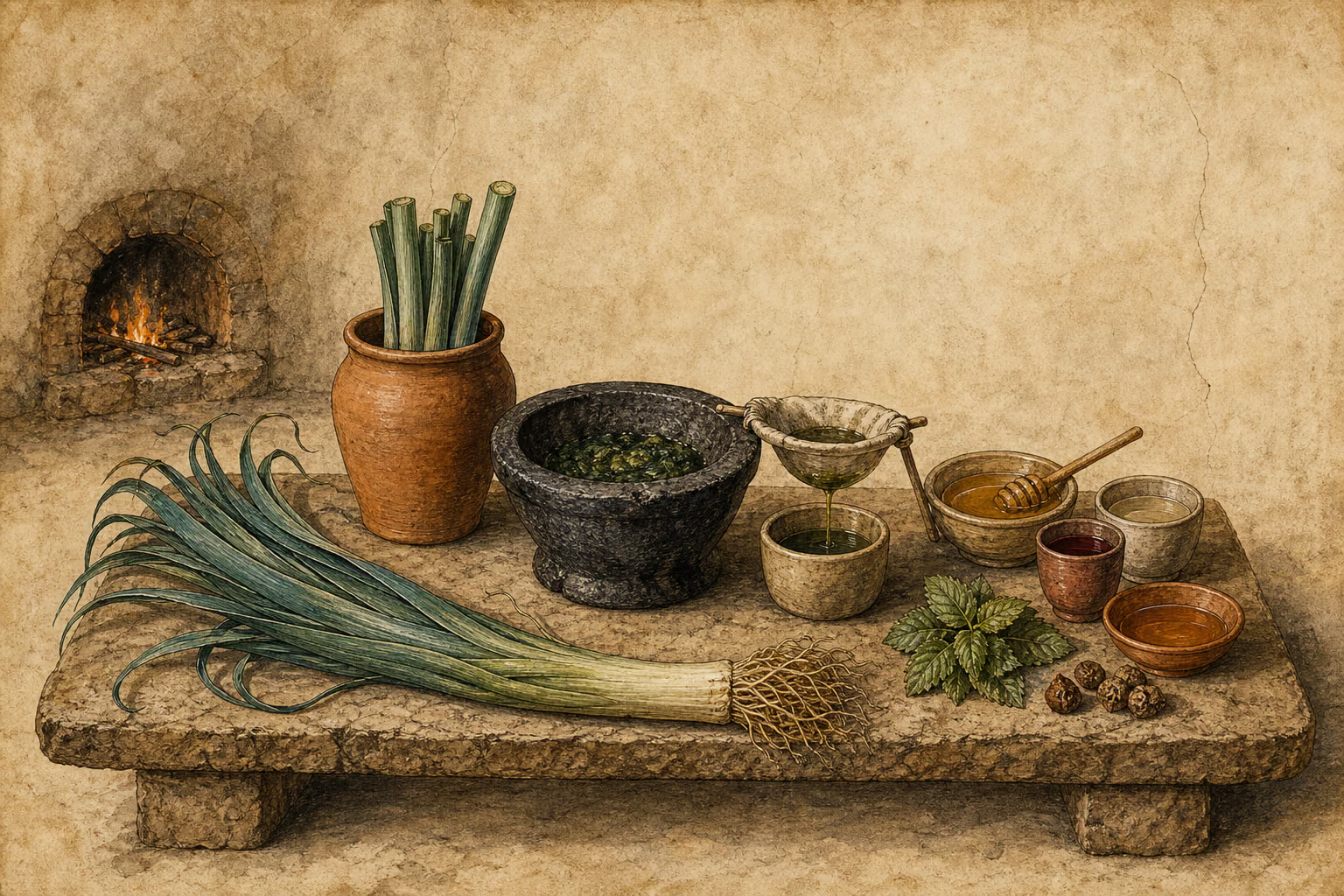
Latine · Mayhoff 1906
Porrum sectivum profluvia sanguinis sistit naribus contrito eo obturatis vel gallae mixto aut mentae, item ex abortu profluvia poto suco. cum lacte mulieris tussi etiam veteri et pectoris ac pulmonis vitiis medetur. inlitis foliis sanantur vari et ambusta et epinyctides— ita vocatur ulcus, quaeet syce, in angulo oculi perpetuo umore manans; quidam eodem nomine appellant pusulas liventes ac noctibus inquietantes—et alia ulcera cum melle tritis, vel bestiarum morsus ex aceto, item serpentium aliorumque venenatorum, aurium vero vitia cum felle caprino vel pari mensura mulsi, stridores cum lacte mulieris, capitis dolores, si in nares fundatur dormituris vel in aures duobus suci coclearibus, uno mellis. sucus et ad serpentium scorpionumque ictus bibitur cum mero et ad lumborum dolores cum vini hemina potus. sanguinem vero excreantibus et phthisicis et destillationibus longis vel sucus vel ex ipso cibus prodest, item morbo regio vel hydropicis et ad renum dolores, cum tisanae suco acetabuli mensura. idem modus cum melle vulvas purgat. estur vero et contra fungorum venena, inponitur et vulneribus, venerem stimulat, sitim sedat, ebrietates discutit, sed oculorum aciem hebetare traditur, inflationes quoque facere, quae tamen stomacho non noceant ventremque molliant. voci splendorem adfert.
Capitato maiores ad eadem effectus. sanguinem reicientibus sucus eius cum galla aut turis farina vel acacia datur. Hippocrates et sine alia mixtura dari iubet vulvasque contractas aperire se putat, fecunditatem etiam feminarum hoc cibo augeri. contritum ex melle ulcera purgat. tussim et destillationes thoracis, pulmonis et arteriae vitia sanat, datum in sorbitione tisanae vel crudum praeter capita sine pane, ita ut alternis diebus sumatur, vel si pura excreentur. sic et voci et veneri somnoque multum confert. capita bis aqua mutata cocta alvum emolliunt.... sistit fluctiones veteres; cortex decoctus inlitusque inficit canos.
Alio magna vis, magnae utilitates contra aquarum et locorum mutationes. serpentes abigit et scorpiones odore atque, ut aliqui tradidere, bestias omnes. ictibus medetur potu vel cibo vel inlitu, privatim contra haemorrhoidas cum vino redditum vomitu. ac, ne contra araneos mures venenati morsus valere miremur, aconitum, quod alio nomine pardalianches vocatur, debellat, item hyoscyamum, canum morsus, in quae vulnera cum melle inponitur. ad serpentium quidem ictus tostum cum restibus suis efficacissime ex oleo inlinitur, adtritisque corporum partibus, vel si in vesicas intumuerint. quin et suffito eo evocari secundas partus existimat Hippocrates, cinere eius cum oleo capitis ulcera manantia sanitati restituens. suspiriosis coctum, aliqui crudum id dedere; Diocles hydropicis cum centaurio aut in fico duplici ad evacuandam alvum, quod efficacius praestat viride cum coriandro in mero potum; suspiriosis aliqui et tritum in lacte dederunt. Praxagoras et contra morbum regium vino miscuit et contra ileum in oleo et pulte, sic inlinens strumis quoque. antiqui et insanientibus dabant crudum, Diodes phreneticis elixum. contra anginas tritum in posca gargarizari prodest. dentium dolorem tribus capitibus in aceto tritis inminuit, vel si decocti aqua conluantur addaturque ipsum in cava dentium. auribus etiam instillatur sucus cum adipe anserino. phthiriases et porrigines potum, item infusum cum aceto et nitro conpescit, destillationes cum lacte coctum vel tritum permixtumve caseo molli, quo genere et raucitatem extenuat vel in pisi aut fabae sorbitione. in totum autem coctum utilius est crudo elixumque tosto; sic et voci plus confert. taenias et reliqua animalia interaneorum pellit in aceto mulso coctum; tenesmo in pulte medetur; temporum doloribus inlinitur elixum et pusulis coctum, dein cum melle tritum; tussi cum adipe vetusto decoctum vel cum lacte aut, si sanguis etiam excreetur vel pura, sub prunatostum et cum mellis pari modo sumptum; convulsis, ruptis cum sale et oleo. item cum adipe tumores suspectos sanat. extrahit fistulis vitia cum sulpure et resina, etiam harundines cum pice; lepras, lichenas, lentigines exulcerat sanatque cum origano, vel cinis eius ex oleo et garo inlitus; sic et sacros ignes; suggillata aut liventia ad colorem reducit conbustum ex melle. credunt et comitialem morbum sanari, si quis eo in cibis utatur ac potione; quartanas quoque excutere potum caput unum cum laserpici obolo in vino austero, —(tussim et alio modo ac pectorum suppurationes??? quantaslibet sanat fractae incoctum fabae atque ita in cibo sumptum, donec sanitatem restituat. facit et somnos, atque in totum rubicundiora corpora)—venerem quoque stimulare cum coriandro viridi tritum potumque e mero. vitia eius sunt quod oculos hebetat, inflationes facit, stomachum laedit copiosius sumptum, sitim gignit. cetero contra pituitam et gallinaceis prodest mixtum farre in cibo. iumenta urinam reddere atque non torqueri tradunt, si trito natura tangatur.
English · Bostock & Riley 1855–57
Cutleek has the effect of stanching bleeding at the nose, the nostrils being plugged with the plant, pounded, or else mixed with nut-galls or mint. The juice of it, taken with woman’s milk, arrests floodings after a miscarriage; and it is remedial in cases even of inveterate cough, and of affections of the chest and lungs. The leaves, applied topically, are employed for the cure of pimples, burns, and epinyctis —this last being the name given to an ulcer, known also as “syce,” situate in the corner of the eye, from which there is a continual running: some persons, however, give this name to livid pustules, which cause great restlessness in the night. Other kinds of ulcers, too, are treated with leeks beaten up with honey: used with vinegar, they are extensively employed also for the bites of wild beasts, as well as of serpents and other venomous creatures. Mixed with goats’ gall, or else honied wine in equal proportions, they are used for affections of the ears, and, combined with woman’s milk, for singing in the ears. In cases of head-ache, the juice is injected into the nostrils, or else into the ear at bed-time, two spoonfuls of juice to one of honey.
This juice is taken too with pure wine, for the stings of serpents and scorpions, and, mixed with a semi-sextarius of wine, for lumbago. The juice, or the leek itself, eaten as a food, is very beneficial to persons troubled with spitting of blood, phthisis, or inveterate catarrhs; in cases also of jaundice or dropsy, and for nephretic pains, it is taken in barley-water, in doses of one acetabulum of juice. The same dose, too, mixed with honey, effectually purges the uterus. Leeks are eaten, too, in cases of poisoning by fungi, and are applied topically to wounds: they act also as an aphrodisiac, allay thirst, and dispel the effects of drunkenness; but they have the effect of weakening the sight and causing flatulency, it is said, though, at the same time, they are not injurious to the stomach, and act as an aperient. Leeks impart a remarkable clearness to the voice.
Bulbed leek produces the same effects as cut-leek, but in a more powerful degree. To persons troubled with spitting of blood, the juice of it is given, with powdered nut-galls or frankincense, or else gum acacia. Hippocrates, however, prescribes it without being mixed with anything else, and expressed himself of opinion that it has the property of opening the uterus when contracted, and that taken as an aliment by females, it is a great promoter of fecundity. Beaten up and mixed with honey, it cleanses ulcerous sores. It is good for the cure of coughs, catarrhs, and all affections of the lungs and of the trachea, whether given in the form of a ptisan, or eaten raw, the head excepted: it must be taken, however, without bread, and upon alternate days, and this even if there should be purulent expectorations.
Taken in this form, it greatly improves the voice, and acts as an aphrodisiac, and as a promoter of sleep. The heads, boiled in a couple of waters, arrest looseness of the bowels, and fluxes of long standing; and a decoction of the outer coat acts as a dye upon grey hair.
Garlic has very powerful properties, and is of great utility to persons on changes of water or locality. The very smell of it drives away serpents and scorpions, and, according to what some persons say, it is a cure for wounds made by every kind of wild beast, whether taken with the drink or food, or applied topically. Taken in wine, it is a remedy for the sting of the hæmorrhoïs more particularly, acting as an emetic. We shall not be surprised too, that it acts as a powerful remedy for the bite of the shrew-mouse, when we find that it has the property of neutralizing aconite, otherwise known as “pardalianches.” It neutralizes henbane, also, and cures the bites of dogs, when applied with honey to the wound. It is taken in drink also for the stings of serpents; and of its leaves, mixed with oil, a most valuable liniment is made for bruises on the body, even when they have swelled and formed blisters.
Hippocrates is of opinion also, that fumigations made with garlic have the effect of bringing away the after-birth; and he used to employ the ashes of garlic, mixed with oil, for the cure of running ulcers of the head. Some persons have prescribed boiled garlic for asthmatic patients; while others, again, have given it raw. Diocles prescribes it, in combination with centaury, for dropsy, and to be taken in a split fig, to promote the alvine evacuations: taken fresh, however, in unmixed wine, with coriander, it is still more efficacious for that purpose. Some persons have given it, beaten up in milk, for asthma. Praxagoras used to prescribe garlic, mixed with wine, for jaundice, and with oil and pottage for the iliac passion: he employed it also in a similar form, as a liniment for scrofulous swellings of the neck.
The ancients used to give raw garlic in cases of madness, and Diocles administered it boiled for phrenitis. Beaten up, and taken in vinegar and water, it is very useful as a gargle for quinsy. Three heads of garlic, beaten up in vinegar, give relief in toothache: and a similar result is obtained by rinsing the mouth with a decoction of garlic, and inserting pieces of it in the hollow teeth. Juice of garlic is sometimes injected into the ears with goose-grease, and, taken in drink, or similarly injected, in combination with vinegar and nitre, it arrests phthiriasis and porrigo. Boiled with milk, or else beaten up and mixed with soft cheese, it is a cure for catarrhs. Employed in a similar manner, and taken with pease or beans, it is good for hoarseness, but in general it is found to be more serviceable cooked than raw, and boiled than roasted: in this last state, however, it is more beneficial to the voice. Boiled in oxymel, it has the effect of expelling tape-worm and other intestinal worms; and a pottage made of it is a cure for tenesmus. A decoction of garlic is applied topically for pains in the temples; and first boiled and then beaten up with honey, it is good for blisters. A decoction of it, with stale grease, or milk, is excellent for a cough; and where persons are troubled with spitting of blood or purulent matter, it may be roasted in hot ashes, and taken with honey in equal proportions. For convulsions and ruptures it is administered in combination with salt and oil; and, mixed with grease, it is employed for the cure of suspected tumours.
Mixed with sulphur and resin, garlic draws out the humours from fistulous sores, and employed with pitch, it will extract an arrow even from the wound. In cases of leprosy, lichen, and eruptions of the skin, it acts as a detergent, and effects a cure, in combination with wild marjoram, or else reduced to ashes, and applied as a liniment with oil and garum. It is employed in a similar manner, too, for erysipelas; and, reduced to ashes, and mixed with honey, it restores contused or livid spots on the skin to their proper colour. It is generally believed, too, that taken in the food and drink, garlic is a cure for epilepsy, and that a clove of it, taken in astringent wine, with an obolus’ weight of silphium, will have the effect of dispelling quartan fever. Garlic cures coughs also, and suppurations of the chest, however violent they may be; to obtain which result, another method is followed, it being boiled with broken beans, and employed as a diet till the cure is fully effected. It is a soporific also, and in general imparts to the body an additional ruddiness of colour.
Garlic acts as an aphrodisiac, beaten up with fresh coriander, and taken in pure wine. The inconveniences which result from the use of it, are dimness of the sight and flatulency; and if taken in too large quantities, it does injury to the stomach, and creates thirst. In addition to these particulars, mixed with spelt flour, and given to poultry in their food, it preserves them from attacks of the pip. Beasts of burden, it is said, will void their urine all the more easily, and without any pain, if the genitals are rubbed with garlic.