LIBER XIX · CAPUT 7
THE NUMBER OF DAYS REQUIRED FOR THE RESPECTIVE PLANTS TO MAKE THEIR APPEARANCE ABOVE GROUND
Latine · Mayhoff 1906
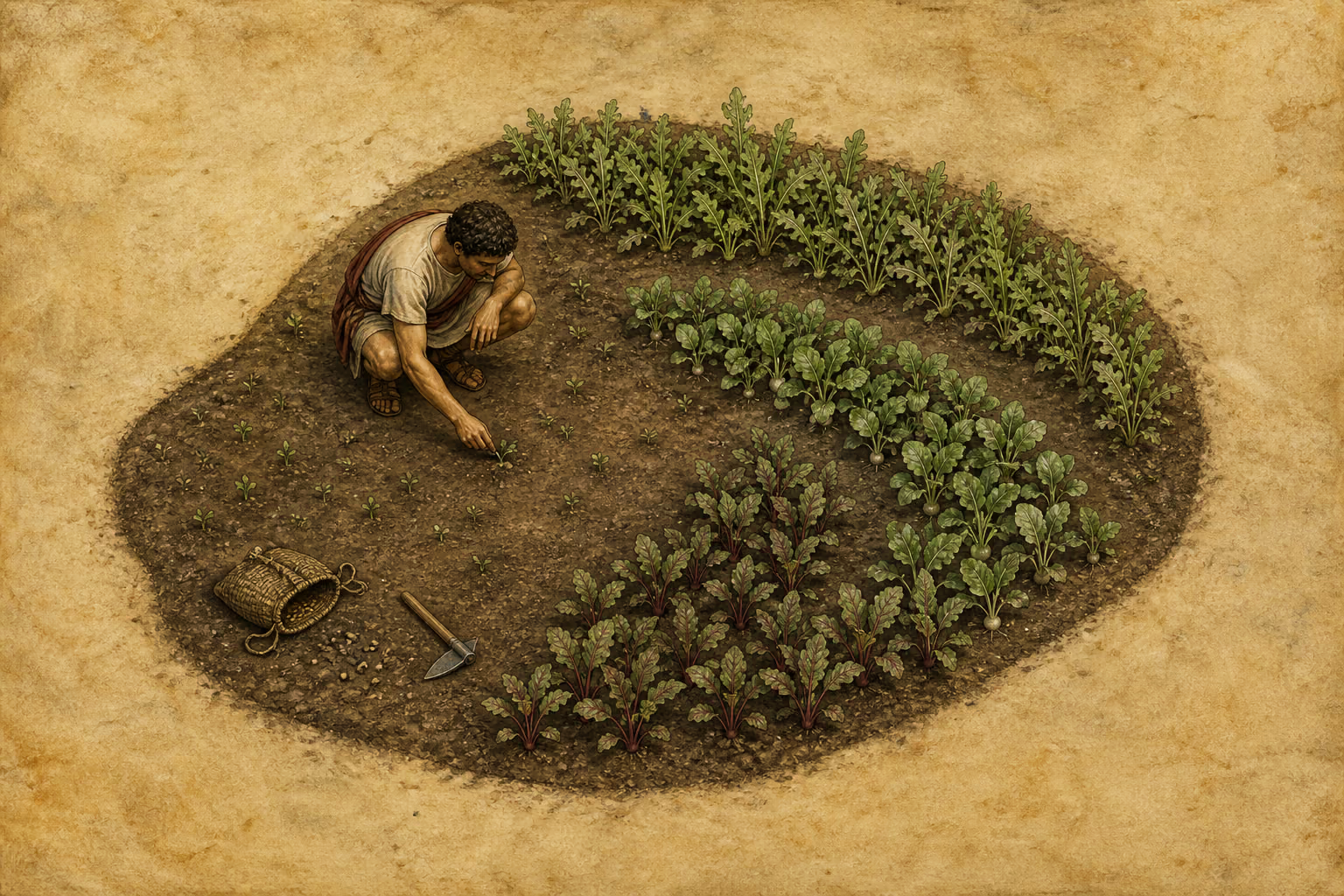
In horto satorum celerrime nascuntur ocimum, blitum, napus, eruca. tertio enim die erumpunt, anetum quarto, lactuca quinto, raphanus sexto, cucumis, cucurbita septimo—prior cucumis —, nasturtium, sinapi quinto, beta aestate sexto, hieme decimo, atriplex octavo, cepae XVIIII aut XX, gethyum X aut duodecimo, contumacius coriandrum, cunila quidem et origanum post XXX diem, omnium autem difficillime apium. XL enim die cum celerrime, L maiore ex parte emergit. aliquid et seminum aetas confert, quoniam recentia maturius gignunt in porro, gethyo, cucumi, cucurbita, ex vetere autem celerius proveniunt apium, beta, cardamum, cunila, origanum, coriandrum. mirum in betae semine: non enim totum eodem anno gignit, sed aliquid sequenti, aliquid et tertio; itaque ex copia seminis modice nascitur. quaedam anno tantum suo pariunt, quaedam saepius, sicut apium, porrum, gethyum; haec enim semel sata pluribus annis restibili fertilitate proveniunt.
Semina plurimis rotunda, aliquis oblonga, paucis foliacia et lata, ut atriplici, quibusdam angusta et canaliculata, ut cumino. differunt et colore nigro, candidiore, item duritia surculacea. in folliculo sunt raphanis, sinapi, rapo. nudum semen est coriandri, aneti, feniculi, cumini, cortice obductum bliti, betae, atriplicis, ocimi, at lactucis in lanugine. nihil ocimo fecundius. cum maledictis ac probris serendum praecipiunt, ut laetius proveniat; sato pavitur terra. et cuminum qui serunt, precantur ne exeat. quae in cortice sunt, difficillime inarescunt maximeque ocimum, et ideo siccantur omnia ac sunt fecunda. utique meliora nascuntur acervatim sato semine quam sparso. ita certe porrum et apium serunt in laciniis colligatum, apium etiam paxillo caverna facta ac fimo ingesto. nascuntur autem omnia aut semine aut avolsione, quaedam semine et surculo, ut ruta, origanum, ocimum—praecidunt enim et hoc, cum pervenit ad palmum altitudinis —, quaedam et semine et radice, ut cepa, alium, bulbi et si quorum radicesanniferorum relinquuntur. eorum vero, quae a radice nascuntur, radix diuturna et fruticosa est, ut bulbi, gethyi, scillae. fruticant alia et non capitata, ut apium et beta. caule reciso fere quidem omnia regerminant exceptis quae non scabrum caulem habent, et in usum vero ocimum, raphanus, lactuca; hanc etiam suaviorem putant a regerminatione. raphanus utique iucundior detractis foliis, antequam decaulescat. hoc et in rapis. nam et eadem dereptis foliis cooperta terra crescunt durantque in aestatem.
Singula genera sunt ocimo, lapatho, blito, nasturtio, erucae, atriplici, coriandro, aneto. haec enim ubique eadem sunt, neque aliud alio melius usquam. rutam furtivam tantum provenire fertilius putant, sicut apes furtivas pessime. nascuntur autem etiam non sata mentastrum, nepete, intubum, puleium. contra plura genera sunt eorum, quae diximus dicemusque, et in primis apio.
English · Bostock & Riley 1855–57
Among the garden plants which make their appearance most speedily above ground, are ocimum, blite, the turnip, and rocket; for they appear above the surface the third day after they are sown. Anise, again, comes up on the fourth day, the lettuce on the fifth, the radish on the sixth, the cucumber and the gourd on the seventh—the cucumber rather the first of the two—cresses and mustard on the fifth, beet on the sixth day in summer and the tenth in winter, orage on the eighth, onions on the nineteenth or twentieth, and scallions on the tenth or twelfth. Coriander, again, is more stubborn in its growth, cunila and wild marjoram do not appear till after the thirtieth day, and parsley comes up with the greatest difficulty of all, for at the very earliest it is forty days before it shows itself, and in most instances as much as fifty.
The age, too, of the seed is of some importance in this respect; for fresh seed comes up more rapidly in the case of the leek, the scallion, the cucumber, and the gourd, while in that of parsley, beet, cardamum, cunila, wild marjoram, and coriander, seed that has been kept for some time is the best.
There is one remarkable circumstance in connection with the seed of beet; it does not all germinate in the first year, but some of it in the second, and some in the third even; hence it is that a considerable quantity of seed produces only a very moderate crop. Some plants produce only in the year in which they are set, and some, again, for successive years, parsley, leeks, and scallions for instance; indeed, these plants, when once sown, retain their fertility, and produce for many years.
In most plants the seed is round, in some oblong; it is broad and foliaceous in some, orage for instance, while in others it is narrow and grooved, as in cummin. There are differences, also, in the colour of seeds, which is either black or white; while some seeds are woody and hard, in radishes, mustard, and rape, the seeds are enclosed in pods. In parsley, coriander, anise, fennel, and cummin, the seed has no covering at all, while in blite, beet, orage, and ocimum, it has an outer coat, and in the lettuce it is covered with a fine down. There is no seed more prolific than that of ocimum; it is generally recommended to sow it with the utterance of curses and imprecations, the result being that it grows all the better for it; the earth, too, is rammed down when it is sown, and prayers offered that the seed may never come up. The seeds which are enveloped in an outer coat, are dried with considerable difficulty, that of ocimum more particularly; hence it is that all these seeds are dried artificially, their fruitfulness being greatly promoted thereby.
Plants in general come up better when the seed is sown in heaps than when it is scattered broad-cast: leeks, in fact, and parsley are generally grown by sowing the seed in little bags; in the case of parsley, too, a hole is made with the dibble, and a layer of manure inserted.
All garden plants grow either from seed or from slips, and some from both seed and suckers, such as rue, wild marjoram, and ocimum, for example—this last being usually cut when it is a palm in height. Some kinds, again, are reproduced from both seed and root, as in the case of onions, garlic, and bulbs, and those other plants of which, though annuals themselves, the roots retain their vitality. In those plants which grow from the root, it lives for a considerable time, and throws out offsets, as in bulbs, scallions, and squills for example.—Others, again, throw out offsets, though not from a bulbous root, such as parsley and beet, for instance. When the stalk is cut, with the exception of those which have not a rough stem, nearly all these plants put forth fresh shoots, a thing that may be seen in ocimum, the radish, and the lettuce, which are in daily use among us; indeed, it is generally thought that the lettuce which is grown from a fresh sprouting, is the sweetest. The radish, too, is more pleasant eating when the leaves have been removed before it has begun to run to stalk. The same is the case, too, with rape; for when the leaves are taken off, and the roots well covered up with earth, it grows all the larger for it, and keeps in good preservation till the ensuing summer.
Of ocimum, lapathum, blite, cresses, rocket, orage, coriander, and anise respectively, there is but a single kind, these plants being the same everywhere, and no better in one place than in another. It is the general belief that stolen rue grows the best, while, on the other hand, bees that have been stolen will never thrive. Wild mint, cat-mint, endive, and pennyroyal, will grow even without any cultivation. With reference to the plants of which we have already spoken, or shall have occasion to speak, there are numerous varieties of many of them, parsley more particularly.