LIBER II · CAPUT 10
OF THE ECLIPSES OF THE MOON AND THE SUN
Latine · Mayhoff 1906
defectus autem suos et solis, rem in tota contemplatione naturae maxime miram et ostento similem, magnitudinum umbraeque indices exsistere.
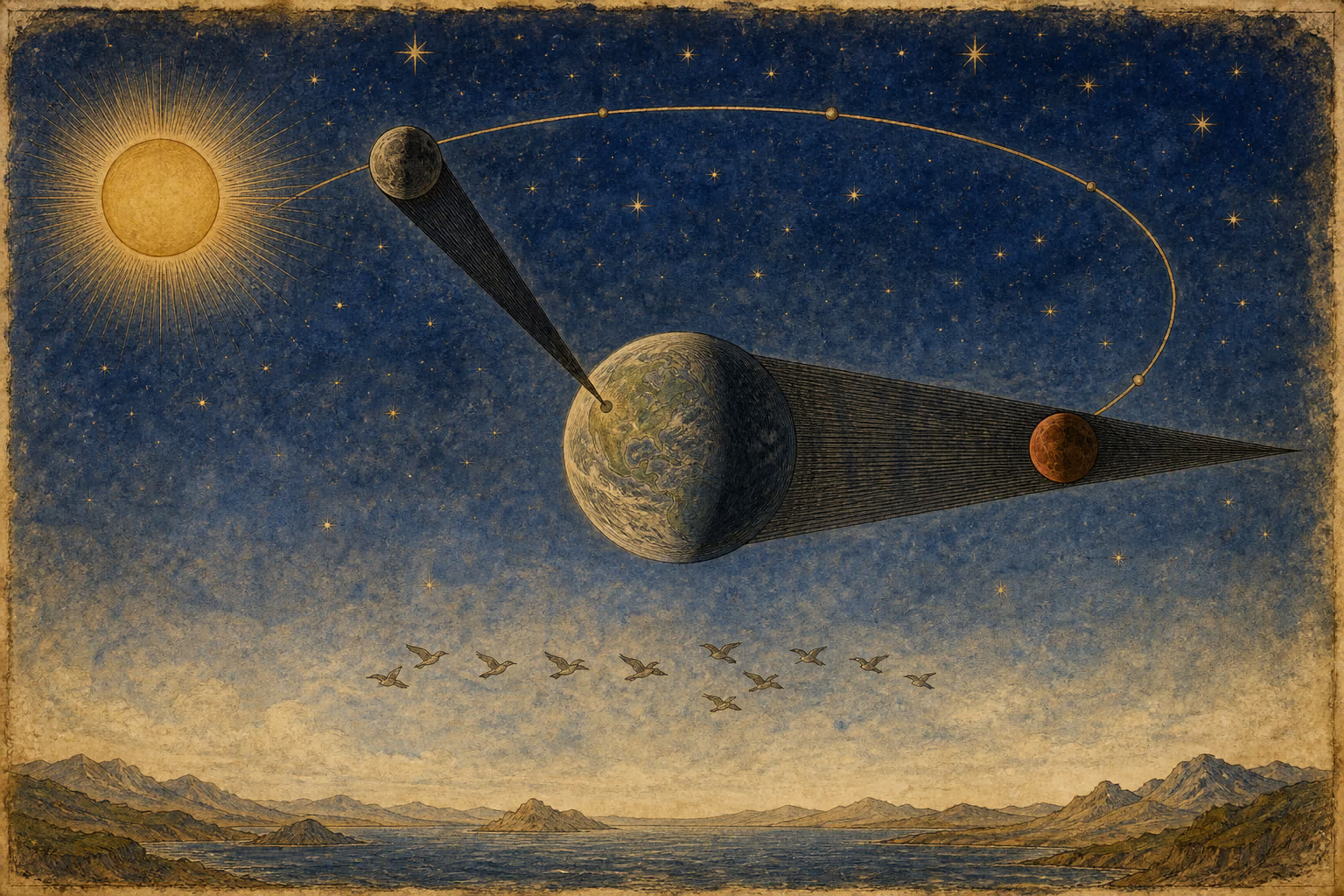
quippe manifestum est solem interventu lunae occultari lunamque terrae obiectu ac vices reddi, eosdem solis radios luna interpositu suo auferente terrae terraque lunae. hac subeunte repentinas obduci tenebras rursumque illius umbra sidus hebetari. neque aliud esse noctem quam terrae umbram, figuram autem umbrae similem metae ac turbini inverso, quando mucrone tantum ingruat neque lunae excedat altitudinem, quoniam nullum aliud sidus eodem modo obscuretur et talis figura semper mucrone deficiat. spatio quidem consumi umbras indicio sunt volucrum praealti volatus. ergo confinium illis est airis terminus initiumque aetheris. supra lunam pura omnia ac diurnae lucis plena. a nobis autem per noctem cernuntur sidera, ut reliqua lumina e tenebris, et propter has causas nocturno tempore deficit luna. stati autem atque menstrui non sunt utrique defectus propter obliquitatem signiferi lunaeque multivagos, ut dictum est, flexus, non semper in scripulis partium congruente siderum motu.
English · Bostock & Riley 1855–57
But her eclipses and those of the sun, the most wonderful of all the phenomena of nature, and which are like prodigies, serve to indicate the magnitude of these bodies and the shadow which they cast.
For it is evident that the sun is hid by the intervention of the moon, and the moon by the opposition of the earth, and that these changes are mutual, the moon, by her interposition, taking the rays of the sun from the earth, and the earth from the moon. As she advances darkness is suddenly produced, and again the sun is obscured by her shade; for night is nothing more than the shade of the earth. The figure of this shade is like that of a pyramid or an inverted top; and the moon enters it only near its point, and it does not exceed the height of the moon, for there is no other star which is obscured in the same manner, while a figure of this kind always terminates in a point. The flight of birds, when very lofty, shows that shadows do not extend beyond a certain distance; their limit appears to be the termination of the air and the commencement of the æther. Above the moon everything is pure and full of an eternal light. The stars are visible to us in the night, in the same way that other luminous bodies are seen in the dark. It is from these causes that the moon is eclipsed during the night. The two kinds of eclipses are not, however, at the stated monthly periods, on account of the obliquity of the zodiac, and the irregularly wandering course of the moon, as stated above; besides that the motions of these stars do not always occur exactly at the same points.