LIBER II · CAPUT 9
OF THE NATURE OF THE STARS; OF THE MOTION OF THE PLANETS
Latine · Mayhoff 1906
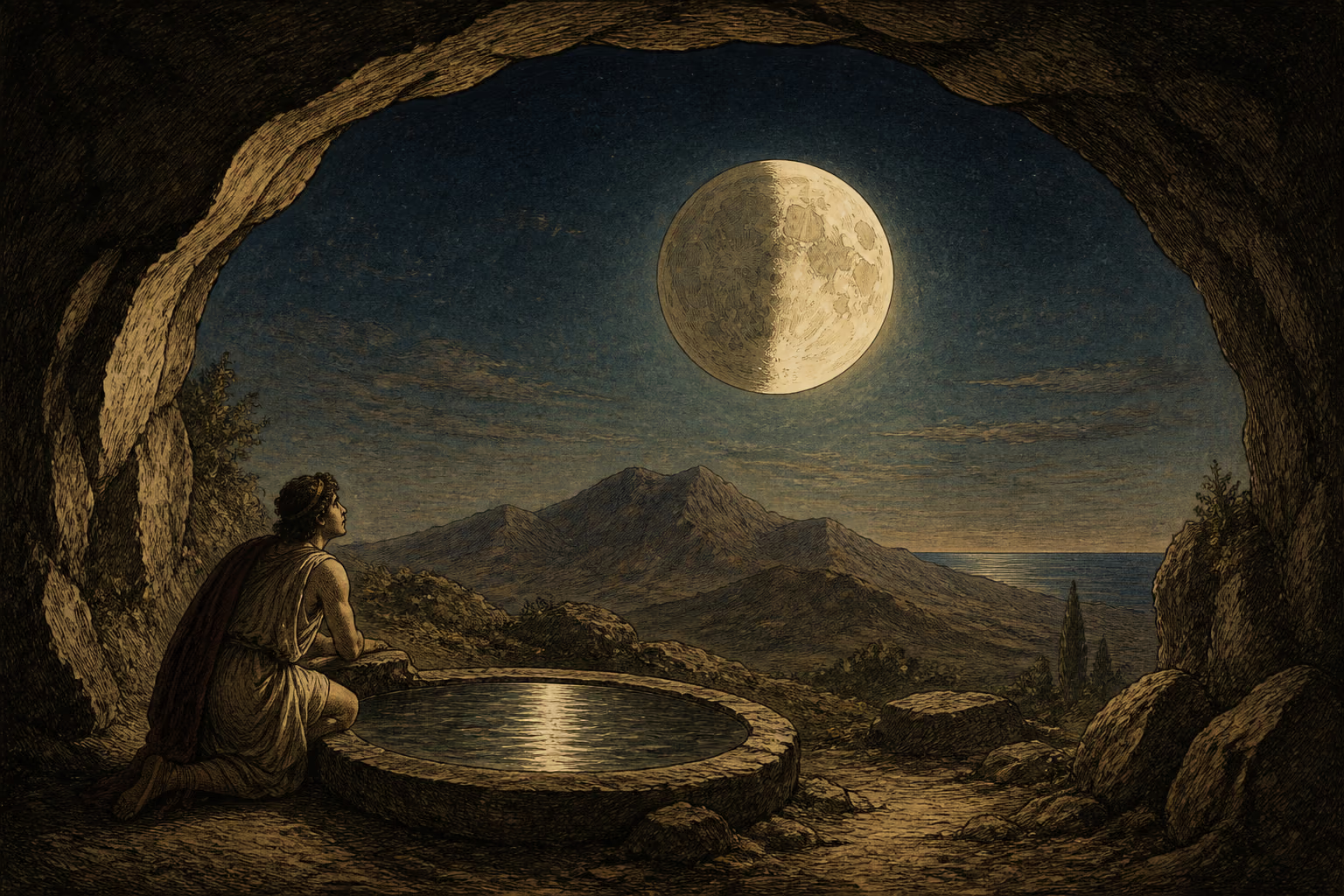
Sed omnium admirationem vincit novissimum sidus, terris familiarissimum et in tenebrarum remedium ab natura repertum, lunae. multiformisl haec ambigua torsit ingenia contemplantium et proximum ignorare sidus maxime indignantium, crescens semper aut senescens et modo curvata in cornua facie, modo aequa portione divisa, modo sinuata in orbem, maculosa eademque subito praenitens, inmensa orbe pleno ac repente nulla, alias pernox, alias sera et parte diei solis lucem adiuvans, deficiens et in defectu tamen conspicua —quae mensis exitu latet,tum laborare non creditur—, iam vero humilis et excelsa, et ne id quidem uno modo, sed alias admota caelo, alias contigua montibus, nunc in aquilonem elata, nunc in austros deiecta. quae.singula in ea deprehendit hominum primus Endymion; ob id amor eius fama traditur. non sumus profecto grati erga eos qui labore curaque lucem nobis aperuere in hac luce, miraque humani ingeni peste sanguinem et caedes condere annalibus iuvat, ut scelera hominum noscantur mundi ipsius ignaris. proxima ergo cardini, ideoque minimo ambitu, vicenis diebus septenisque et tertia diei parte peragit spatia eadem, quae Saturni sidus altissimum XXX, ut dictum est, annis. dein morata in coitu solis biduo, cum tardissime, a tricesima luce rursum ad easdem vices exit, haut scio an omnium, quae in caelo pernosci potuerunt, magistra: in XII mensium spatia oportere dividi annum, quando ipsa totiens solem redeuntem ad principia consequitur; solis fulgore, ut reliqua siderum, regi, siquidem in totum mutuata ab eo luce fulgere, qualem in reper- cussu aquae volitare conspicimus; ideo molliore et inperfecta vi solvere tantum umorem atque etiam augere, quem solis radii absumant. ideo inaequali lumine adspici, quia, ex adverso demum plena, reliquis diebus tantum ex se terris ostendat, quantum a sole ipsa concipiat; in coitu quidem non cerni, quoniam haustum omnem lucis aversa illo regerat, unde acceperit. sidera vero haut dubie umore terreno pasci, quia dimidio orbe numquam maculoso cernatur, scilicet nondum suppetente ad hauriendum ultra iusta vi; masculas enim non aliud esse quam terrae raptas cum umore sordes.
English · Bostock & Riley 1855–57
But the Moon, which is the last of the stars, and the one the most connected with the earth, the remedy provided by nature for darkness, excels all the others in its admirable qualities. By the variety of appearances which it assumes, it puzzles the observers, mortified that they should be the most ignorant concerning that star which is the nearest to them. She is always either waxing or waning; sometimes her disc is curved into horns, sometimes it is divided into two equal portions, and at other times it is swelled out into a full orb; sometimes she appears spotted and suddenly becomes very bright; she appears very large with her full orb and suddenly becomes invisible; now continuing during all the night, now rising late, and now aiding the light of the sun during a part of the day; becoming eclipsed and yet being visible while she is eclipsed; concealing herself at the end of the month and yet not supposed to be eclipsed. Sometimes she is low down, sometimes she is high up, and that not according to one uniform course, being at one time raised up to the heavens, at other times almost contiguous to the mountains; now elevated in the north, now depressed in the south; all which circumstances having been noticed by Endymion, a report was spread about, that he was in love with the moon. We are not indeed sufficiently grateful to those, who, with so much labour and care, have enlightened us with this light; while, so diseased is the human mind, that we take pleasure in writing the annals of blood and slaughter, in order that the crimes of men may be made known to those who are ignorant of the constitution of the world itself.
Being nearest to the axis, and therefore having the smallest orbit, the Moon passes in twenty-seven days and the one-third part of a day, through the same space for which Saturn, the highest of the planets, as was stated above, requires thirty years. After remaining for two days in conjunction with the sun, on the thirtieth day she again very slowly emerges to pursue her accustomed course. I know not whether she ought not to be considered as our instructress in everything that can be known respecting the heavens; as that the year is divided into the twelve divisions of the months, since she follows the sun for the same number of times, until he returns to the commencement of his course; and that her brightness, as well as that of the other stars, is regulated by that of the sun, if indeed they all of them shine by light borrowed from him, such as we see floating about, when it is reflected from the surface of water. On this account it is that she dissolves so much moisture, by a gentle and less perfect force, and adds to the quantity of that which the rays of the sun consume. On this account she appears with an unequal light, because being full only when she is in opposition, on all the remaining days she shows only so much of herself to the earth as receives light from the sun. She is not seen in conjunction, because, at that time, she sends back the whole stream of light to the source whence she has derived it. That the stars generally are nourished by the terrestrial moisture is evident, because, when the moon is only half visible she is sometimes seen spotted, her power of absorbing moisture not having been powerful enough; for the spots are nothing else than the dregs of the earth drawn up along with the moisture.