LIBER XX · CAPUT 19
THE POPPY CALLED RHŒAS: TWO REMEDIES
Latine · Mayhoff 1906
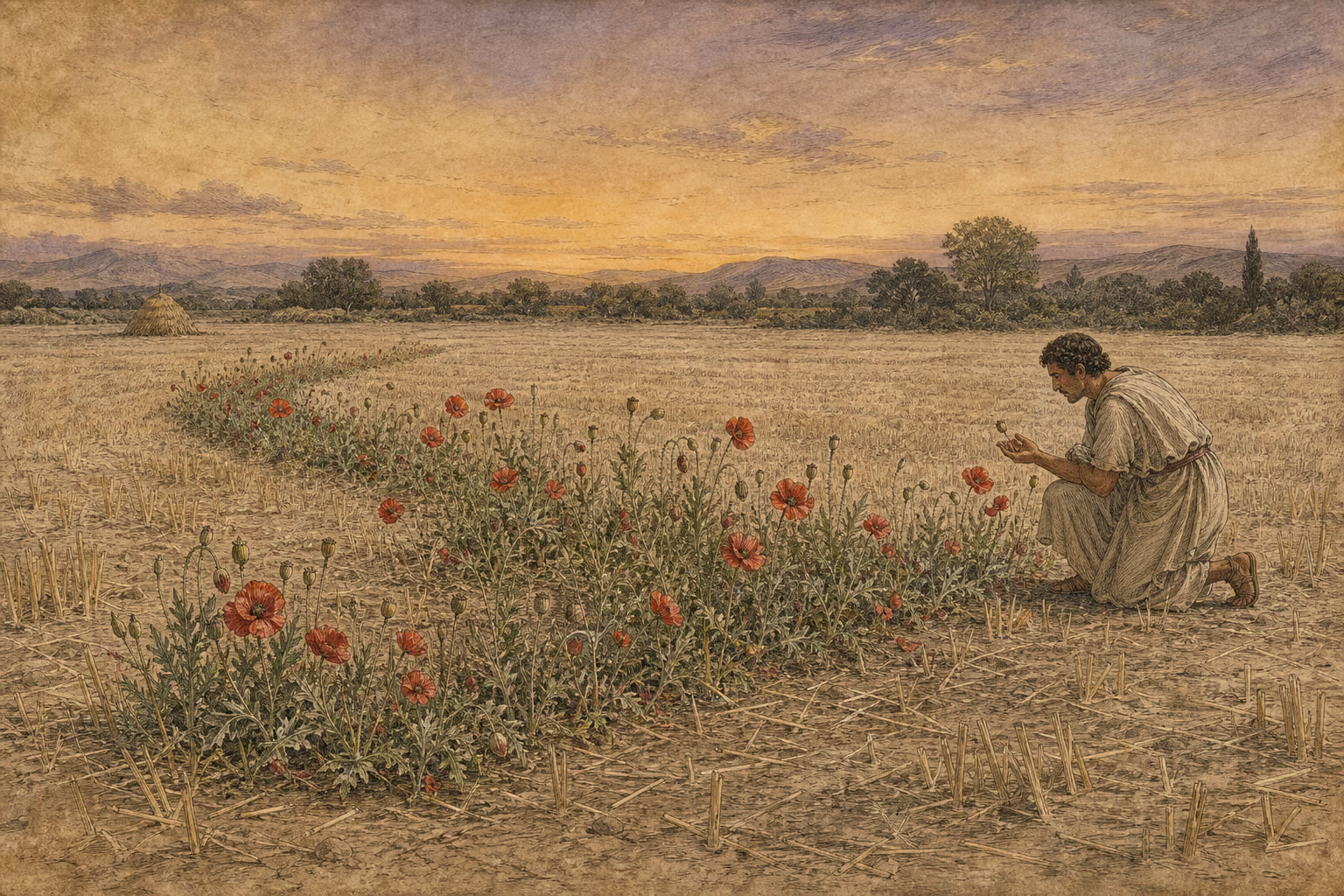
Inter sativa et silvestria medium genus, quoniam in arvis, sed sponte nasceretur, rhoeam vocavimus et erraticum. quidam id decerptum protinus cum toto calice mandunt. alvum exinanit. capita quinque decocta in vini tribus heminis pota et somnum faciunt.
Silvestrium unum genus ceratitim vocant, nigrum, cubitali altitudine, radice crassa et corticosa, calyculo inflexo ut corniculo. folia minora et tenuiora quam ceteris silvestribus. semen exile tempestivum est messibus; alvum purgat dimidio acetabulo in mulso. folia trita cum oleo argema iumentorum sanant. radix acetabuli mensura cocta in duobus sextariis ad dimidias datur ad lumborum vitia et iocineris. carbunculis medentur ex melle folia. quidam hoc genus glaucion vocant, alii paralium. nascitur enim in adflatu maris aut nitroso loco.
Alterum e silvestribus genus heraclium vocatur, ab aliis aphrodes, foliis, si procul intuearis, speciem passerum praebentibus, radice in summa terrae cute, semine spumeo. ex hoc lina splendorem trahunt. aestate tunditur in pila. comitialibus morbis acetabulo seminis in vino albo —vomitionem enim facit—, item medicamento, quod διὰ κωδυῶν et arteriace vocatur, utilissimum. fit autem huius papaveris aut cuiuscumque silvestris capitibus cxx in aquae caelestis sextariis tribus biduo maceratis in eademque discoctis, deinde suco siccato iterumque cum melle decocto ad dimidias partes vapore tenui. addidere postea drachmas senas croci, hypocisthidis, turis, acaciae et passi Cretici sextarium. haec ostentatione, simplex quidem et antiqua illa salubritas papavere et melle constat.
Tertium genus est tithymalon—mecona vocant, lii paralion—folio lini, flore albo, capite magnitudinis fabae. colligitur uva florente, siccatur in umbra. semen potum purgat alvum dimidio acetabulo in mulso. cuiuscumque autem papaveris caput viride vel siccum inlitum epiphoras oculorum lenit. opium ex vino meraculo si protinus detur, scorpionum ictibus resistit. aliqui hoc tantum nigro tribuunt, si capita eius vel folia terantur.
English · Bostock & Riley 1855–57
The poppy which we have spoken of under the names of “rhœas” and the “erratic” poppy, forms an intermediate variety between the cultivated and the wild poppy; for it grows in the fields, it is true, but it is self-set nevertheless. Some persons eat it, calyx and all, immediately after it is gathered. This plant is an extremely powerful purgative: five heads of it, boiled in three semi-sextarii of wine, and taken in drink, have the effect of producing sleep.
There is one variety of wild poppy known as “ceratitis.” It is of a black colour, a cubit in height, and has a thick root covered with bark, with a head resembling a small bud, bent and pointed at the end like a horn. The leaves of this plant are smaller and thinner than those of the other wild poppies, and the seed, which is very diminutive, is ripe at harvest. Taken with honied wine, in doses of half an acetabulum, the seed acts as a purgative. The leaves, beaten up in oil, are a cure for the white specks which form on the eyes of beasts of burden. The root, boiled down to one half, in doses of one acetabulum to two sextarii of water, is prescribed for maladies of the loins and liver, and the leaves, employed with honey, are a cure for carbuncles.
Some persons give this kind of poppy the name of “glaucion,” and others of “paralium,” for it grows, in fact, in spots exposed to exhalations from the sea, or else in soils of a nitrous nature.
There is another kind of wild poppy, known as “heraclion” by some persons, and as “aphron” by others. The leaves of it, when seen from a distance, have all the appearance of sparrows; the root lies on the surface of the ground, and the seed has exactly the colour of foam. This plant is used for the purpose of bleaching linen cloths in summer. It is bruised in a mortar for epilepsy, being given in white wine, in doses of one acetabulum, and acting as an emetic.
This plant is extremely useful, also, for the composition of the medicament known as “diacodion,” and “arteriace.” This preparation is made with one hundred and twenty heads of this or any other kind of wild poppy, steeped for two days in three sextarii of rain water, after which they are boiled in it. You must then dry the heads; which done, boil them down with honey to one half, at a slow heat. More recently, there have been added to the mixture, six drachmæ of saffron, hypocisthis, frankincense, and gum acacia, with one sextarius of raisin wine of Crete. All this, however, is only so much ostentation; for the virtue of this simple and ancient preparation depends solely upon the poppy and the honey.
There is a third kind, again, called “tithymalon;” some persons give it the name of “mecon,” others of “paralion.” It has a white leaf, resembling that of flax, and a head the size of a bean. It is gathered when the vine is in blossom, and dried in the shade. The seed, taken in drink, purges the bowels, the dose being half an acetabulum, in honied wine. The head of every species of poppy, whether green or dry, used as a fomentation, assuages defluxions of the eyes. Opium, if taken in pure wine immediately after the sting of a scorpion, prevents any dangerous results. Some persons, however, attribute this virtue to the black poppy only, the head or leaves being beaten up for the purpose.