LIBER XX · CAPUT 20
PORCILLACA OR PURSLAIN, OTHERWISE CALLED PEPLIS: TWENTY-FIVE REMEDIES
Latine · Mayhoff 1906
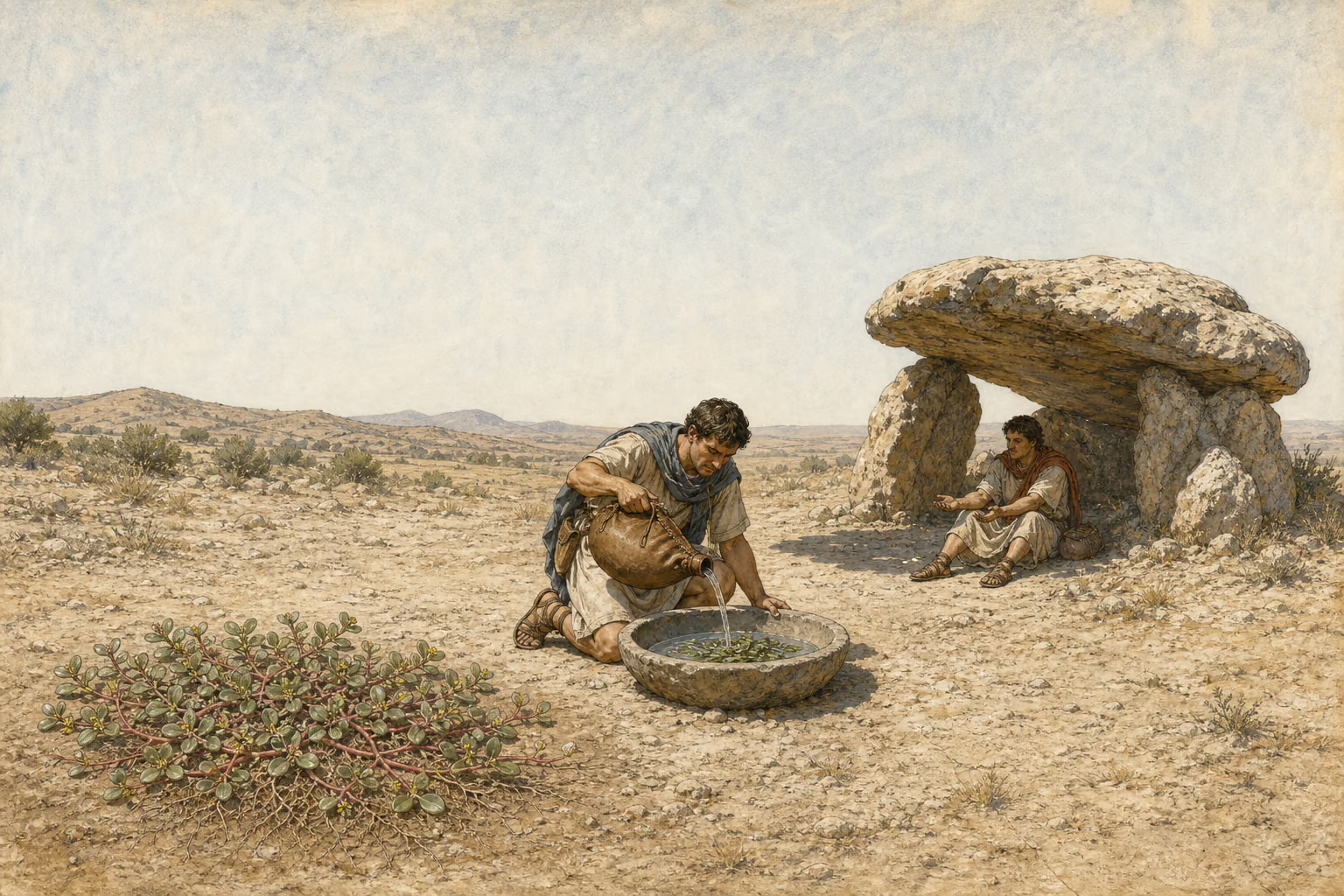
Est et porcillaca, quam peplin vocant, non multum sativa efficacior, cuius memorabiles usus traduntur: sagittarum venena et serpentium haemorrhoidum et presterum restingui pro cibo sumpta et plagis inposita extrahi, item hyoscyami pota e passo expresso suco. cum ipsa non est, semen eius simili effectu prodest. resistit et aquarum vitiis, capitis dolori ulceribusque in vino tusa et inposita, reliqua ulcera commanducata cum melle sanat. sic et infantium cerebro inponitur umbilicoque prociduo, in epiphoris vero omnium fronti temporibusque cum polenta, sed ipsis oculis e lacte et melle; eadem, si proci- dant oculi, foliis tritis cum corticibus fabae, pusulis cum polenta et sale et aceto. ulcera oris tumoremque gingivarum commanducata cruda sedat, item dentium dolores, tonsillarum ulcera sucus decoctae; quidam adiecere paulum murrae. nam mobiles dentes stabilit conmanducata [cruda sedat] vocemque firmat et sitim arcet. cervicis dolores cum galla et lini semine et melle pari mensura sedat, mammarum vitia cum melle aut Cimolia crela, salutaris et suspiriosis semine cum melle hausto. stomachum in acetariis sumpta corroborat. ardenti febribus inponitur cum polenta, et alias manducata refrigerat etiam intestina. vomitiones sistit. dysinteriae et vomicis estur ex aceto vel bibitur cum cumino, tenesmis autem cocta. comitialibus cibo vel potu prodest, purgationibus mulierum acetabuli mensura in sapa, podagris calidis cum sale inlita et sacro igni. sucus eius potus renes iuvat ac vesicas, ventris animalia pellit. ad vulnerum dolores ex oleo cum polenta inponitur. nervorum duritias emollit. Metrodorus, qui ἐπιτομὴν ῥιζοτομουμένων scripsit, purgationibus a partu dandam censuit. venerem inhibet venerisque somnia. praetorii viri pater est, Hispaniae princeps, quem scio propter inpetibiles uvae morbos radicem eius filo suspensam e collo gerere praeterquam in balineis, ita liberatum incommodo omni. quin etiam inveni apud auctores caput inlitum ea destillationem anno toto non sentire. oculos tamen hebetare putatur.
Coriandrum inter silvestria non invenitur. praecipuum esse constat Aegyptium. valet contra serpentium genus unum, quod amphisbaenas vocant, potum inpositumque. sanat et alia vulnera, epinyctidas pusulas tritum; sic et omnes tumores collectionesque cum melle aut uva passa, panos vero ex aceto tritum. seminis grana tria in tertianis devorari iubent aliqui ante accessionem vel plura inlini fronti. sunt qui et ante solis ortum cervicalibus subici efficaciter putent. vis magna ad refrigerandos ardores viridi. ulcera quoque, quae serpunt, sanat cum melle vel uva passa, item testes, ambusta, carbunculos, aures, cum lacte mulieris epiphoras oculorum, ventris et intestinorum fluctiones semen ex aqua potum. bibitur et in choleris cum ruta. pellit animalia interaneorum cum mali punici suco et oleo semen potum. Xenocrates tradit rem miram, si vera est, menstrua contineri uno die, si unum granum biberint feminae, biduo, si duo, et totidem diebus quot grana sumpserint, M. Varro coriandro subtrito et cumino acetoque carnem omnem incorruptam aestate servari putat.
Atriplex et silvestre est, accusatum Pythagorae, tamquam faceret hydropicos morbosque regios et pallorem, concoqueretur difficillime; ac ne in hortis quidem iuxta id nasci quicquam nisi languidum culpavit. addidere Dionysius et Diodes plurimos gigni ex eo morbos, nec nisi mutata saepe aqua coquendum, stomacho contrarium esse, lentigines et papulas gignere. miror quare difficulter in Italia nasci tradiderit id Solo Smyrnaeus. Hippocrates vulvarum vitiis infundit id cum beta. Lycus Neapolitanus contra cantharidas bibendum dedit, panos, furunculos incipientes,duritias omnes vel cocto vel crudo utiliter inlini putavit,item ignem sacrum cum melle, aceto, nitro, similiter podagras. ungues scabros detrahere dicitur sine ulcere. sunt qui et morbo regio dent semen eius cum melle, arterias et tonsillas nitro addito perfricent, alvum moveant cocto vel per se vel cum malva aut lenticula. concitant et vomitiones. silvestri capillos tingunt et ad supra scripta utuntur.
English · Bostock & Riley 1855–57
There is a wild purslain, too, called “peplis,” not much superior in its virtues to the cultivated kind, of which such remarkable properties are mentioned. It neutralizes the effects, it is said, of poisoned arrows, and the venom of the serpents known as hæmorrhois and prester; taken with the food and applied to the wound, it extracts the poison. The juice, too, they say, taken in raisin wine, is an antidote for henbane. When the plant itself cannot be procured, the seed of it is found to be equally efficacious. It is a corrective, also, of impurities in water; and beaten up in wine and applied topically, it is a cure for head-ache and ulcers of the head. Chewed in combination with honey, it is curative of other kinds of sores. It is similarly applied to the region of the brain in infants, and in cases of umbilical hernia; as also for defluxions of the eyes, in persons of all ages, being applied to the forehead and temples with polenta. If employed as a liniment for the eyes, milk and honey are added, and when used for proptosis of the eyes, the leaves are beaten up with bean-shells. In combination with, polenta, salt, and vinegar, it is employed as a fomentation for blisters.
Chewed raw, purslain reduces ulcerations of the mouth and gum-boils, and cures tooth-ache; a decoction of it is good, too, for ulcers of the tonsils. Some persons have added a little myrrh to it, when so employed. Chewed, it strengthens such teeth as may happen to be loose, dispels crudities, imparts additional strength to the voice, and allays thirst. Used with nut-galls, linseed, and honey, in equal proportions, it assuages pains in the neck; and, combined with honey or Cimolian chalk, it is good for diseases of the mamillæ. The seed of it, taken with honey, is beneficial for asthma. Eaten in salads, this plant is very strengthening to the stomach. In burning fevers, applications of it are made with polenta; in addition to which, if chewed, it will cool and refresh the intestines. It arrests vomiting, also, and for dysentery and abscesses, it is eaten with vinegar, or else taken with cummin in drink: boiled, it is good for tenesmus. Taken either in the food or drink, it is good for epilepsy; and, taken in doses of one acetabulum in boiled wine, it promotes the menstrual discharge. Employed, also, as a liniment with salt, it is used as a remedy for fits of hot gout and erysipelas.
The juice of this plant, taken in drink, strengthens the kidneys and bladder, and expels intestinal worms. In conjunction with oil, it is applied, with polenta, to assuage the pain of wounds, and it softens indurations of the sinews. Metrodorus, who wrote an Abridgment of Botany, says that it should be given after delivery, to accelerate the lochial discharge. It is also an antaphrodisiac, and prevents the recurrence of lascivious dreams. One of the principal personages of Spain, whose son has been Prætor, is in the habit of carrying the root of it, to my knowledge, suspended by a string from his neck, except when he is taking the bath, for an incurable affection of the uvula; a precaution by which he has been spared all inconvenience.
I have found it stated, too, in some authors, that if the head is rubbed with a liniment of this plant, there will be no defluxions perceptible the whole year through. It is generally thought, however, that purslain weakens the sight.
There is no wild coriander to be found; the best, it is generally agreed, is that of Egypt. Taken in drink and applied to the wound, it is a remedy for the sting of one kind of serpent, known as the amphisbæna: pounded, it is healing also for other wounds, as well as for epinyctis and blisters. Employed in the same state with honey or raisins, it disperses all tumours and gatherings, and, beaten up in vinegar, it removes abscesses of an inflammatory nature. Some persons recommend three grains of it to be taken for tertian fevers, just before the fit comes on, or else in larger quantities, to be bruised and applied to the forehead. There are others, again, who think that it is attended with excellent results, to put coriander under the pillow before sunrise.
While green, it is possessed of very cooling and refreshing properties. Combined with honey or raisins, it is an excellent remedy for spreading ulcers, as also for diseases of the testes, burns, carbuncles, and maladies of the ears. Applied with woman’s milk, it is good for defluxions of the eyes; and for fluxes of the belly and intestines, the seed is taken with water in drink; it is also taken in drink for cholera, with rue. Coriander seed, used as a potion with pomegranate juice and oil, expels worms in the intestines.
Xenocrates states a very marvellous fact, if true; he says, that if a woman takes one grain of this seed, the menstrual discharge will be retarded one day, if two grains, two days, and so on, according to the number of grains taken. Marcus Varro is of opinion, that if coriander is lightly pounded, and sprinkled over it with cummin and vinegar, all kinds of meat may be kept in summer without spoiling.
Orage, again, is found both wild and cultivated. Pythagoras has accused this plant of producing dropsy, jaundice, and paleness of the complexion, and he says that it is extremely difficult of digestion. He asserts, also, to its disparagement, that every thing that grows near it in the garden is sure to be drooping and languid. Diocles and Dionysius have added a statement, that it gives birth to numerous diseases, and that it should never be boiled without changing the water repeatedly; they say, too, that it is prejudicial to the stomach, and that it is productive of freckles and pimples on the skin.
I am at a loss to imagine why Solo of Smyrna has stated that this plant is cultivated in Italy with the greatest difficulty. Hippocrates prescribes it with beet, as a pessary for affections of the uterus; and Lycus of Neapolis recommends it to be taken in drink, in cases of poisoning by cantharides. He is of opinion, also, that either raw or boiled, it may be advantageously employed as a liniment for inflammatory swellings, incipient boils, and all kinds of indurations; and that, mixed with oxymel and nitre, it is good for erysipelas and gout. This plant, it is said, will bring away mal-formed nails, without producing sores. There are some persons who give orage-seed with honey for jaundice, and rub the throat and tonsils with it, nitre being added as well. They employ it, also, to purge the bowels, and use the seed, boiled, as an emetic, either taken by itself, or in conjunction with mallows or lentils.
Wild orage is used for dyeing the hair, as well as the other purposes above enumerated.