LIBER XX · CAPUT 21
THE MALLOW CALLED MALOPE: THIRTEEN REMEDIES. THE MALLOW CALLED MALACHE: ONE REMEDY. THE MALLOW CALLED ALTHÆA, OR PLISTOLOCHIA: FIFTY-NINE REMEDIES
Latine · Mayhoff 1906
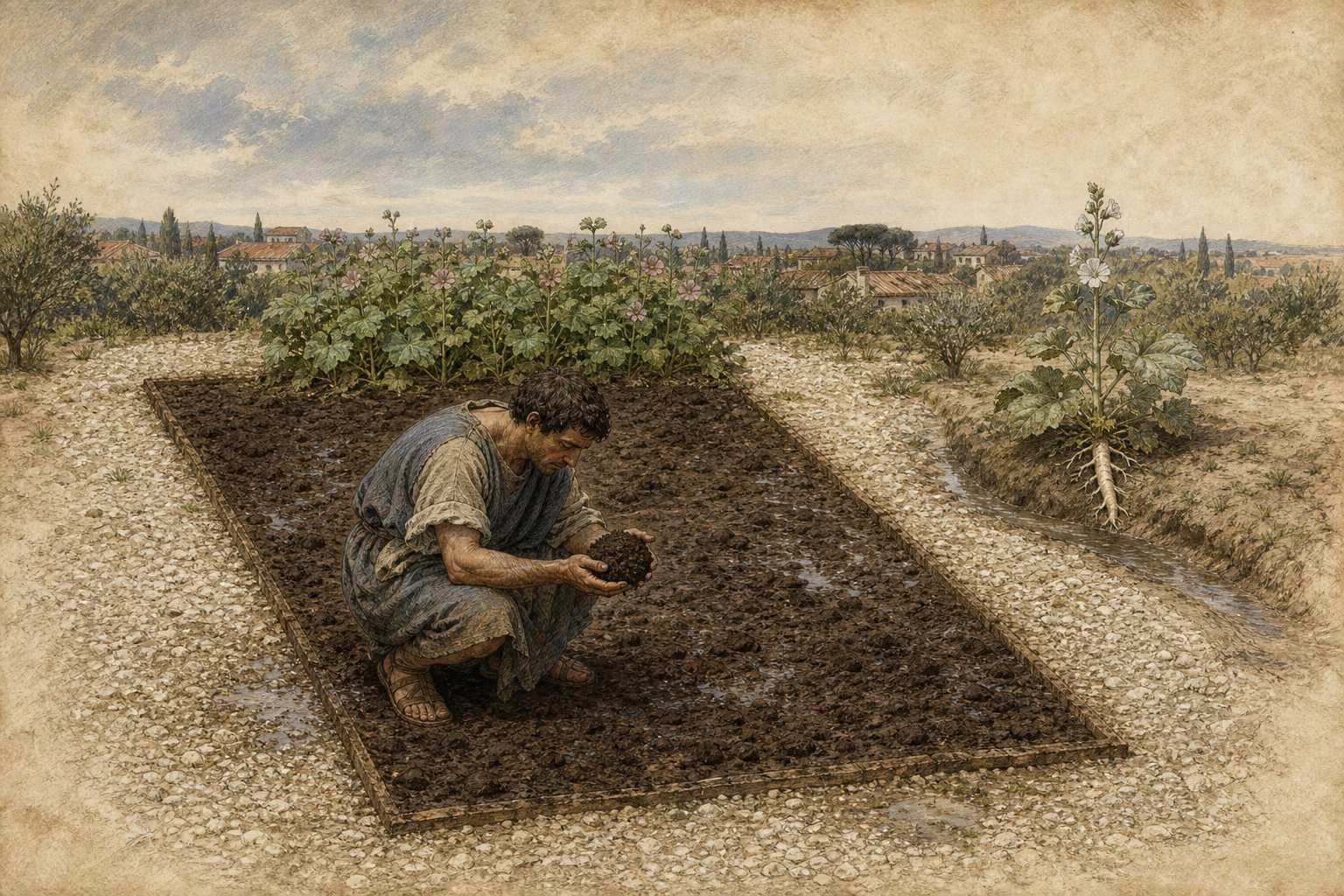
E contrario in magnis laudibus malva est utraque et sativa et silvestris. duo genera earum amplitudine folii discernuntur. maiorem Graeci malopen vocant in sativis, alteram ab emolliendo ventre dictam putant malachen. at e silvestribus, cui grande folium et radices albae, althaea vocatur, ab excellentia effectus a quibusdam plistolochia. omne solum, in quo seruntur, pinguius faciunt. contra omnes aculeatos ictus efficaces, praecipue scorpionum, vesparum similiumque et muris aranei. quin et trita cum oleo qualibet earum peruncti ante vel habentes eas non feriuntur. folium inpositum scorpionibus torporem adfert. valent et contra psimithi venena. aculeos omnes extrahunt inlitae crudae cum aphronitro, potae vero decoctae cum radice sua leporis marini venenum restingunt, ut quidam dicunt, si vomatur. de iisdem mira et alia traduntur, sed maxime, si quis cotidie suci ex qualibet earum sorbeat cyathum dimidium, omnibus morbis cariturum. ulcera manantia in capite sanant in urina putrefactae, lichenas et ulcera oris cum melle; radix decocta furfures capitis et dentium mobilitates. eius, quae unum caulem habet, radice circa dentem, qui doleat, pungunt, donec desinat dolor; eadem strumas et parotidas, panos addita hominis saliva purgat citra vulnus. semen in vino nigro potum pituita et nauseis liberat. radix mammarum vitiis occurrit adalligata in lana nigra, tussim in lacte cocta et sorbitionis modo sumpta quinis diebus emendat. stomacho inutiles Sextius Niger dicit, Olympias Thebana abortivas esse cum adipe anseris, aliqui purgari feminas foliis earum manus plenae mensura in oleo et vino sumptis. utique constat parturientes foliis substratis celerius solvi; protinus a partu revocanda, ne vulva sequatur. dant et sucum bibendum parturientibus ieiunis in vino decoctae hemina. quin et semen adalligant racchio genitale non continentium, adeoque veneri nascuntur, ut semen unicaulis adspersum curationi feminarum aviditates augere ad infinitum Xenocrates tradat itemque tres radices iuxta adalligatas. tenesmo, dysintericis utilissime infundi, item sedis vitiis, vel si foveantur. melancholicis quoque sucus datur cyathis ternis tepidus et insanientibus quaternis, decoctae comitialibus heminae suci. hic et calculosis et inflatione et torminibus aut opisthotonico laborantibus tepidus inlinitur. et sacris ignibus et ambustis decocta in oleo folia inponuntur, et ad vulnerum impetus cruda cum pane. sucus decoctae nervis prodest et vesicae et intestinorum rosionibus, vulvas et cibo et infusione emollit. alvo sucus decoctae permeatus suaves facit.
Althaeae in omnibus supra dictis efficacior radix, praecipue convulsis ruptisque. cocta in aqua alvum sistit, ex vino albo strumas et parotidas et mammarum inflammationes; et panos in vino folia decocta et inlita tollunt; eadem arida in lacte decocta quamlibet perniciosae tussi citissime medentur. Hippocrates vulneratis sitientibusque defectu sanguinis radicis decoctae sucum bibendum dedit et ipsam vulneribus cum melle et resina, item contusis, luxatis, tumentibus; et musculis, nervis, articulis inposuit ut supra; spasticis, dysintericis in vino bibendam dedit. mirum aquam radice ea addita addensari sub diu atque glaciescere. efficacior autem quo recentior.
Nec lapathum dissimiles effectus habet. est autem et silvestre. quod alii oxalida appellant, *nostri vero rumicem, alii lapathum canterinum*, sapore sativo proximum, foliis acutis, colore betae candidae, radice minima, * ad strumas cum axungia efficacissimum est; et alterum genus fere oxylapathum vocant, sativo [item] similius et acutiore folio ac rubriore, non nisi in palustribus nascens. sunt qui et hydrolapathum tradant, in aqua natum, et aliud hippolapathum, maius sativo candidiusque ac spissius. silvestria scorpionum ictibus medentur et feriri prohibent habentes. radix aceto decocta, si colluatur sucus, dentibus auxiliatur, si vero bibatur, morbo regio. semen stomachi inextricabilia vitia sanat. hippolapathi radix et privatim ungues scabros detrahit; dysintericos semen duabus drachmis in vino potum liberat. oxylapathi semen lotum in aqua caelesti sanguinem reicientibus adiecta acacia lentis magnitudine prodest. praestantissimos pastillos faciunt ex foliis et radice addito nitro et ture exiguo. in usu aceto diluunt.
Sed sativum in epiphoris oculorum inlinunt frontibus. radice lichenas et lepras curant, in vino vero decocta strumas et parotidas, set calculos pota e vino et lienes inlita, coeliacos aeque et dysintericos et tenesmos; ex eademque ad omnia efficacious ius lapathi et ructus facit et urinam ciet et caliginem oculorum discutit, item pruritum corporis in solia balinearum additum aut prius ipsum inlitum sine oleo. firmat et commanducata radix dentes; eadem decocta cum vino sistit alvum, folia solvunt. adiecit Solo, ne quid omittamus, bulapathum, radicis tantum altitudine differens et egregio ad dysintericos effectu potae ex vino.
English · Bostock & Riley 1855–57
Both kinds of mallows, on the other hand, the cultivated and the wild, are held in very general esteem. These kinds are subdivided, each of them, into two varieties, according to the size of the leaf. The cultivated mallow with large leaves is known to the Greeks by the name of “malope,” the other being called “malache,” —from the circumstance, it is generally thought, that it relaxes the bowels. The wild mallow, again, with large leaves and white roots, is called “althæa,” and by some persons, on account of its salutary properties, “plistolochia.” Every soil in which mallows are sown, is rendered all the richer thereby. This plant is possessed of remarkable virtues, as a cure for all kinds of stings, those of scorpions, wasps, and similar insects, as well as the bite of the shrew-mouse, more particularly; nay, what is even more than this, if a person has been rubbed with oil in which any one of the mallows has been beaten up, or even if he carries them on his person, he will never be stung. A leaf of mallow put upon a scorpion, will strike it with torpor.
The mallow is an antidote, also, against the poisonous effects of white lead; and applied raw with saltpetre, it extracts all kinds of pointed bodies from the flesh. A decoction of it with the root, taken in drink, neutralizes the poison of the sea-hare, provided, as some say, it is brought off the stomach by vomiting.
Other marvels are also related in connection with the mallow, but the most surprising thing of all is, that if a person takes half a cyathus of the juice of any one of them daily, he will be exempt from all diseases. Left to putrefy in wine, mallows are remedial for running sores of the head, and, mixed with honey, for lichens and ulcerations of the mouth; a decoction of the root, too, is a remedy for dandriff of the head and looseness of the teeth. With the root of the mallow which has a single stem, it is a good plan to prick the parts about a tooth when it aches, until the pain has ceased. With the addition of human saliva, the mallow cleanses scrofulous sores, imposthumes of the parotid glands, and inflammatory tumours, without producing a wound. The seed of it, taken in red wine, disperses phlegm and relieves nausea; and the root, attached to the person with black wool, is a remedy for affections of the mamillæ. Boiled in milk, and taken as a pottage, it cures a cough within five days.
Sextius Niger says that mallows are prejudicial to the stomach, and Olympias, the Theban authoress, asserts that, employed with goose-grease, they are productive of abortion. Some persons are of opinion, that a good handful of the leaves, taken in oil and wine, promotes the menstrual discharge. At all events, it is a well-known fact, that if the leaves are strewed beneath a woman in labour, the delivery will be accelerated; but they must be taken away immediately after the birth, or prolapsus of the uterus will be the consequence. Mallow-juice, also, is given to women in labour, a decoction of it being taken fasting in wine, in doses of one hemina.
Mallow seed is attached to the arms of patients suffering from spermatorrhœa; and, so naturally adapted is this plant for the promotion of lustfulness, that the seed of the kind with a single stem, sprinkled upon the genitals, will increase the sexual desire in males to an infinite degree, according to Xenocrates; who says, too, that if three roots are attached to the person, in the vicinity of those parts, they will be productive of a similar result. The same writer informs us also, that injections of mallows are good for tenesmus and dysentery, and for maladies of the rectum even, if used as a fomentation only. The juice is given warm to patients afflicted with melancholy, in doses of three cyathi, and to insane persons in doses of four. One hemina of the decoction is prescribed, also, for epilepsy. A warm decoction of the juice is employed, too, as a fomentation for calculus, flatulency, gripings of the stomach, and opisthotony. The leaves are boiled, and applied with oil, as a poultice for erysipelas and burns, and raw, with bread, to arrest inflammation in wounds. A decoction of mallows is beneficial for affections of the sinews and bladder, and for gnawing pains of the intestines; taken, too, as an aliment, or an injection, they are relaxing to the uterus, and the decoction, taken with oil, facilitates the passage of the urine.
The root of the althæa is even more efficacious for all the purposes above enumerated, and for convulsions and ruptures more particularly. Boiled in water, it arrests looseness of the bowels; and taken in white wine, it is a cure for scrofulous sores, imposthumes of the parotid glands, and inflammations of the mamillæ. A decoction of the leaves in wine, applied as a liniment, disperses inflammatory tumours; and the leaves, first dried, and then boiled in milk, are a speedy cure for a cough, however inveterate. Hippocrates prescribes a decoction of the root to be drunk by persons wounded or thirsty from loss of blood, and the plant itself as an application to wounds, with honey and resin. He also recommends it to be employed in a similar manner for contusions, sprains, and tumours of the muscles, sinews, and joints, and prescribes it to be taken in wine for asthma and dysentery. It is a singular thing, that water in which this root has been put, thickens when exposed in the open air, and congeals like ice. The more recently, however, it has been taken up, the greater are the virtues of the root.
Lapathum, too, has pretty nearly the same properties. There is a wild variety, known to some as “oxalis,” very similar in taste to the cultivated kind, with pointed leaves, a colour like that of white beet, and an extremely diminutive root: our people call it “rumex,” while others, again, give it the name of “lapathum cantherinum.” Mixed with axle-grease, this plant is very efficacious for scrofulous sores. There is another kind, again, hardly forming a distinct variety, known as “oxylapathon,” which resembles the cultivated kind even more than the last, though the leaves are more pointed and redder: it grows only in marshy spots. Some authors are found who speak of a “hydrolapathon,” which grows in the water, they say. There is also another variety, known as “hippolapathon,” larger than the cultivated kind, whiter, and more compact.
The wild varieties of the lapathum are a cure for the stings of scorpions, and protect those who carry the plant on their person from being stung. A decoction of the root in vinegar, employed as a gargle, is beneficial to the teeth, and if drunk, is a cure for jaundice. The seed is curative of the most obstinate maladies of the stomach. The root of hippolapathum, in particular, has the property of bringing off malformed nails; and the seed, taken in wine, in doses of two drachmæ, is a cure for dysentery. The seed of oxylapathum, washed in rain-water, with the addition of a piece of gum acacia, about the size of a lentil, is good for patients troubled with spitting of blood. Most excellent lozenges are made of the leaves and root of this plant, with the addition of nitre and a little incense. When wanted for use, they are first steeped in vinegar.
As to garden lapathum, it is good in liniments on the forehead for defluxions of the eyes. The root of it cures lichens and leprous sores, and a decoction of it in wine is remedial for scrofulous swellings, imposthumes of the parotid glands, and calculus of the bladder. Taken in wine it is a cure for affections of the spleen, and employed as a fomentation, it is equally good for cœliac affections, dysentery, and tenesmus. For all these purposes, the juice of lapathum is found to be even still more efficacious. It acts as a carminative and diuretic, and dispels films on the eyes: put into the bath, or else rubbed upon the body, without oil, before taking the bath, it effectually removes all itching sensations. The root of it, chewed, strengthens the teeth, and a decoction of it in wine arrests looseness of the stomach: the leaves, on the other hand, relax it.
Not to omit any particulars, Solo has added to the above varieties a bulapathon, which differs only from the others in the length of the root. This root, taken in wine, is very beneficial for dysentery.