LIBER XX · CAPUT 22
MUSTARD, THE THREE KINDS OF IT: FORTY-FOUR REMEDIES
Latine · Mayhoff 1906
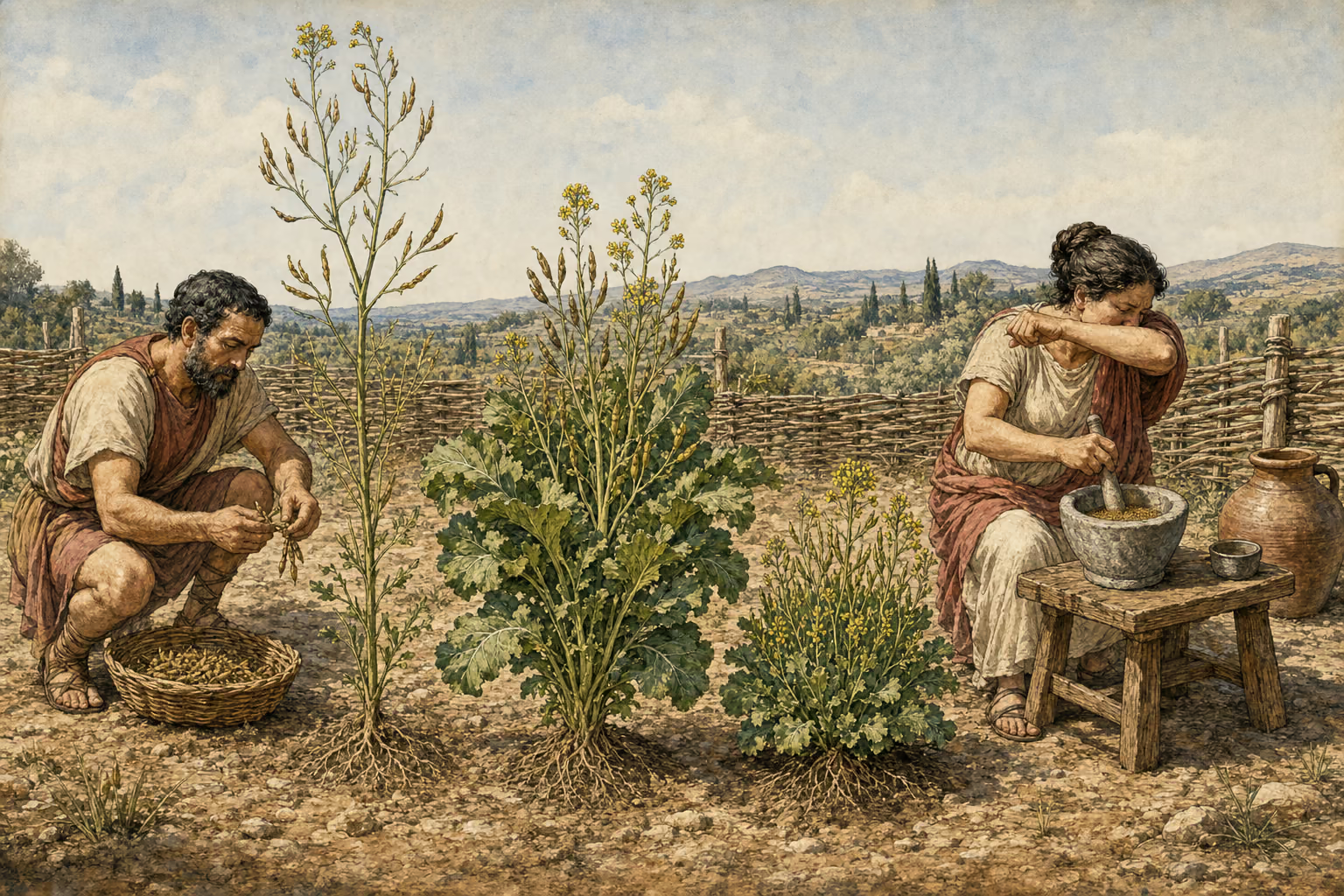
Sinapi, cuius in sativis tria genera diximus, Pythagoras principatum habere ex his, quorum in sublime vis feratur, iudicavit, quoniam non aliud magis in nares et cerebrum penetret. ad serpentium ictus et scorpionum tritum cum aceto inlinitur; fungorum venena discutit. contra pituitam tenetur in ore, donec liquescat, aut gargarizatur cum aqua mulsa. ad dentium dolores manditur, ad uvam gargarizatur cum aceto et melle, stomacho utilissimum contra omnia vitia, pulmonibus excreationes faciles facit in cibo sumptum; et suspiriosis datur, item comitialibus ter die cum suco cucumerum. sensus atque sternutamentis caput purgat, alvum mollit, menstrua et urinam ciet. et hydropicis inponitur cum fico et cumino tusum ternis partibus. comitiali morbo aut vulvarum conversione suffocatas excitat odore aceto mixto; item lethargicos: adicitur tordylon—est autem hoc semen ex seseli —et, si vehementior lethargus premat, cruribus aut etiam capiti inlinitur cum fico ex aceto. veteres dolores thoracis, lumborum, coxendicum, umerorum et in quacumque parte ex alto corporis vitia extrahenda sint inlitum caustica vi emendat pusulas faciendo, at in magna duritia sine fico inpositum aut, si vehementior ustio timeatur, per duplices pannos. utuntur eo ad alopecias cum rubrica, psoras, lepras, phthiriases, tetanicos, opisthotonicos. inungunt quoque scabras genas aut caligantes oculos suco cum melle, sucusque tribus modis exprimitur in fictili calescitque in eo sole modice. exit et e cauliculo sucus lacteus; eius gutta, cum induruit, dentium dolori medetur. semen ac radix, cum inmaduere musto, conteruntur manusque plenae mensura sorbentur ad confirmandas fauces, stomachum, oculos, caput sensusque omnes, mulierum etiam lassitudines, saluberrimo genere medicinae. calculos quoque discutit potum in aceto. inlinitur et livoribus suggillatisque cum melle et adipe anserino aut cera Cypria. fit et oleum ex eo semine madefacto in oleo expressoque, quo utuntur ad nervorum rigores lumborumque et coxendicum et perfrictiones.
Sinapis naturaeesse effectusque eosdem habere traditur adarca inter silvestria dicta, in cortice calamorum sub ipsa coma nascens.
Marrubium plerique inter primas herbas commendavere, quod Graeci prasion vocant, alii linostrophon, nonnulli philopaeda aut philochares, notius quam ut indicandum sit. huius folia semenque contrita prosunt contra serpentes, pectorum et lateris dolores, tussim veterem. et iis, qui sanguinem reiecerint, eximie utile, scopis eius cum panico aqua decoctis, ut asperitas suci mitigetur. inponitur strumis cum adipe. sunt qui viride semen, quantum duobus digitis capiant, cum farris pugillo decoctum addito exiguo olei et salis sorberi ieiunis ad tussim iubeant. alii nihil conparant in eadem causa marrubii et feniculi sucis ad sextarios ternos expressis decoctisque ad sextarios duos, tum addito mellis sextario, rursus decocto ad sextarios duos, si coclearii mensura in die sorbeatur in aquae cyatho. virilium vitiis tusum cum melle mire prodest. lichenas purgat ex aceto, ruptis, convulsis, spasticis, nervis salutare. potum alvum solvit cum sale et aceto, item menstrua et secundas mulierum. arida farina cum melle ad tussim siccam efficacissima est, item ad gangraenas et pterygia. sucus vero auriculis, ex naribus et morbo regio minuendaeque bili cum melle prodest, item contra venena inter pauca potens. ipsa herba stomachum et excreationes pectoris purgat cum iride et melle, urinam ciet, cavenda tamen exulceratae vesicae et renium vitiis. dicitur sucus et claritatem oculorum adiuvare. Castor marrubii duo genera tradit, nigrum et, quod magis probat, candidum. in ovum inane sucum addit is ipsumque ovum infundit cum melle aequis portionibus, tepefactum vomicas rumpere, purgare, persanare promittens. inlinit etiam vulneribus a cane factis tusum cum axungia vetere.
Serpyllum a serpendo putant dictum, quod in silvestri evenit, in petris maxime; nam sativum non serpit, sed ad palmum altitudine increscit. pinguius voluntarium et candidioribus foliis ramisque. adversus serpentes efficax, maxime cenchrim et scolopendras terrestres ac marinas et scorpiones, decotis ex vino ramis foliisque. fugat et odore omnes, si uratur, et contra marinorum venena praecipue valet. capitis doloribus decoctum in aceto inlinitur temporibus ac fronti cum rosaceo, item phreneticis, lethargicis. contra tormina et urinae difficultates, anginas, vomitiones drachmis quattuor ex aqua bibitur; ad iocinerum desideria folia obolis quattuor dantur, ad lienem ex aceto. ad cruentas excreationes teritur in cyathis duobus aceti et mellis.
Sisymbrium silvestre, quibusdam thymbraeum appellatum, pedali non amplius altitudine. quod in riguis nascitur, simile nasturtio est, tritumque efficax adversus aculeata animalia, ut crabrones et similia; quod in sicco, odoratum est et inseritur coronis, angustiore folio. sedant utraque capitis dolorem, item epiphoras, ut Philinus tradit. alii panem addunt, alii per se decocunt in vino. sanat et epinyctidas cutisque vitia in facie mulierum intra quartum diem noctibus inpositum diebusque detractum. vomitiones, singultus, tormina, stomachi dissolutiones cohibet, sive in cibo sumptum sive suco poto. non edendum gravidis nisi mortuo conceptu, quippe etiam inpositum eicit. movet urinas cum vino potum, silvestre vero et calculos. quos vigilare opus sit, excitat infusum capiti cum aceto.
Lini semen cum aliis quidem in usu est, sed et per se mulierum cutis vitia emendat in facie, oculorum aciem suco adiuvat. epiphoras cum ture et aqua aut cum murra ac vino sedat, parotidas cum melle aut adipe aut cera, stomachi solutiones inspersum polentae modo, angina s in aqua et oleo decoctum et cum aneso inlitum. torretur, ut alvum sistat. coeliacis et dysintericis inponitur ex aceto. ad iocineris dolores estur cum uva passa; ad phthisim utilissime e semine fiunt ecligmata. musculorum, nervorum, articulorum, cervicium duritias, cerebri membranas mitigat farina seminis nitro aut sale aut cinere additis. eadem cum fico... etidem concoquit ac maturat; cum radice vero cucumeris silvestris extrahit quaecumque corpori inhaereant; sic et fracta ossa. serpere ulcus in vino decocta prohibet, eruptiones pituitae cum melle. emendat ungues scabros cum pari modo nasturtii, testium vitia et ramices cum resina et murra et gangraenas ex aqua, stomachi dolores cum feno Graeco sextariis utriusque decoctis in aqua mulsa, intestinorum, thoracis perniciosa vitia clystere in oleo aut melle.
Blitum iners videtur ac sine sapore aut acrimonia ulla, unde convicium feminis apud Menandrum faciunt mariti. stomacho inutile est. ventrem adeo turbat, ut choleram faciat aliquis. dicitur tamen adversus scorpiones potum e vino prodesse, clavis pedum inlini, item lienibus et temporum dolori ex oleo. Hippocrates menstrua sisti eo cibo putat.
English · Bostock & Riley 1855–57
Mustard, of which we have mentioned three different kinds, when speaking of the garden herbs, is ranked by Pythagoras among the very first of those plants the pungency of which mounts upwards; for there is none to be found more penetrating to the brain and nostrils.
Pounded with vinegar, mustard is employed as a liniment for the stings of serpents and scorpions, and it effectually neutralizes the poisonous properties of fungi. To cure an immoderate secretion of phlegm it is kept in the mouth till it melts, or else it is mixed with hydromel, and employed as a gargle. Mustard is chewed for tooth-ache, and is taken as a gargle with oxymel for affections of the uvula; it is very beneficial, also, for all maladies of the stomach. Taken with the food, it facilitates expectoration from the lungs: it is given, too, for asthma and epileptic fits, in combination with cucumber seed. It has the effect of quickening the senses, and effectually clears the head by sneezing, relaxes the stomach, and promotes the menstrual discharge and the urinary secretions: beaten up with figs and cummin, in the proportion of one-third of each ingredient, it is used as an external application for dropsy.
Mixed with vinegar, mustard resuscitates by its powerful odour persons who have swooned in fits of epilepsy or lethargy, as well as females suffering from hysterical suffocations. For the cure of lethargy tordylon is added—that being the name given to the seed of hartwort —and if the lethargic sleep should happen to be very profound, an application of it, with figs and vinegar, is made to the legs, or to the head even. Used as an external application, mustard is a cure for inveterate pains of the chest, loins, hips, shoulders, and, in general, for all deep-seated pains in any part of the body, raising blisters by its caustic properties. In cases of extreme indurations of the skin, the mustard is applied, to the part without figs; and a cloth is employed doubled, where it is apprehended that it may burn too powerfully. It is used also, combined with red-earth, for alopecy, itch-scabs, leprosy, phthiriasis, tetanus, and opisthotony. They employ it also as a liniment with honey for styes on the eyelids and films on the eyes.
The juices of mustard are extracted in three different ways, in earthen vessels in which it is left to dry gradually in the sun. From the thin stem of the plant there exudes also a milky juice, which when thus hardened is remedial for tooth-ache. The seed and root, after they have been left to steep in must, are beaten up together in a mortar; and a good handful of the mixture is taken to strengthen the throat, stomach, eyes, head, and all the senses. This mixture is extremely good, too, for fits of lassitude in females, being one of the most wholesome medicines in existence. Taken in vinegar, mustard disperses calculi in the bladder; and, in combination with honey and goose-grease, or else Cyprian wax, it is employed as a liniment for livid spots and bruises. From the seed, first steeped in olive-oil, and then subjected to pressure, an oil is extracted, which is employed for rigidity of the sinews, and chills and numbness in the loins and hips.
It is said that adarca, of which we have already made mention when speaking of the forest-trees, has a similar nature to that of mustard, and is productive of the same effects: it grows upon the outer coat of reeds, below the head.
Most medical writers have spoken in high terms of marrubium, or horehound, as a plant of the very greatest utility. Among the Greeks, it is called “prasion” by some, by others “linostrophon,” and by others, again, “philopais” or “philochares:” it is a plant too well known to require any description. The leaves and seed beaten up, together, are good for the stings of serpents, pains of the chest and side, and inveterate coughs. The branches, too, boiled in water with panic, so as to modify its acridity, are remarkably useful for persons troubled with spitting of blood. Horehound is applied also, with grease, to scrofulous swellings. Some persons recommend for a cough, a pinch of the fresh seed with two fingers, boiled with a handful of spelt and a little oil and salt, the mixture to be taken fasting. Others, again, regard as quite incomparable for a similar purpose an extract of the juices of horehound and fennel. Taking three sextarii of the extract, they boil it down to two, and then add one sextarius of honey; after which they again boil it down to two, and administer one spoonful of the preparation daily, in one cyathus of water.
Beaten up with honey, horehound is particularly beneficial for affections of the male organs; employed with vinegar, it cleanses lichens, and is very salutary for ruptures, convulsions, spasms, and contractions of the sinews. Taken in drink with salt and vinegar, it relaxes the bowels, promotes the menstrual discharge, and accelerates the after-birth. Dried, powdered, and taken with honey, it is extremely efficacious for a dry cough, as also for gangrenes and hang-nails. The juice, too, taken with honey, is good for the ears and nostrils: it is a remedy also for jaundice, and diminishes the bilious secretions. Among the few antidotes for poisons, it is one of the very best known.
The plant itself, taken with iris and honey, purges the stomach and promotes expectorations: it acts, also, as a strong diuretic, though, at the same time, care must be taken not to use it when the bladder is ulcerated and the kidneys are affected. It is said, too, that the juice of horehound improves the eyesight. Castor speaks of two varieties of it, the black horehound and the white, which last he considers to be the best. He puts the juice of it into an empty eggshell, and then mixes the egg with it, together with honey, in equal proportions: this preparation used warm, he says, will bring abscesses to a head, and cleanse and heal them. Beaten up, too, with stale axle-grease and applied topically, he says, horehound is a cure for the bite of a dog.
Wild thyme, it is said, borrows its name, “serpyllum,” from the fact that it is a creeping plant, a property peculiar to the wild kind, that which grows in rocky places more particularly. The cultivated thyme is not a creeping plant, but grows upwards, as much a palm in height. That which springs up spontaneously, grows the most luxuriantly, its leaves and branches being whiter than those of the other kinds. Thyme is efficacious as a remedy for the stings of serpents, the cenchris more particularly; also for the sting of the scolopendra, both sea and land, the leaves and branches being boiled for the purpose in wine. Burnt, it puts to flight all venomous creatures by its smell, and it is particularly beneficial as an antidote to the venom of marine animals.
A decoction of it in vinegar is applied for head-ache, with rose oil, to the temples and forehead, as also for phrenitis and lethargy: it is given, too, in doses of four drachmæ, for gripings of the stomach, strangury, quinsy, and fits of vomiting. It is taken in water, also, for liver complaints. The leaves are given in doses of four oboli, in vinegar, for diseases of the spleen. Beaten up in two cyathi of oxymel, it is used for spitting of blood.
Wild sisymbrium, by some persons called “thymbræum,” does not grow beyond a foot in height. The kind which grows in watery places, is similar to nasturtium, and they are both of them efficacious for the stings of certain insects, such as hornets and the like. That which grows in dry localities is odoriferous, and is employed for wreaths: the leaf of it is narrower than in the other kind. They both of them alleviate head-ache, and defluxions of the eyes, Philinus says. Some persons, however, employ bread in addition; while others, again, use a decoction of the plant by itself in wine. It is a cure, also, for epinyctis, and removes spots on the face in females, by the end of four days; for which purpose, it is applied at night and taken off in the day-time. It arrests vomiting, hiccup, gripings, and fluxes of the stomach, whether taken with the food, or the juice extracted and given in drink.
This plant, however, should never be eaten by pregnant women, except in cases where the fœtus is dead, for the very application of it is sufficient to produce abortion. Taken with wine, it is diuretic, and the wild variety expels calculi even. For persons necessitated to sit up awake, an infusion of it in vinegar is applied as a liniment to the head.
Linseed is not only used in combination with other substances, but, employed by itself, it disperses spots on the face in women: its juice, too, is very beneficial to the sight. Combined with incense and water, or else with myrrh and wine, it is a cure for defluxions of the eyes, and employed with honey, grease, or wax, for imposthumes of the parotid glands. Prepared like polenta, it is good for fluxes of the stomach; and a decoction of it in water and oil, applied topically with anise, is prescribed for quinsy. It is sometimes used parched, also, to arrest looseness of the bowels, and applications of it are used, with vinegar, for cœliac affections and dysentery. It is eaten with raisins, also, for pains in the liver, and excellent electuaries are made of it for the treatment of phthisis.
Linseed-meal, with the addition of nitre, salt, or ashes, softens rigidities of the muscles, sinews, joints, and vertebræ, as well as of the membranous tissues of the brain. Employed with figs, linseed-meal ripens abscesses and brings them to a head: mixed with the root of wild cucumber, it extracts all foreign bodies from the flesh, as well as splinters of broken bones. A decoction of linseed-meal in wine prevents ulcers from spreading, and mixed with honey, it is remedial for pituitous eruptions. Used with nasturtium, in equal quantities, it rectifies malformed nails; mixed with resin and myrrh, it cures affections of the testes and hernia, and with water, gangrenous sores. A decoction of linseed-meal with fenugreek, in the proportion of one sextarius of each, in hydromel, is recommended for pains in the stomach; and employed as an injection, with oil or honey, it is beneficial for dangerous affections of the chest and intestines.
Blite seems to be a plant of an inert nature, without flavour or any pungency whatever; hence it is that, in Menander, we find husbands giving this name to their wives, by way of reproach. It is prejudicial to the stomach, and disturbs the bowels to such a degree, as to cause cholera in some. It is stated, however, that, taken in wine, it is good for the stings of scorpions; and that it is sometimes used as a liniment for corns on the feet, and, with oil, for affections of the spleen and pains in the temples. Hippocrates is of opinion, that if taken with the food, it will arrest the menstrual discharge.