LIBER XX · CAPUT 8
BEET: TWENTY-FOUR REMEDIES
Latine · Mayhoff 1906
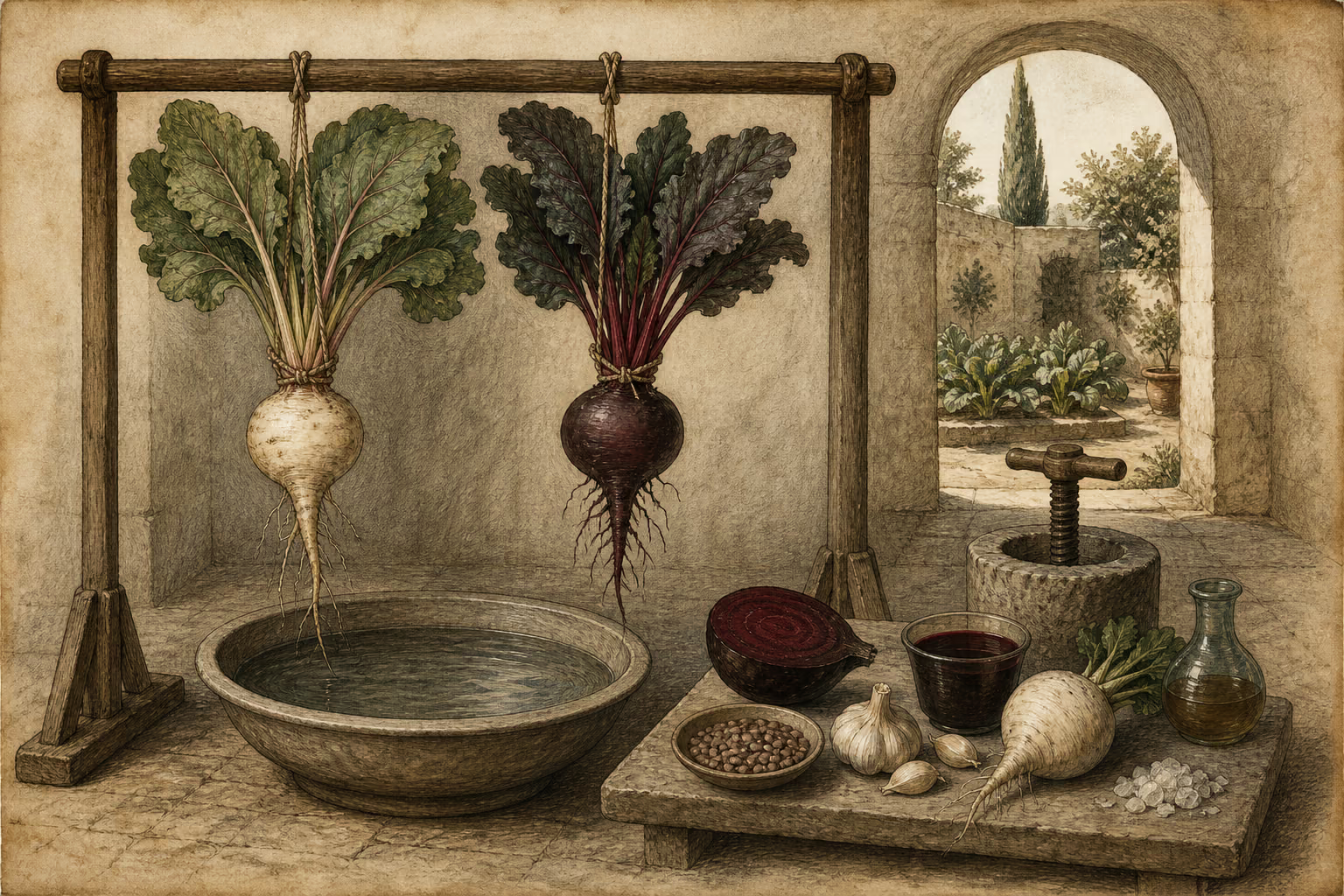
Nec beta sine remediis est utraque: sive candidae sive nigrae radix recens et madefacta suspensa funiculo contra serpentium morsus efficax esse dicitur; candida beta cocta et cum alio crudo sumpta contra taenias; nigrae radices in aqua coctae porriginem tollunt, atque in totum efficacior esse traditur nigra. sucus eius capitis dolores veteres et vertigines, item sonitum aurium sedat infusus iis. ciet urinam, medetur dysintericis iniecta et morbo regio, dolores quoque dentium sedat. inlitus sucus et contra serpentium ictus valet, sed hoc radici dumtaxat expressus. ipsa vero decocta pernionibus occurrit. alba epiphoras sedat fronti inlita, aluminis parvo admixto ignem sacrum sine oleo trita. sic et adustis medetur. et contra eruptiones papularum, coctaque eadem contra ulcera, quae serpunt, inlinitur, et alopeciis cruda et ulceribus, quae in capite manant. sucus eius cum melle naribus inditus caput purgat. coquitur et cum lenticula addito aceto, ut ventrem molliat. validius cocta fluctiones stomachi et ventris sistit.
Est et beta silvestris quam limonium vocant, alii neuroidem, multum minoribus foliis tenuioribusque ac densioribus; undecim saepe cauli uni. huius folia ambustis utilia gustantium os adstringunt. semen acetabuli mensura dysintericis prodest. aqua betae radice decocta maculas vestium elui dicunt, item membranarum.
Intubi quoque non extra remedia sunt. sucus eorum cum rosaceo et aceto capitis dolores lenit idemque cum vino potus iocineris et vesicae; et epiphoris inponitur. erraticum apud nos quidam ambubaiam appellavere. in Aegypto cichorium vocant quod silvestre est, sativum autem serim, quod est minus et venosius.
Cichorium refrigerat in cibo sumptum vel inlitum collectiones; sucus decocti ventrem solvit, iocineri et renibus et stomacho prodest. item, si in aceto decoquatur, urinae tormina discutit, item morbum regium e mulso, si sine febri sit. vesicam adiuvat. mulierum quidem purgationibus decoctum in aqua adeo prodest, ut emortuos partus trahat. adiciunt Magi suco totius cum oleo perunctos favorabiliores fieri et quae velint facilius impetrare. quamqu am idem propter singularem salubritatem aliqui chreston appellant, alii pancration.
Est et silvestre genus alterum—hedypnoida vocant—, latioris folii. stomachum dissolutum adstringit cocta, crudaque sistit alvum. et dysintericis prodest, magis cum lente. rupta et convulsa utroque genere iuvantur, item genitura quibus valetudinis morbo effluat.
Seris et ipsa, lactucae simillima, duorum generum est silvestris: melior nigra et aestiva, deterior hiberna et candidior. utraque amara, stomacho utilissima; praecipue quem umor vexet cum aceto in cibo refrigerant vel inlitae, discutiuntque et alios quam stomachi. cum polenta silvestrium radices stomachi causa sorbentur, et cardiacis inlinuntur super sinistram mammam et ex aceto. omnes hae et podagricis utiles et sanguinem reicientibus, item quibus genitura effluat, alterno dierum potu. Petronius Diodotus, qui ἀνθολογούμενα scripsit, in totum damnavit serim multis modis arguens, sed aliorum omnium opinio resistit.
English · Bostock & Riley 1855–57
Nor are the two varieties of the beet without their remedial properties. The root of either white or black beet, if hung by a string, fresh-gathered, and softened with water, is said to be efficacious for the stings of serpents. White beet, boiled and eaten with raw garlic, is taken for tapeworm; the root, too, of the black kind, similarly boiled in water, removes porrigo; indeed, it is generally stated, that the black beet is the more efficacious of the two. The juice of black beet is good for inveterate head-aches and vertigo, and injected into the ears, it stops singing in those organs. It is a diuretic, also, and employed in injections is a cure for dysentery and jaundice.
This juice, used as a liniment, allays tooth-ache, and is good for the stings of serpents; but due care must be taken that it is extracted from this root only. A decoction, too, of beet-root is a remedy for chilblains.
A liniment of white beet-root applied to the forehead, arrests defluxions of the eyes, and mixed with a little alum it is an excellent remedy for erysipelas. Beaten up, and applied without oil, it is a cure for excoriations. In the same way, too, it is good for pimples and eruptions. Boiled, it is applied topically to spreading ulcers, and in a raw state it is employed in cases of alopecy, and running ulcers of the head. The juice, injected with honey into the nostrils, has the effect of clearing the head. Beet-root is boiled with lentils and vinegar, for the purpose of relaxing the bowels; if it is boiled, however, some time longer, it will have the effect of arresting fluxes of the stomach and bowels.
There is a wild beet, too, known by some persons as “limonion,” and by others as “neuroides;” it has leaves much smaller and thinner than the cultivated kind, and lying closer together. These leaves amount often to eleven in number, the stalk resembling that of the lily. The leaves of this plant are very useful for burns, and have an astringent taste in the mouth: the seed, taken in doses of one acetabulum, is good for dysentery. It is said that a decoction of beet with the root has the property of taking stains out of cloths and parchment.
Endive, too, is not without its medicinal uses. The juice of it, employed with rose oil and vinegar, has the effect of allaying headache; and taken with wine, it is good for pains in the liver and bladder: it is used, also, topically, for defluxions of the eyes. The spreading endive has received from some persons among us the name of “ambula.” In Egypt, the wild endive is known as “cichorium,” the cultivated kind being called “seris.” This last is smaller than the other, and the leaves of it more full of veins.
Wild endive or cichorium has certain refreshing qualities, used as an aliment. Applied by way of liniment, it disperses abscesses, and a decoction of it loosens the bowels. It is also very beneficial to the liver, kidneys, and stomach. A decoction of it in vinegar has the effect of dispelling the pains of strangury; and, taken in honied wine, it is a cure for the jaundice, if unattended with fever. It is beneficial, also, to the bladder, and a decoction of it in water promotes the menstrual discharge to such an extent as to bring away the dead fœtus even.
In addition to these qualities, the magicians state that persons who rub themselves with the juice of the entire plant, mixed with oil, are sure to find more favour with others, and to obtain with greater facility anything they may desire. This plant, in consequence of its numerous salutary virtues, has been called by some persons “chreston,” and “pancration” by others.
There is a sort of wild endive, too, with a broader leaf, known to some persons as “hedypnoïs.” Boiled, it acts as an astringent upon a relaxed stomach, and eaten raw, it is productive of constipation. It is good, too, for dysentery, when eaten with lentils more particularly. This variety, as well as the preceding one, is useful for ruptures and spasmodic contractions, and relieves persons who are suffering from spermatorrhœa.
The vegetable, too, called “seris,” which bears a considerable resemblance to the lettuce, consists of two kinds. The wild, which is of a swarthy colour, and grows in summer, is the best of the two; the winter kind, which is whiter than the other, being inferior. They are both of them bitter, but are extremely beneficial to the stomach, when distressed by humours more particularly. Used as food with vinegar, they are cooling, and, employed as a liniment, they dispel other humours besides those of the stomach. The roots of the wild variety are eaten with polenta for the stomach: and in cardiac diseases they are applied topically above the left breast. Boiled in vinegar, all these vegetables are good for the gout, and for patients troubled with spitting of blood or spermatorrhœa; the decoction being taken on alternate days.
Petronius Diodotus, who has written a medical Anthology, utterly condemns seris, and employs a multitude of arguments to support his views: this opinion of his is opposed, however, to that of all other writers on the subject.