LIBER XXI · CAPUT 12
PLANTS WHICH SHOULD BE SOWN AMONG FLOWERS FOR BEES. THE CERINTHA
Latine · Mayhoff 1906
Verum hortis coronamentisque maxime alvaria et apes conveniunt, res praecipui quaestus conpendiique, cum favet. harum ergo causa oportet serere thymum, apiastrum, rosam, violas, lilium, cytisum, fabam, erviliam, cunilam, papaver, conyzam, casiam, melilotum, melissophyllum, cerinthen. ea est autem folio candido, incurvo, cubitalis, capite concavo mellis sucum habente. horum floris avidissimae sunt atque etiam sinapis, quod miremur, cum olivae florem ab his non attingi constet; ideo hanc arborem procul esse melius sit, cum aliquas quam proxime seri conveniat, quae et evolantium examina invitent nec longius abire patiantur.
Cornum quoque arborem caveri oporteat. flore eius degustato alvo cita moriuntur. remedium sorba contusa e melle praebere his vel urinam hominis vel boum aut grana punici mali Ammineo vino conspersa. at genistas circumseri alvariis gratissimum.
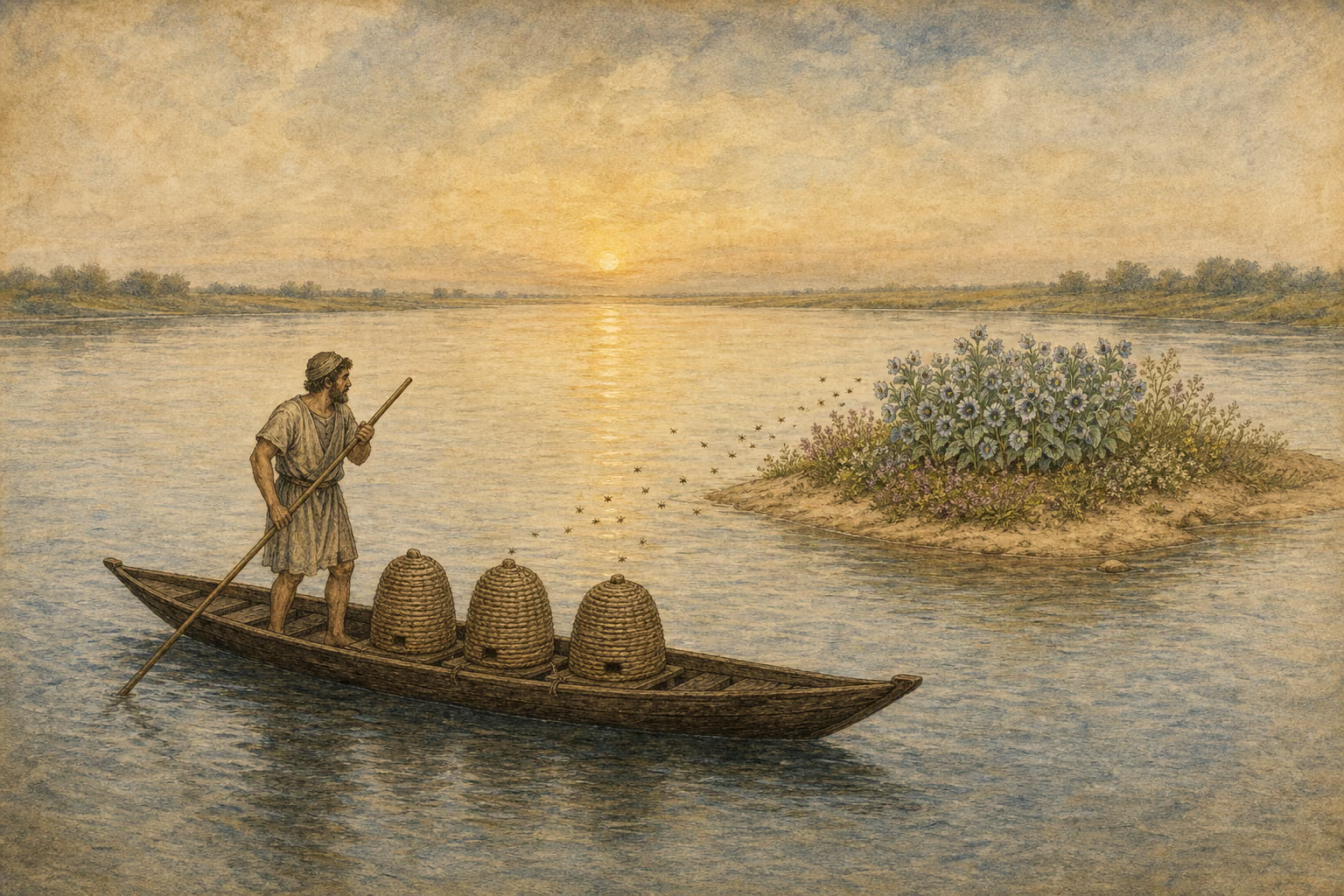
Mirum est dignumque memoratu de alimentis quod conperi. Hostilia vicus adluitur Pado. huius inquilini pabulo circa deficiente inponunt navibus alvos noctibusque ad quina milia passuum contrario amne subvehunt. egressae luce apes pastaeque ad naves cotidie remeant mutantes locum, donec pondere ipso pressis navibus plenae alvi intellegantur revectisque eximantur mella.
English · Bostock & Riley 1855–57
Bees and beehives, too, are a subject extremely well suited to a description of gardens and garland plants, while, at the same time, where they are successfully managed, they are a source, without any great outlay, of very considerable profit. For bees, then, the following plants should be grown—thyme, apiastrum, the rose, the various violets, the lily, the cytisus, the bean, the fitch, cunila, the poppy, conyza, cassia, the melilote, melissophyllum, and the cerintha. This last is a plant with a white leaf, bent inwards, the stem of it being a cubit in height, with a flower at the top presenting a concavity full of a juice like honey. Bees are remarkably fond of the flowers of these plants, as also the blossoms of mustard, a thing that is somewhat surprising, seeing that it is a well-known fact that they will not so much as touch the blossoms of the olive: for which reason, it will be as well to keep that tree at a distance from them.
There are other trees, again, which should be planted as near the hives as possible, as they attract the swarm when it first wings its flight, and so prevent the bees from wandering to any considerable distance.
The greatest care, too, should be taken to keep the cornel at a distance from the hives; for if the bees once taste the blossoms of it, they will speedily die of flux and looseness. The best remedy in such case is to give them sorb apples beaten up with honey, or else human urine or that of oxen, or pomegranate seeds moistened with Aminean wine. It is a very good plan, too, to plant broom about the hives, the bees being extremely fond of the blossoms.
In relation to the food of bees, I have ascertained a very singular fact, and one that well deserves to be mentioned. There is a village, called Hostilia, on the banks of the river Padus: the inhabitants of it, when food fails the bees in their vicinity, place the hives in boats and convey them some five miles up the river in the night. In the morning the bees go forth to feed, and then return to the boats; their locality being changed from day to day, until at last, as the boats sink deeper and deeper in the water, it is ascertained that the hives are full, upon which they are taken home, and the honey is withdrawn.