LIBER XXI · CAPUT 13
POISONED HONEY, AND THE REMEDIES TO BE EMPLOYED BY THOSE WHO HAVE EATEN OF IT
Latine · Mayhoff 1906
et in Hispania mulis provehunt simili de causa. tantumque pabulum refert, ut mella quoque venenata fiant. Heracliae in Ponto quibusdam annis perniciosissima existunt ab iisdem apibus facta, nec dixere auctores, e quibus floribus ea fierent! nos trademus quae conperimus. herba est ab exitio et iumentorum quidem, sed praecipue caprarum appellata aegolethron. huius flore concipiunt noxium virus aquoso vere marcescentis. ita fit, ut non omnibus annis sentiatur malum. venenati signa sunt, quod omnino non densatur, quod color magis rutilus est, odor alienus, sternumenta protinus movens, quod ponderosius innoxio. qui edere, abiciunt se humi refrigerationem quaerentes, nam et sudore diffluunt. remedia sunt multa, quae suis locis dicemus; sed quoniam statim repraesentari aliqua in tantis insidiis oportet, mulsum vetus e melle optimo et ruta, salsamenta etiam, si reiciantur, sumpta crebro. certumque est id malum per excrementa ad canes etiam pervenire similiterque torqueri eos. mulsum tamen ex eo inveteratum innocuum esse constat, et feminarum cutem nullo melius emendari cum costo, suggillata cum aloe.
Aliud genus in eodem Ponti situ, gente Sannorum, mellis, quod ab insania, quam gignit, maenomenon vocant. id existimatur contrahi flore rhododendri, quo scatent silvae. gensque ea, cum ceram in tributa Romanis praestet, mel, quoniam exitiale est, non vendit. et in Perside et in Mauretaniae Caesariensis Gaetulia, contermina Massaesylis, venenati favi gignuntur, quidamque a parte, quo nihil esse fallacius potest, nisi quod livore deprehenduntur. quid sibi voluisse naturam his arbitremur insidiis, ut ab iisdem apibus nec omnibus annis fierent aut non totis favis? parum enim erat genuisse rem, in qua venenum facillime daretur? etiamne hoc ipsa in melle tot animalibus dedit? quid sibi voluit, nisi ut cautiorem minusque avidum faceret hominem? non enim et ipsis apibus iam cuspides dederat et quidem venenatas, remedio adversus has utique non differendo? ergo malvae suco aut foliorum hederae perungui salutare est vel percussos eas bibere. mirum tamen est venena portantes ore fingentesque ipsas non mori, nisi quod illa domina rerum omnium hanc dedit repugnantiam apibus, sicut contra serpentes Psyllis Marsisque inter homines.
English · Bostock & Riley 1855–57
In Spain, too, for the same purpose, they have the hives carried from place to place on the backs of mules.
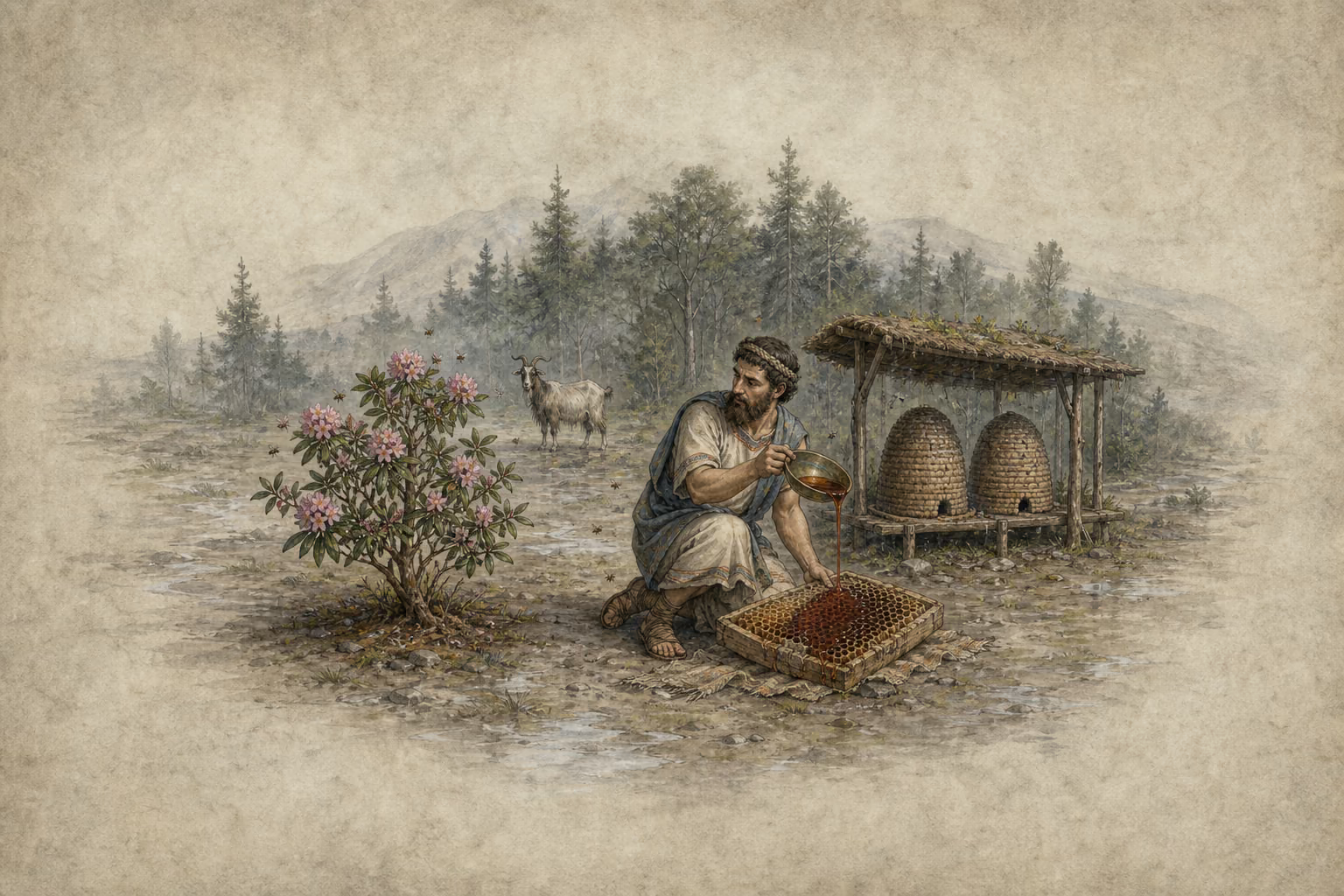
Indeed, the food of bees is of the very greatest importance, as it is owing to this that we meet with poisonous honey even. At Heraclia in Pontus, the honey is extremely pernicious in certain years, though it is the same bees that make it at other times. Authors, however, have not informed us from what flowers this honey is extracted; we shall, therefore, take this opportunity of stating what we have ascertained upon the subject.
There is a certain plant which, from the circumstance that it proves fatal to beasts of burden, and to goats in particular, has obtained the name of “ægolethron,” and the blossoms of which, steeped in the rains of a wet spring, contract most noxious properties. Hence it is that it is not every year that these dangerous results are experienced. The following are the signs of the honey being poisonous: it never thickens, the colour is redder than usual, and it emits a peculiar smell which immediately produces sneezing; while, at the same time, it is more weighty than a similar quantity of good honey. Persons, when they have eaten of it, throw themselves on the ground to cool the body, which is bathed with a profuse perspiration. There are numerous remedies, of which we shall have occasion to speak in a more appropriate place; but as it will be as well to mention some of them on the present occasion, by way of being provided for such insidious accidents, I will here state that old honied wine is good, mixed with the finest honey and rue; salt meats, also, taken repeatedly in small quantities, and as often brought up again.
It is a well-known fact that dogs, after tasting the excretions of persons suffering from these attacks, have been attacked with similar symptoms, and have experienced the same kind of pains.
Still, however, it is equally well ascertained, that honied wine prepared from this honey, when old, is altogether innoxious; and that there is nothing better than this honey, mixed with costus, for softening the skin of females, or, combined with aloes, for the treatment of bruises.
In the country of the Sanni, in the same part of Pontus, there is another kind of honey, which, from the madness it produces, has received the name of “mænomenon.” This evil effect is generally attributed to the flowers of the rhododendron, with which the woods there abound; and that people, though it pays a tribute to the Romans in wax, derives no profit whatever from its honey, in consequence of these dangerous properties. In Persis, too, and in Gætulia, a district of Mauritania Cæsariensis, bordering on the country of the Massæsyli, there are poisonous honeycombs found; and some, too, only partly so, one of the most insidious things that possibly could happen, were it not that the livid colour of the honey gives timely notice of its noxious qualities. What can we suppose to have possibly been the intention of Nature in thus laying these traps in our way, giving us honey that is poisonous in some years and good in others, poisonous in some parts of the combs and not in others, and that, too, the produce in all cases of the self-same bees? It was not enough, forsooth, to have produced a substance in which poison might be administered without the slightest difficulty, but must she herself administer it as well in the honey, to fall in the way of so many animated beings? What, in fact, can have been her motive, except to render mankind a little more cautious and somewhat less greedy?
And has she not provided the very bees, too, with pointed weapons, and those weapons poisoned to boot? So it is, and I shall, therefore, without delay, set forth the remedies to counteract the effects of their stings. It will be found a very excellent plan to foment the part stung with the juice of mallows or of ivy leaves, or else for the person who has been stung to take these juices in drink. It is a very astonishing thing, however, that the insects which thus carry these poisons in their mouths and secrete them, should never die themselves in consequence; unless it is that Nature, that mistress of all things, has given to bees the same immunity from the effects of poison which she has granted against the attacks of serpents to the Psylli and the Marsi among men.