LIBER XXI · CAPUT 14
HONEY THAT FLIES WILL NOT TOUCH
Latine · Mayhoff 1906
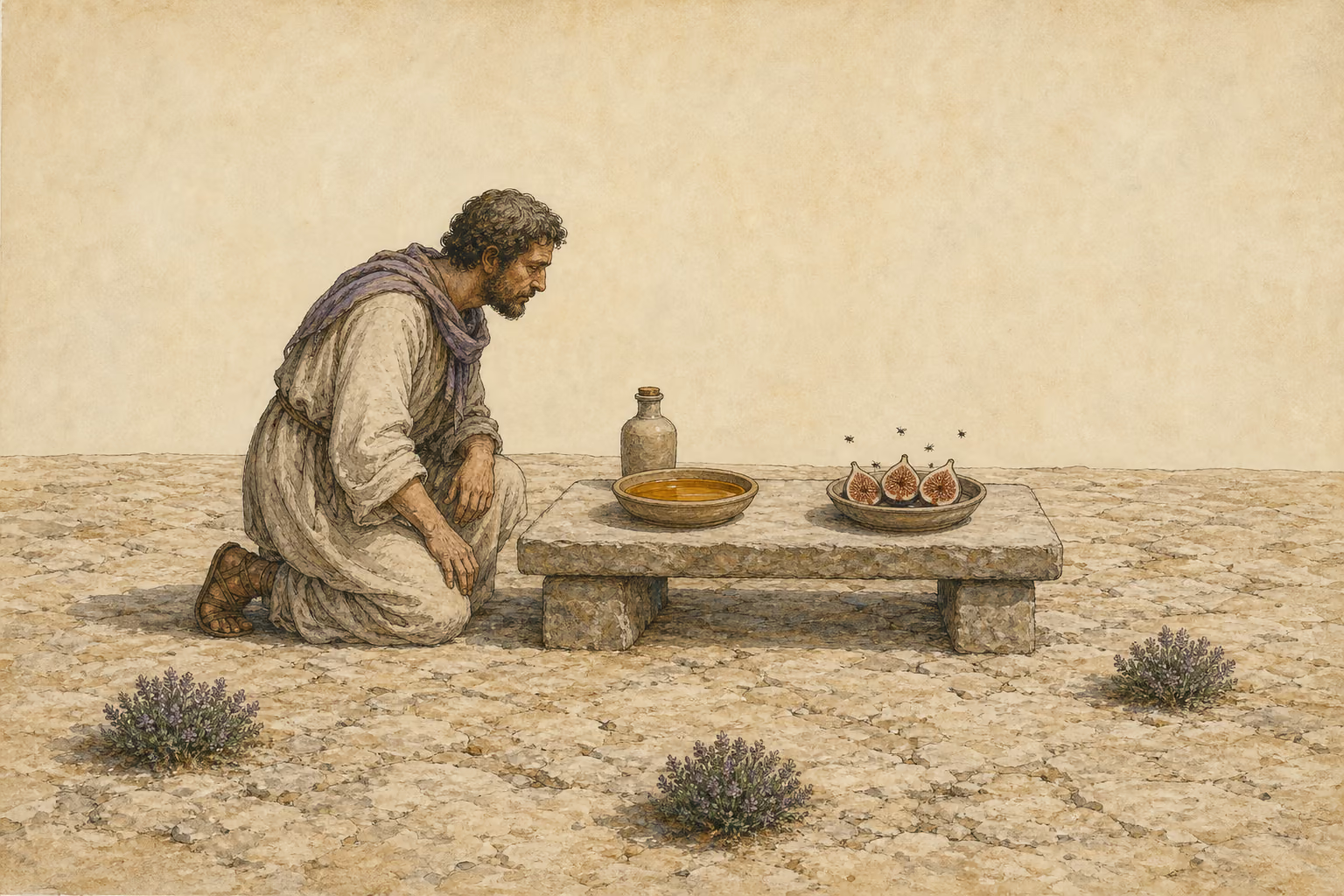
Aliud in Creta miraculum mellis: mons est CarinaVIIII passuum ambitu, intra quod spatium muscae non reperiuntur, natumque ibi mel nusquam attingunt. hoc experimento singulare medicamentis eligitur.
Alvaria orientem aequinoctialem spectare convenit. aquilonem evitent, nec favonium minus. alvus optima e cortice, secunda ferula, tertia vimine; multi et e speculari lapide fecere, ut operantes intus spectarent. circumlini alvos fimo bubulo utilissimum, operculum a tergo esse ambulatorium, ut proferatur intus, si magna sit alvus aut sterilis operatio, ne desperatione curam abiciant; id paulatim reduci fallente operis incremento. alvos hieme stramento operiri, crebro suffiri, maxime fimo bubulo. cognatum hoc iis innascentes bestiolas necat, araneos, papiliones, teredines, apesque ipsas excitat. et araneorum quidem exitium facilius est; papilio, pestis maior, lucernis tollitur vere, cum maturescat malva, noctu interlunio caelo sereno accensis ante alvos. in eam flammam sese ingerunt.
Si cibus sentiatur deesse apibus, uvas passas siccasve ficos tusas ad fores earum posuisse conveniat, item lanas tractas madentes passo aut defruto aut aqua mulsa, gallinarum etiam crudas carnes. quibusdam et aestatibus iidem cibi praestandi, cum siccitas continua florum alimentum abstulit. alvorum, cum mel eximatur, inlini oportet exitus melissophyllo aut genista tritis, aut medias alba vite praecingi, ne apes diffugiant. vasa mellaria et favos lavari aqua praecipiunt, hac decocta fieri saluberrimum acetum.
Cera fit expressis favis, sed ante purificatis aqua ac triduo in tenebris siccatis, quarto die liquatis igni in novo fictili, aqua favos tegente, tunc sporta colatis. rursus in eadem olla coquitur cera cum eadem aqua excipiturque alia frigida, vasis melle circumlitis. optima quae Punica vocatur, proxima quam maxime fulva odorisque mellei, pura, natione autem Pontica, quod constare equidem miror inter venenata mella, dein Cretica, plurimum enim ex propoli habet, de qua diximus in natura apium. post has Corsica, quoniam ex buxo fit, habere quandam vim medicaminis putatur. Punica fit hoc modo: ventilatur sub diu saepius cera fulva, dein fervet in aqua marina ex alto petita addito nitro. inde lingulis hauriunt florem, id est candidissima quaeque, transfunduntque in vas, quod exiguum frigidae habeat, et rursus marina decocunt separatim, dein vas ipsum aut aquam refrigerant. et cum hoc ter fecere, iuncea crate sub diu siccant sole lunaque. haec enim candorem facit, sol siccat, et, ne liquefaciat, protegunt tenui linteo. candidissima vero fit post insolationem etiamnum recocta. Punica medicinis utilissima. nigrescit cera addito chartarum cinere, sicut anchusa admixta rubet, variosque in colores pigmentis trahitur ad reddendas similitudines et innumeros mortalium usus parietumque etiam et armorum tutelam. cetera de melle apibusque in natura earum dicta sunt.
Et hortorum quidem omnis fere peracta ratio est;
English · Bostock & Riley 1855–57
Another marvellous fact, again, connected with honey in Crete. Upon Mount Carina in that island, which is nine miles in circuit, there is not a fly to be found, and the honey that is made there no fly will touch. It is by this circumstance that honey said to have come from that district is usually tested, it being highly prized for medicinal preparations.
The hives ought to have an aspect due east, but never looking towards the north-east or the west. The best hives are those made of bark, the next best those of fennel-giant, and the next of osier: many persons, too, have them made of mirror-stone, for the purpose of watching the bees at work within. It is the best plan to anoint the hives all over with cow-dung. The lid of the hive should be made to slide from behind, so as to admit of being shut to within, in case the hive should prove too large or their labours unproductive; for, if this is not done, the bees are apt to become discouraged and abandon their work. The slide may then be gradually withdrawn, the increase of space being imperceptible to the bees as the work progresses. In winter, too, the hives should be covered with straw, and subjected to repeated fumigations, with burnt cow-dung more particularly. As this is of kindred origin with the bees, the smoke produced by it is particularly beneficial in killing all such insects as may happen to breed there, such as spiders, for instance, moths, and wood-worms; while, at the same time, it stimulates the bees themselves to increased activity. In fact, there is little difficulty in getting rid of the spiders, but to destroy the moths, which are a much greater plague, a night must be chosen in spring, just when the mallow is ripening, there being no moon, but a clear sky: flambeaux are then lighted before the hives, upon which the moths precipitate themselves in swarms into the flame.
If it is found that the bees are in want of aliment, it will be a good plan to place at the entrance of the hive raisins or dried figs beaten up, as also carded wool soaked in raisin wine, boiled must, or hydromel, and sometimes even the raw flesh of poultry. In certain summers, too, when long-continued drought has deprived them of the nutriment which they usually derive from flowers, similar food must be provided for them.
When the honey is taken, the outlets of the hive should be well rubbed with melissophyllum or broom, beaten up, or else the middle of it should be encircled with bands of white vine, to prevent the bees from taking to flight. It is recommended, too, that the honey-pots and combs should be washed with water: this water, boiled, it is said, will make an extremely wholesome vinegar.
Wax is made from the honeycombs after the honey has been extracted. For this purpose, they are first cleaned with water, and then dried three days in the shade: on the fourth day they are melted on the fire in a new earthen vessel, with sufficient water to cover them, after which the liquor is strained off in a wicker basket. The wax is then boiled again with the same water and in the same pot, and poured into vessels of cold water, the interior of which has been well rubbed with honey. The best wax is that known as Punic wax, the next best being that of a remarkably yellow colour, with the smell of honey. This last comes from Pontus, and, to my surprise, it is in no way affected by the poisonous honey which it has contained. The next in quality is the Cretan wax, which contains the largest proportion of propolis, a substance of which we have previously made mention when treating of bees. Next to these varieties comes the Corsican wax, which, being the produce of the box-tree, is generally thought to be possessed of certain medicinal properties.
The Punic wax is prepared in the following manner: yellow wax is first blanched in the open air, after which it is boiled in water from the open sea, with the addition of some nitre. The flower of the wax, or, in other words, the whitest part of it, is then skimmed off with spoons, and poured into a vessel containing a little cold water. After this, it is again boiled in sea-water by itself, which done, the vessel is left to cool. When this operation has been three times repeated, the wax is left in the open air upon a mat of rushes, to dry in the light of the sun and moon; for while the latter adds to its whiteness, the sun helps to dry it. In order, however, that it may not melt, it is the practice to cover it with a linen cloth: if, when it has been thus refined, it is boiled once more, the result is a wax of the greatest possible whiteness.
Punic wax is considered the best for all medicinal preparations. Wax is made black by the addition of ashes of papyrus, and a red colour is given to it by the admixture of alkanet; indeed, by the employment of various pigments, it is made to assume various tints, in which state it is used for making models, and for other purposes without number, among which we may mention varnishing walls and armour, to protect them from the air. We have given the other particulars relative to bees and honey, when speaking of the nature of those insects. We have now stated pretty nearly all that we have to say on the subject of the pleasure garden.