LIBER XXI · CAPUT 16
THE CARDUUS, THE ACORNA, THE PHONOS, THE LEUCACANTHOS, THE CHALCEOS, THE CNECOS, THE POLYACANTHOS, THE ONOPYXOS, THE HELXINE, THE SCOLYMOS, THE CHAMÆLEON, THE TETRALIX, AND ACANTHICE MASTICHE
Latine · Mayhoff 1906
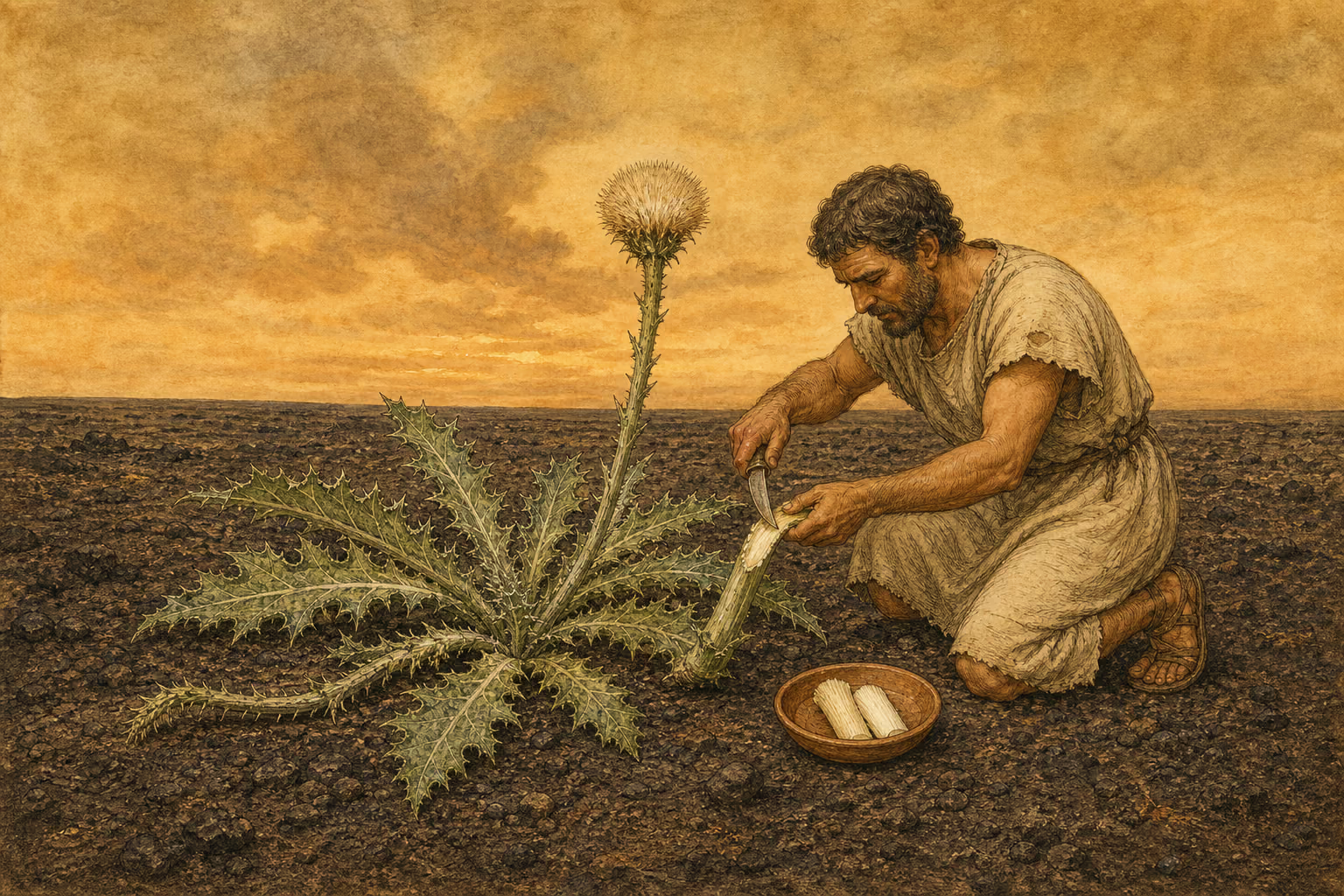
Carduus et folia et caules spinosae lanuginis habet, item acorna, leucacanthos, chalceos,cnecos, polyacanthos, onopyxos, helxine, scolymos. chamaeleon in foliis non habet aculeos. est et illa differentia, quod quaedam in his multicaulia ramosaque sunt, ut carduus, uno autem caule nec ramosum cnecos. quaedam cacumine tantum spinosa sunt, ut erynge. quaedam aestate florent, ut tetralix et helxine. scolymos quoque sero floret et diu. acornaa cneco colore tantum rufo distinguitur et pinguiore suco. idem erat atractylis quoque, nisi candidior esset et nisi sanguineum sucum funderet, qua de causa phonos vocatur a quibusdam, odore etiam gravis, sero maturescente semine nec ante autumnum, quamquam id de omnibus spinosis dici potest. verum omnia haec et semine et radice nasci possunt. scolymus carduorum generis ab his distat, quod radix eius vescendo est decocta. mirum, quod sine intervallo tota aestate aliud floret in eo genere, aliud concipit, aliud parturit. aculei arescente folio desinunt pungere. Helxine rara visu est neque in omnibus terris, a radice foliosa, ex qua media veluti malum extuberat contectum sua fronde. huius vertex summus lacrimam continet iucundi saporis, acanthicen mastichen appellatam.
Et cactos quoque in Sicilia tantum nascitur, suae proprietatis et ipse. in terra serpunt caules a radice emissi, lato folio et spinoso. caules vocant cactos, nec fastidiunt in cibis inveteratos quoque. unum autem caulem rectum habet, quem vocant pternica, eiusdem suavitatis, sed vetustatis inpatientem. semen ei lanuginis, quam pappum vocant, quo detracto et cortice teneritas similis cerebro palmae est. vocant ascalian.
Tribulus non nisi in palustribus nascitur. dura res alibi, iuxta Nilum et Strymonem amnes recipitur in cibos, inclinatus in vadum, folio lato atque effigie ulmi, pediculo longo. at in reliquo orbe genera II, uni cicerculae folia, alteri aculeata. hic et serius floret magisque saepta obsidet villarum. semen ei rotundius, nigrum, in siliqua, alteri harenaceum. spinosorum etiamnum aliud genus anonis. in ramis enim spinas habet adposito folio rutae simili, toto caule foliato in modum coronae. sequitur arata, frugibus inimica vivaxque praecipue.
Aculeatarum caules aliquarum per terram serpunt, ut eius, quam coronopum vocant. e diverso stat anchusa inficiendo ligno cerisque radicis aptae, stant e mitioribus anthemis et phyllanthes et anemone et aphace. caule foliato est crepis et lotos.
Differentia foliorum et hic quae in arboribus, brevitate pediculi ac longitudine, angustiis ipsius folii, amplitudine, iam vero angulis, incisuris, odore, flore. diuturnior hic quibusdam per partes florentibus, ut ocimo, heliotropio, aphacae, onochili.
English · Bostock & Riley 1855–57
The carduus has leaves and a stem covered with a prickly down; the same is the case, too, with the acorna, the leucacanthos, the chalceos, the cnecos, the polyacanthos, the onopyxos, the helxine, and the scolymos; the chamæleon, however, has no prickles upon the leaves. There is, however, this difference among these plants, that some of them have numerous stems and branches, such as the carduus, for instance; while others, again, have a single stem and no branches, the cnecos, for example. Some, again, such as the erynge, are prickly at the head only; and some blossom in the summer, the tetralix and the helxine, for instance. The scolymos blossoms late, and remains a considerable period in flower: the acorna being distinguished only for its red colour and its unctuous juice. The atractylis would be similar in every respect to the last, were it not that it is somewhat whiter, and produces a juice the colour of blood, a circumstance to which it owes the name of “phonos,” given to it by some. The smell of this plant is powerful, and the seed only ripens at a late period, and never before autumn, although the same may be said of all the prickly plants, in fact. All of them are capable, however, of being reproduced from either seed or root.
The scolymos, which belongs to the thistle genus, differs from the rest of them in the circumstance that the root of it is boiled and eaten. It is a singular fact that this genus of plants bears blossoms, buds, and fruit the whole of the summer through, without any interruption: when the leaf is dried, the prickles lose their pungency. The helxine is a plant but rarely seen, and in some countries only. It throws out leaves at the root, from the middle of which there is a protuberance in the shape of an apple, covered with leaves of its own: the head of it contains a thick juice of a sweet flavour, the name given to which is “acanthice mastiche.”
The cactos, too, is a plant that grows only in Sicily, having peculiar characteristics of its own: the root throws out stalks which creep along the ground, the leaves being broad and thorny. The name given to these stalks is “cactos,” and they are not disliked as an article of food, even when old. The plant, however, has one stem which grows upright, and is known by the name of “pternix;” it has the same sweet flavour as the other parts, though it will not keep. The seed of it is covered with a kind of down, known as “pappus:” when this is removed, as well as the rind of the fruit, it is tender, and like the pith of the palm: the name given to it is “ascalias.”
The tribulus grows nowhere except in marshy places: though held in abomination elsewhere, it is employed on the banks of the Nilus and Strymon as an article of food. It always bends towards the water, and has a leaf like that of the elm, with a long stalk. In other parts of the world there are two varieties of this plant; the one with leaves like those of the chicheling vetch, the other with leaves protected by prickles. This last variety blossoms also at a later period than the other, and is mostly found in the hedge-rows about farm-houses. The seed of it is black, rounder than that of the other, and enclosed in pods: that of the other variety bears a resemblance to sand.
Among the prickly plants there is also another kind, known as the “anonis:” indeed, it has thorns upon the branches, to which leaves are attached similar to those of rue, the stem being entirely covered also with leaves, in form resembling a garland. It comes up in land that has been newly ploughed, being highly prejudicial to the corn, and long-lived in the extreme.
Some, again, among the prickly plants have a stem which creeps along the ground, that, for instance, known as the “coronopus.” On the other hand, the anchusa, the root of which is employed for dyeing wood and wax, has an upright stem; which is the case also with some of the plants that are prickly in a less degree, the anthemis, for example, the phyllanthes, the anemone, and the aphace: the crepis, again, and the lotus, have a foliated stem.
The leaves of plants, as well as those of trees, differ from one another in the length of the footstalk, and in the breadth or narrowness of the leaf, and the angles and indentations perceptible on its edge. Other differences are also constituted in respect of their smell and blossom. The blossom remains on longer in some of those plants which flower only a little at a time, such as the ocimum, the heliotropium, the aphace, and the onochilis, for example.