LIBER XXII · CAPUT 5
THE ONLY PERSONS THAT HAVE BEEN PRESENTED WITH THIS CROWN
Latine · Mayhoff 1906
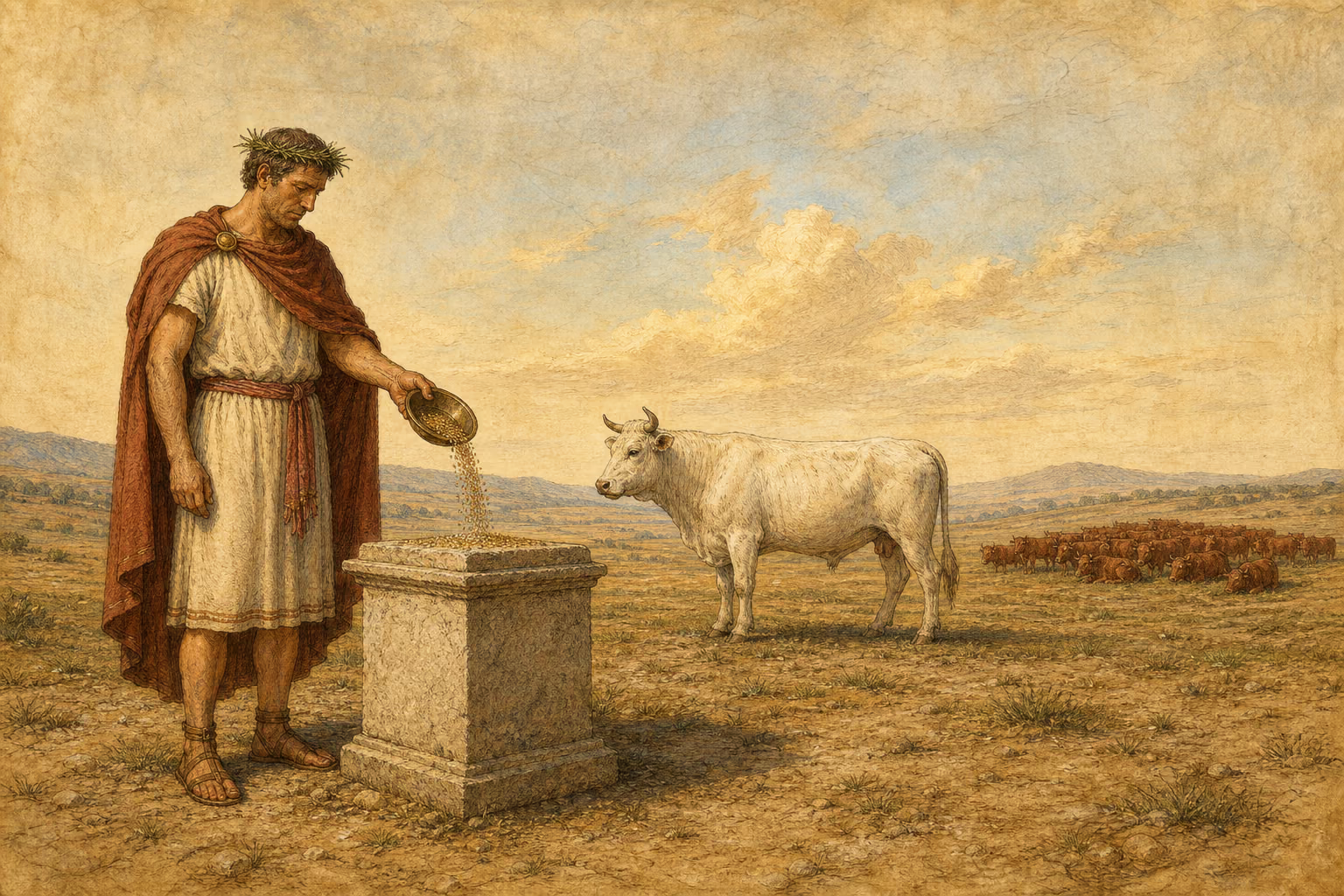
Donatus est ea L. Siccius Dentatus semel, cum civicas quattuordecim meruisset depugnassetque centiens viciens semper victor. tanto rarius est servatorem unum a servatis donari. quidam imperatores et saepius donati sunt, veluti P. Decius Mus tribunus militum ab exercitu, altera ab his, qui in praesidio obsessi fuerant, quanta esset eius honoris auctoritas, confessus religione, siquidem donatus bovem album Marti inmolavit et centum fulvos, qui ei virtutis causa dati fuerant simul ab obsessis. hic Decius postea se consul Imperioso conlega pro victoria devovit. data est et a senatu populoque Romano, qua claritate nihil equidem in rebus humanis sublimius duco, Fabio illi, qui rem omnem Romanam restituit non pugnando; nec data, cum magistrum equitum exercitumque eius servasset,—tune satius fuit nomine novo coronari appellatum patrem ab his, quos servaverat,—sed quo dictum est consensu honoratus est Hannibale Italia pulso, quae corona adhuc sola ipsius imperii manibus inposita est et, quod peculiare ei est, sola a tota Italia data.
English · Bostock & Riley 1855–57
L. Siccius Dentatus was presented with this crown but once, though he gained as many as fourteen civic crowns, and fought one hundred and twenty battles, in all of which he was victorious—so rarely is it that an army has to thank a single individual only for its preservation! Some generals, however, have been presented with more than one of these crowns, P. Decius Mus, the military tribune, for example, who received one from his own army, and another from the troops which he had rescued when surrounded. He testified by an act of devoutness in what high esteem he held such an honour as this, for, adorned with these insignia, he sacrificed a white ox to Mars, together with one hundred red oxen, which had been presented to him by the beleaguered troops as the recompense of his valour: it was this same Decius, who afterwards, when consul, with Imperiosus for his colleague, devoted his life to secure victory to his fellow-citizens.
This crown was presented also by the senate and people of Rome—a distinction than which I know of nothing in existence more glorious—to that same Fabius who restored the fortunes of Rome by avoiding a battle; not, however, on the occasion when he preserved the master of the horse and his army; for then it was deemed preferable by those who were indebted to him for their preservation to present him with a crown under a new title, that of “father.” The crown of grass was, however, awarded to him, with that unanimity which I have mentioned, after Hannibal had been expelled from Italy; being the only crown, in fact, that has hitherto been placed upon the head of a citizen by the hands of the state itself, and, another remarkable distinction, the only one that has ever been conferred by the whole of Italy united.